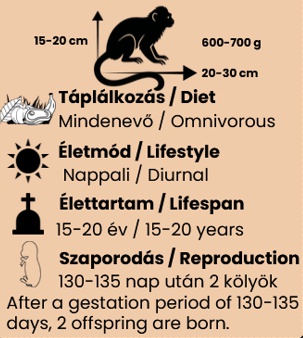

Golden lion tamarin (Leontopithecus rosalia)
Habitat: Lowland, coastal rain forest region in Southeast Brazil.
Food habits: the golden lion tamarin is omnivorous. It eats spiders, snails, small lizards, eggs, small birds, fruits and vegetables.
Golden lion tamarins live in stable family groups typically consisting of up to 10 individuals. They are highly active, diurnal primates that primarily navigate the upper canopy of the forest during the day. At night, they seek refuge within dense thickets or hollow tree cavities to avoid predation.
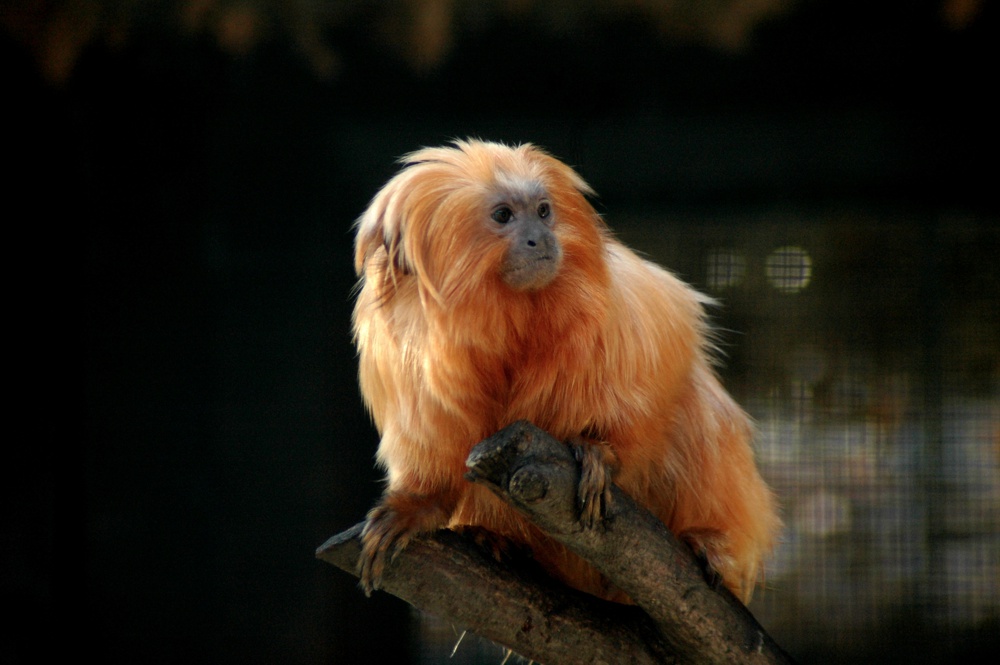
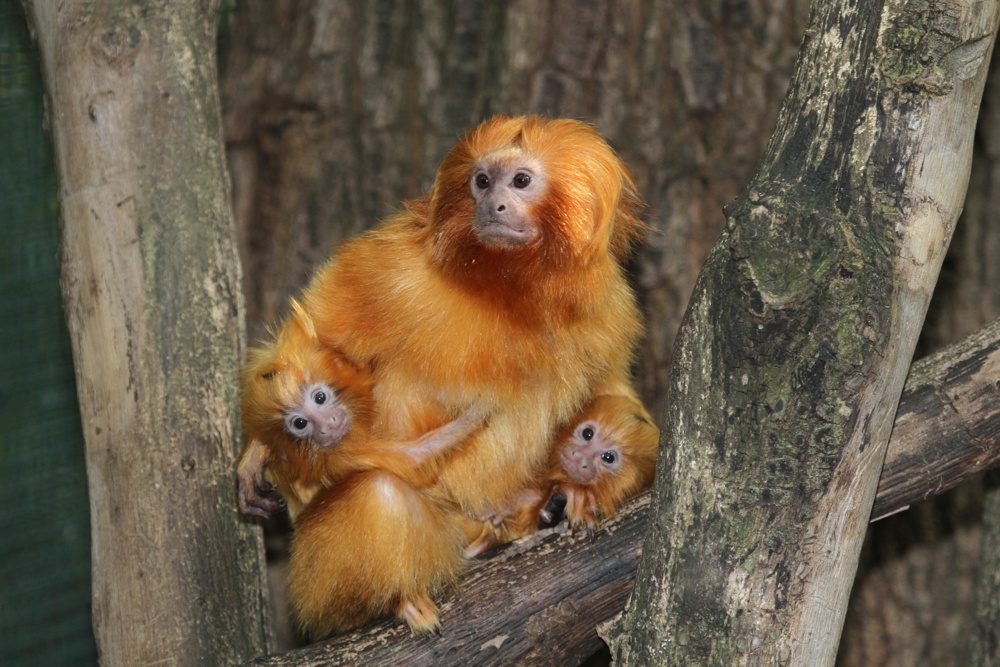
Due to their diminutive size, they are capable of traversing even the thinnest branches, utilizing their specialized claws for secure anchorage. Mature adults weigh approximately 500g, while newborns weigh between 50–60g. In an exhibit of significant paternal investment, the offspring are initially carried by their parents—primarily the father—clinging tightly to their fur during transport.
The golden lion tamarin is among the world’s rarest mammals. Having faced near-extinction in the wild, the species was salvaged through a massive international collaboration between zoos and successful reintroduction programs. Currently, the Brazilian government retains ownership of all individuals, whether living in the wild or in captivity. Due to its restricted range, the species remains acutely vulnerable to habitat loss and fragmentation.
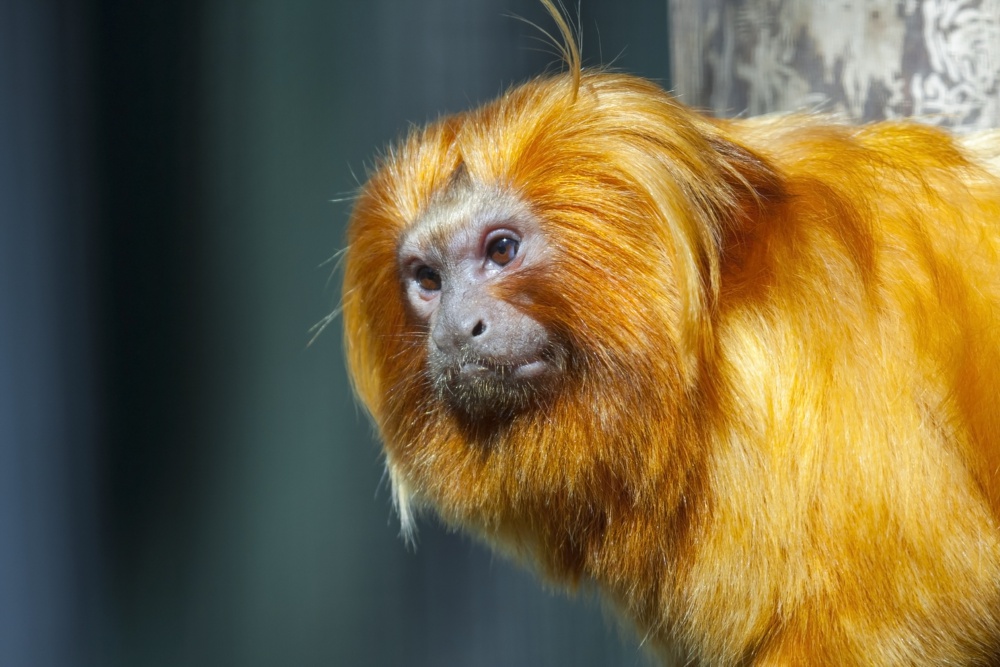
The golden lion tamarin belongs to the subfamily of Callitrichinae (clawed monkeys), a group in which every species is currently classified as endangered.
Primates / Cebidae
IUCN Redlist: EN (Endangered)



I.