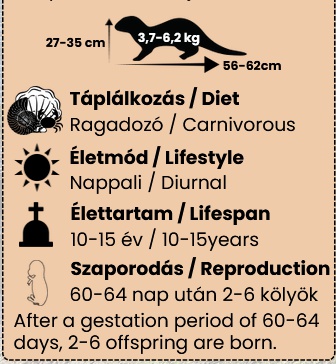

Asian small-clawed otter (Aonyx cinereus)
Habitat: Asian small-clawed otter is found in coastal regions from southern India to the Malay Peninsula and southern China. Asian small-clawed otter individuals are commonly seen in the shallows of freshwater streams and rivers as well as coastal regions.
Diet: carnivore, animal foods: amphibians, fish, mollusks
Its name is derived from its remarkably short claws, which leave its digits almost entirely free to move—making it exceptionally “dexterous.” Using its front paws, it is capable of grasping, crushing, and prying open mussels, crabs, and snails. It often displays a “washing” behavior, rinsing its prey in the water before consumption. Highly intelligent and quick to learn, these otters are known to use stones or other hard objects as tools.
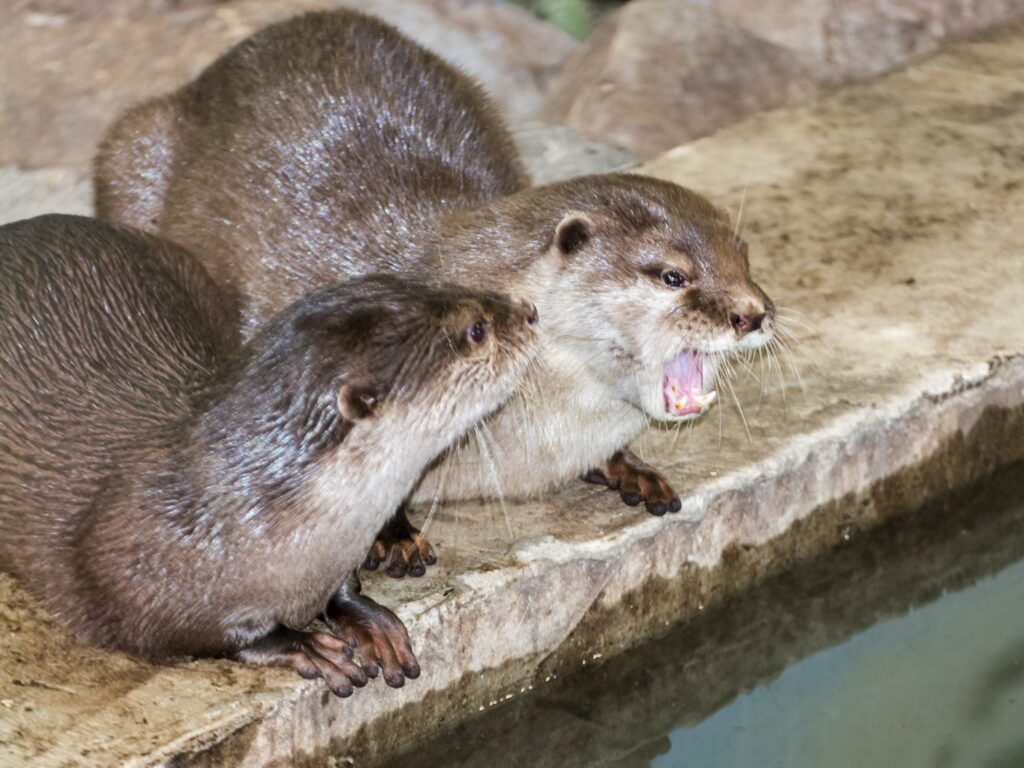
While the European otter and this species belong to the same family, they differ significantly. Unlike the mostly solitary European species, their Asian relatives are highly social, forming cohesive family groups, and are primarily diurnal (active during the day). For this reason, they are popular and charismatic inhabitants of zoos worldwide.
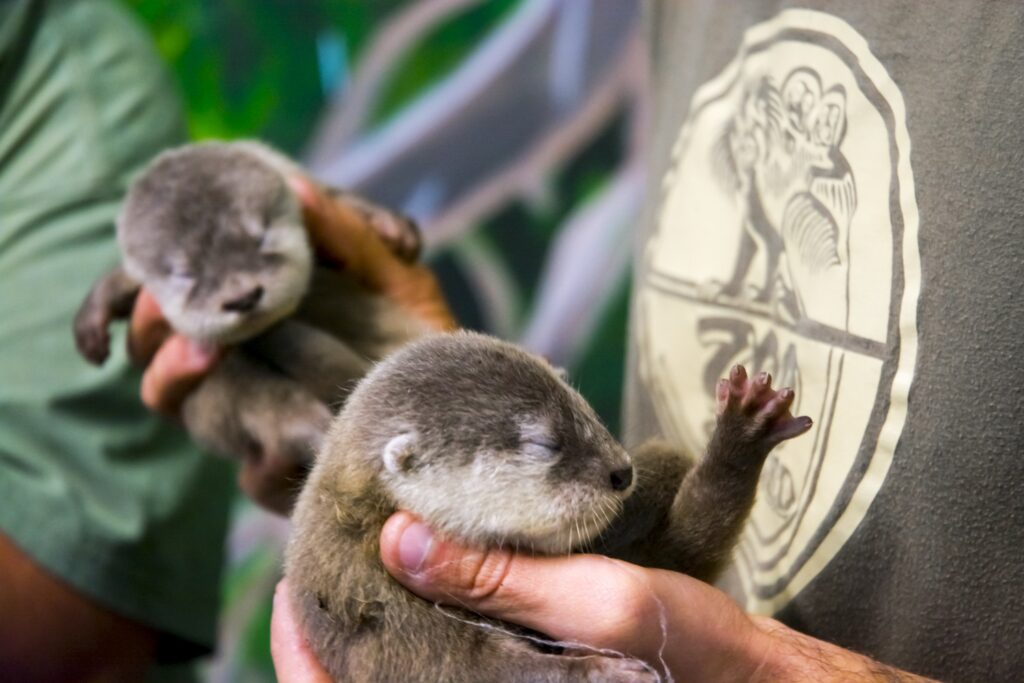
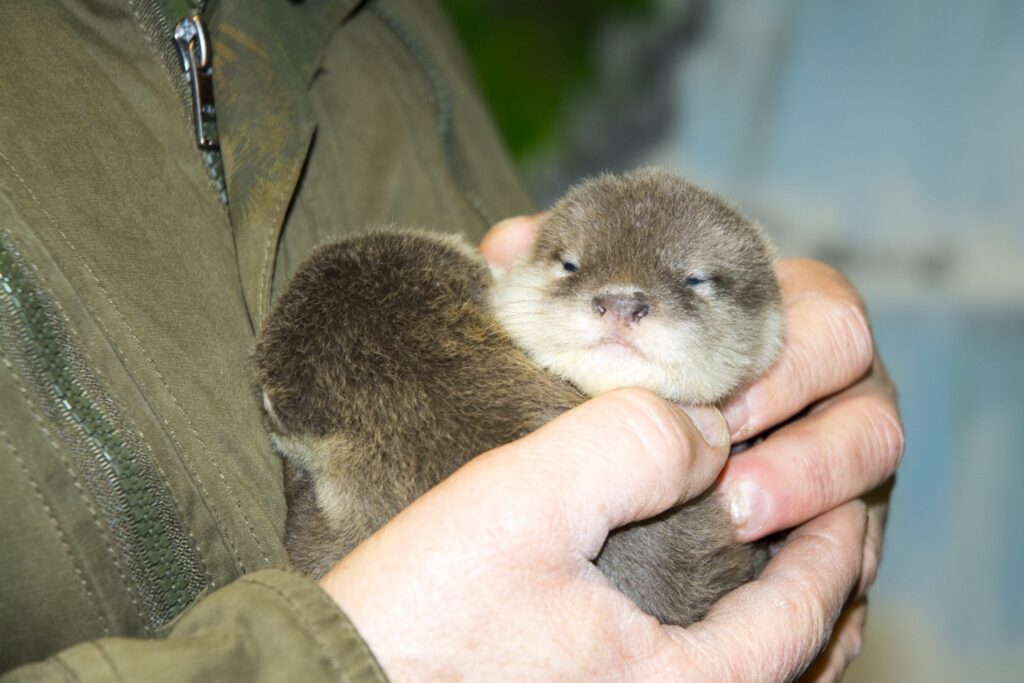
Pairs form lifelong monogamous bonds. In a remarkable display of family cooperation, both parents and even older siblings participate in the rearing and care of the younger cubs.
Their communication is rich and complex, involving a variety of vocalizations, scent markings, and postures—more than a dozen distinct sounds have been identified. In a behavior that endears them to many, they are often seen “holding hands” while floating in the water to prevent drifting away from one another.
Carnivora / Mustelidae
IUCN Redlist: LC (Least Concern)


II.