
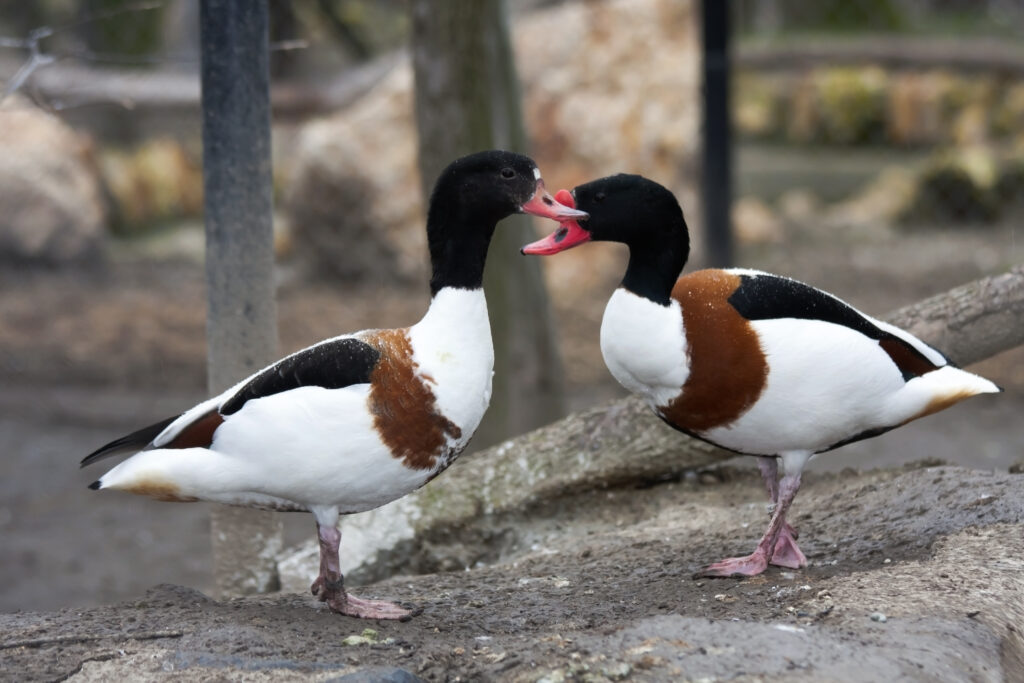
Common Shelduck (Tadorna tadorna)
Order: Anseriformes
Family: Anatidae
IUCN Red List: LC (Least concern)
A protected species in Hungary!
Habitat
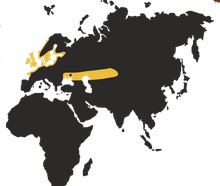
Marshes and coastal wetlands of Europe and Asia
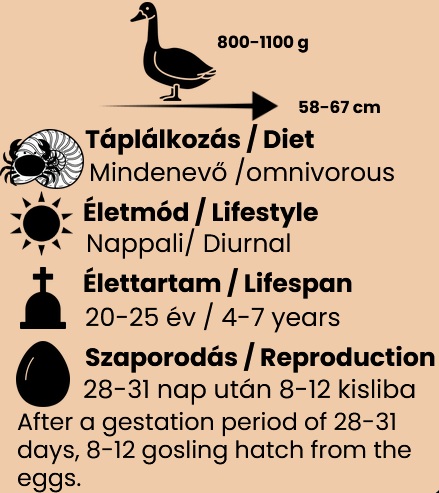
Informations
The common shelduck is a distinctive member of the duck family. Two main populations are known, each adapted to different habitats. In Europe, the species mainly lives along coastal areas, while in Asia it is more closely associated with salty or brackish steppe waters. Some European populations remain in the same areas throughout the year—especially along the coasts of the North Sea and in the southern Balkans—while others spend the winter along the Mediterranean. Part of the Asian population migrates to South Asia during the winter months.
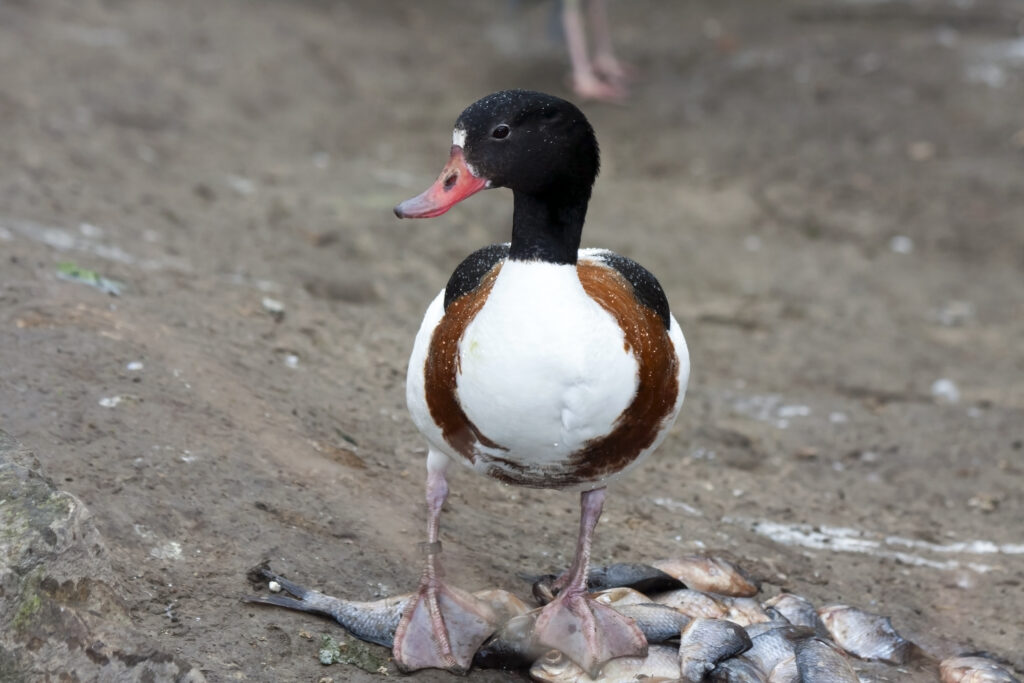
Like many other ducks, shelducks molt their flight feathers simultaneously, which means they are unable to fly for about a month each year. During this period they gather in safe areas rich in food. In Europe large groups assemble mainly on the sandbanks between the mouths of the Weser and Elbe rivers, as well as on the bird sanctuary island of Trischen in Schleswig-Holstein. Birds from across the continent gather here after the breeding season. The species is easy to recognize thanks to the red knob on the male’s bill, its strikingly patterned plumage, and its loud calls.
The common shelduck is a monogamous species. Pairs often stay together for many years and strongly defend their nesting territory.