
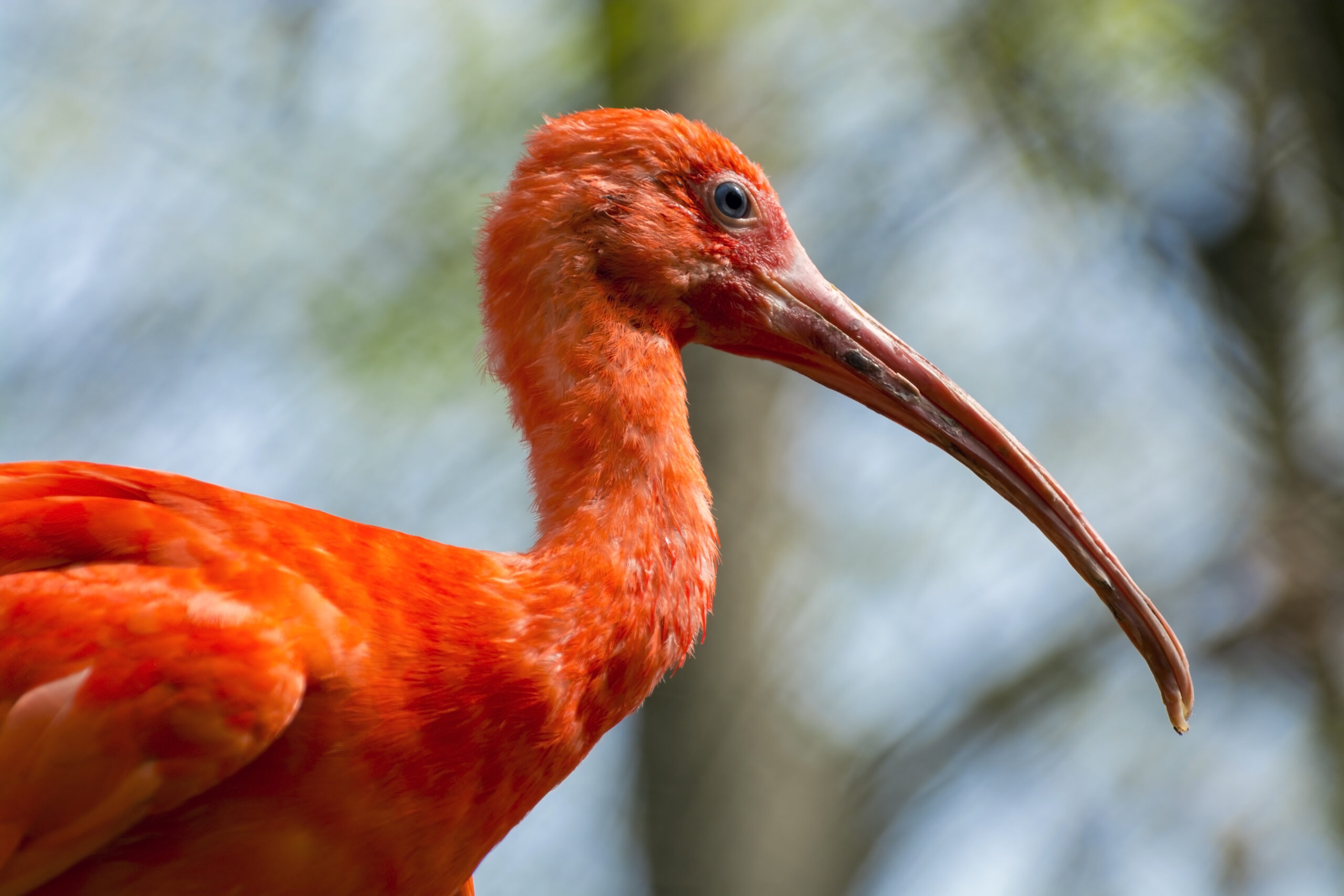
Scarlet ibis (Eudocimus ruber)
Order: Pelecaniformes
Family: Threskiornithidae
IUCN Red List: LC (Least Concern)

II.
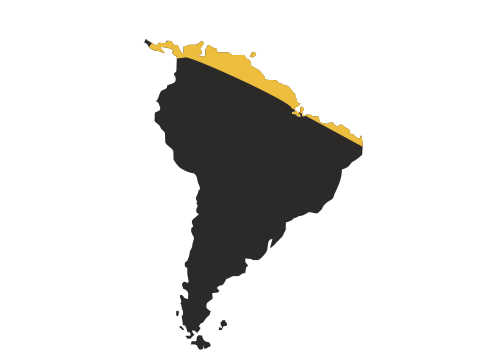
Habitat
Tropical South-America.
Information
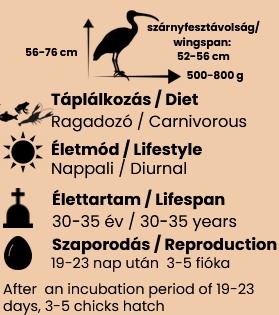
Diet: The striking color of Scarlet ibises is caused by carotenoids obtained from their primary food source, crustaceans. Juvenile birds have brown feathers. In addition to crustaceans, their diet consists of mollusks, small fish, and worms, which they find by probing the mud. Their beak curves downward. They often feed alongside other waterbirds; this mixed grouping helps them hide from predators more effectively, and the movement of many birds stirs up the shallow water, making it easier to disturb and catch their prey.
They live in colonies, building their nests close to one another in trees; a single colony can consist of hundreds of nests. Both adult birds share the responsibility of caring for the chicks, providing them with food and protecting them from predators. The chicks fledge and leave the nest at two weeks old and become self-sufficient by 75 days. If they are disturbed at the nesting site, all the birds will take flight simultaneously.
One advantage of gathering in large groups is that individuals are less likely to fall victim to predators than if they lived alone. Although a colony is more conspicuous than a single, well-camouflaged nest, the chance of a hunter choosing one specific nest out of many is small. If they sense danger, they emit warning calls to alert the group.