
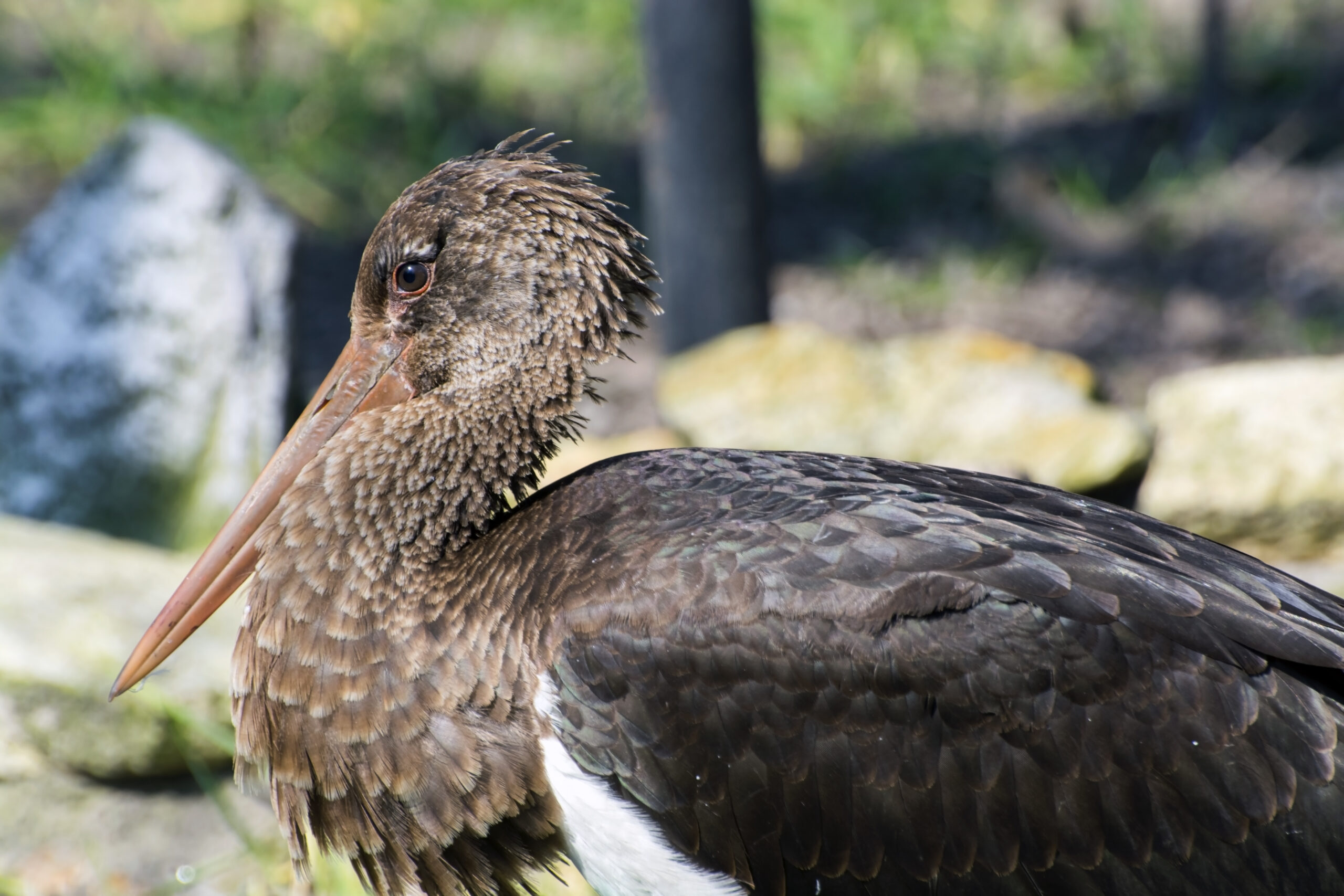
Black stork (Ciconia nigra)
Order: Ciconiiformes
Family: Ciconiidae
IUCN Red List: LC (Least Concern)


II.
Habitat
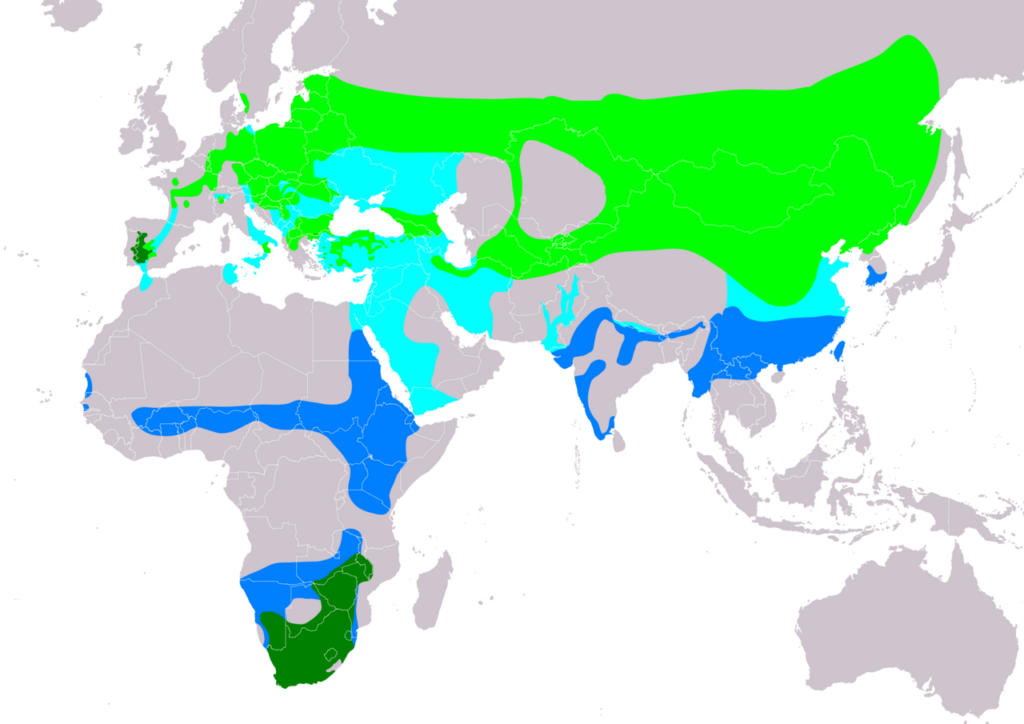
The Black stork occurs in more than 100 countries across three continents: Europe, Asia, and Africa, nesting on all three.
Information
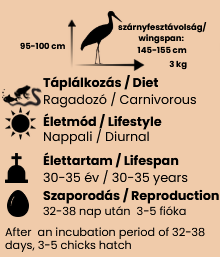
Diet: It primarily searches for food in forest streams and lakes, with a diet consisting of fish, frogs, and insects.
Unlike its relatives, it nests far from human settlements, on the branches of sturdy trees or on cliffs. It prefers mature forests located near wetlands. The larger known wintering grounds for the European population are located in Africa, north of the Equator. During migration, it avoids the open sea and high mountain ranges, utilizing rising air currents while flying an average of 5–6 hours per day. If it finds a suitable feeding site, it may interrupt its journey for one or more days. It migrates from Hungary a few weeks later than the White stork.
Their nests or nesting sites may be destroyed due to the continuous logging of old-growth forests. The drainage of wetlands also results in the loss of their feeding grounds. The Black stork is highly sensitive; if disturbed at its nesting site, it will often abandon the area and never return. They may use the same nest for decades, which sometimes leads to the nest collapsing due to a decaying branch. The chicks are also threatened by predators, such as the pine marten, beech marten, and northern goshawk.