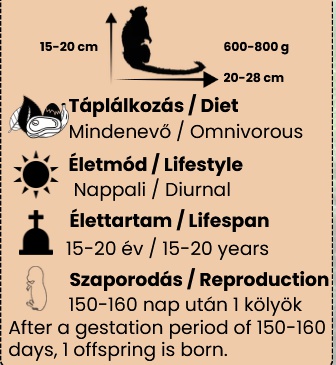

Goeldi’s marmoset (Callimico goeldii)
Habitat: Goeldi’s marmosets prefer understory habitats in the Amazon rainforest.
Food habits: during the wet season, over half of their diet consists of fruits and insects. During the dry season, fungi comprise 48 to 63% of their diet.
Taxonomy and Morphology: The Goeldi’s marmoset—also known as the Goeldi’s monkey—is a reclusive and lesser-known small primate of the South American rainforests. Although grouped with tamarins, it represents a distinct evolutionary lineage and is genetically distant from most marmosets. It is distinguished by its dark, velvety pelage and large, inquisitive eyes.
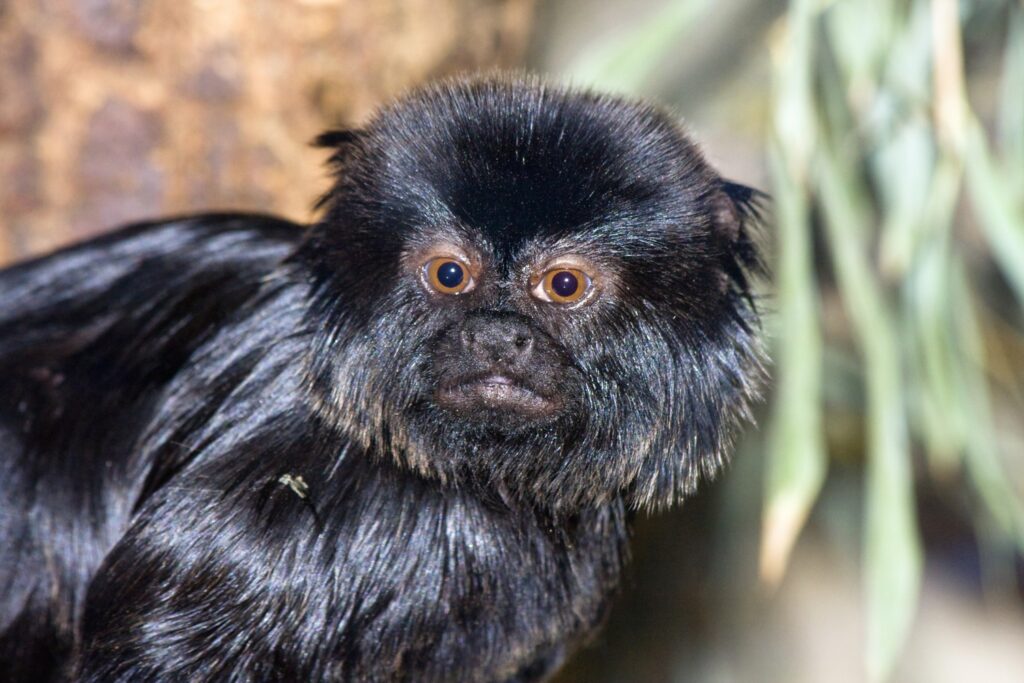
Locomotion and Ethology: These primates are named for their unique method of locomotion: they are capable of leaping up to four meters between branches. Remarkably, during the leap, they can rotate their bodies in mid-air to land vertically on the next branch. This specialized movement allows them to navigate the dense understory rapidly and efficiently without the need for constant climbing.
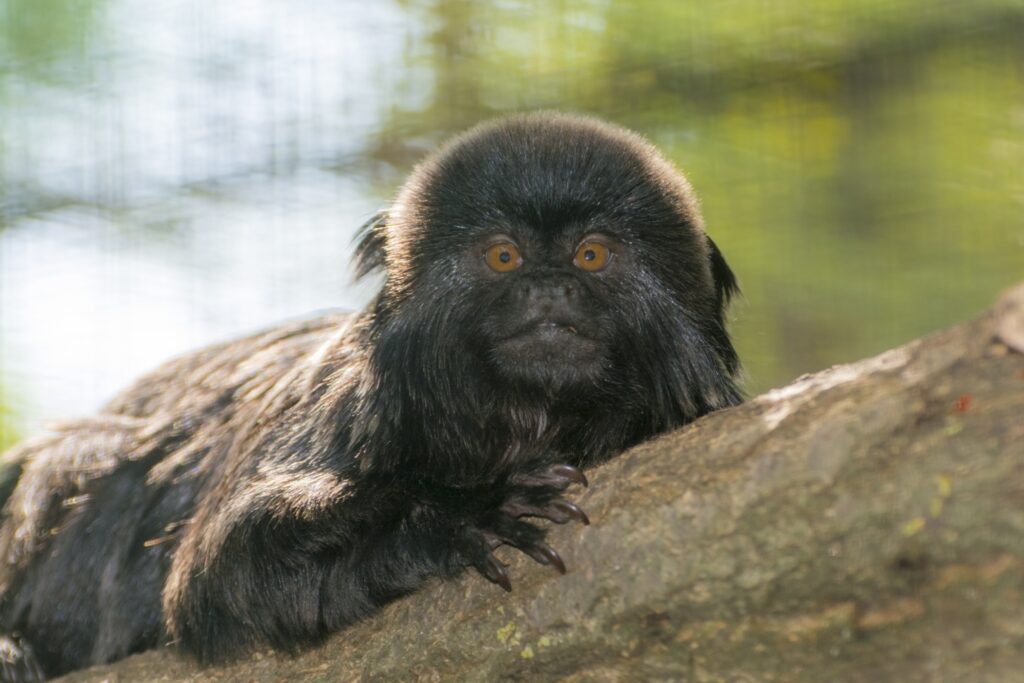
Social Structure and Conservation: Goeldi’s marmosets live in small family groups consisting of a dominant breeding pair and their offspring. The entire group participates in the cooperative rearing of the young, with the male playing a primary role in carrying the infants. Due to the shrinkage of its natural habitats, the species is increasingly threatened. Consequently, several zoological institutions support its survival through dedicated international breeding programs.
Primates / Cebidae
IUCN Redlist: VU (Vulnerable)



I.