
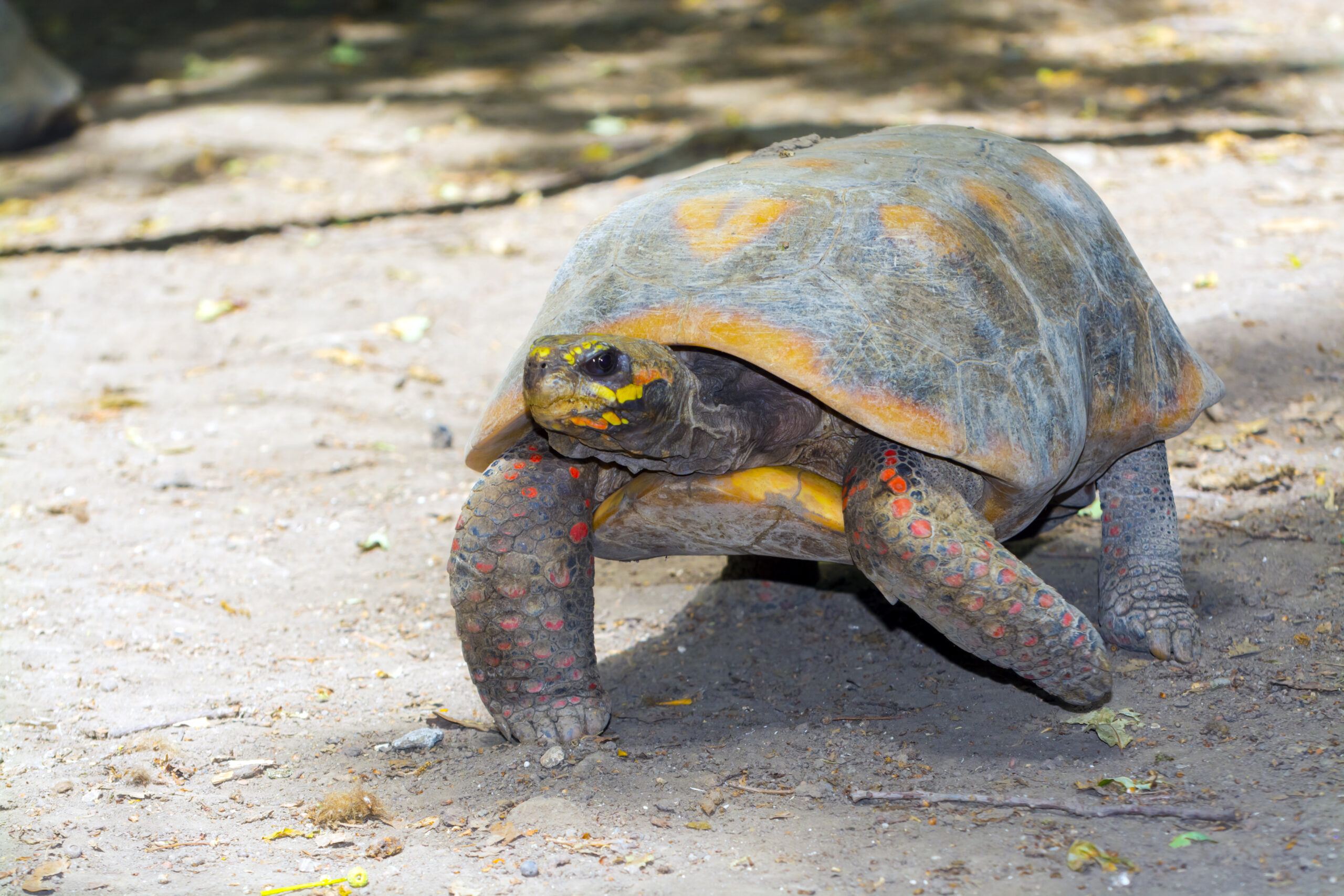
Red-footed tortoise (Chelonoidis carbonarius)

Order: Testudines
Family: Testudinidae

IUCN Red List: VU (Vulnerable)

II.

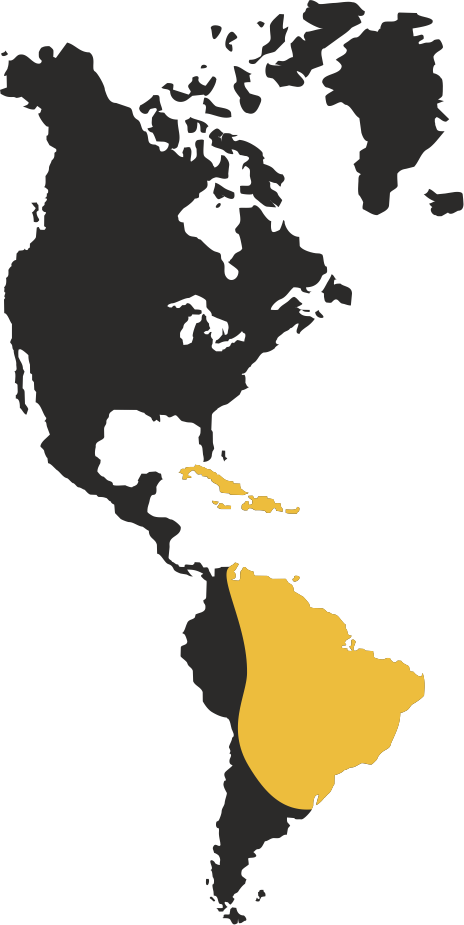
Habitat

South America
Informations
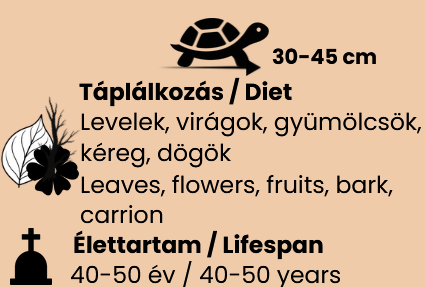
Red-footed tortoises are South American reptiles that primarily inhabit rainforests, though they are also found in grasslands and drier woodlands. They prefer to stay in close proximity to water sources. Compared to many other tortoise species, they consume more protein: in addition to small animals, they readily feed on carrion, although the significant majority of their diet remains plant-based.

The female digs a “bottle-shaped” nesting hole approximately 20 cm deep, where she deposits her eggs. After covering the nest, she provides no further parental care, as is typical of most turtle and tortoise species.

They are popular animals in the terrarium hobby, largely because they are more active and curious than many other tortoises. Many owners report that they seem more responsive to human presence, often approaching during feeding times or when they detect movement in their surroundings. Furthermore, they are long-lived, reaching ages of 50 to 60 years in captivity.
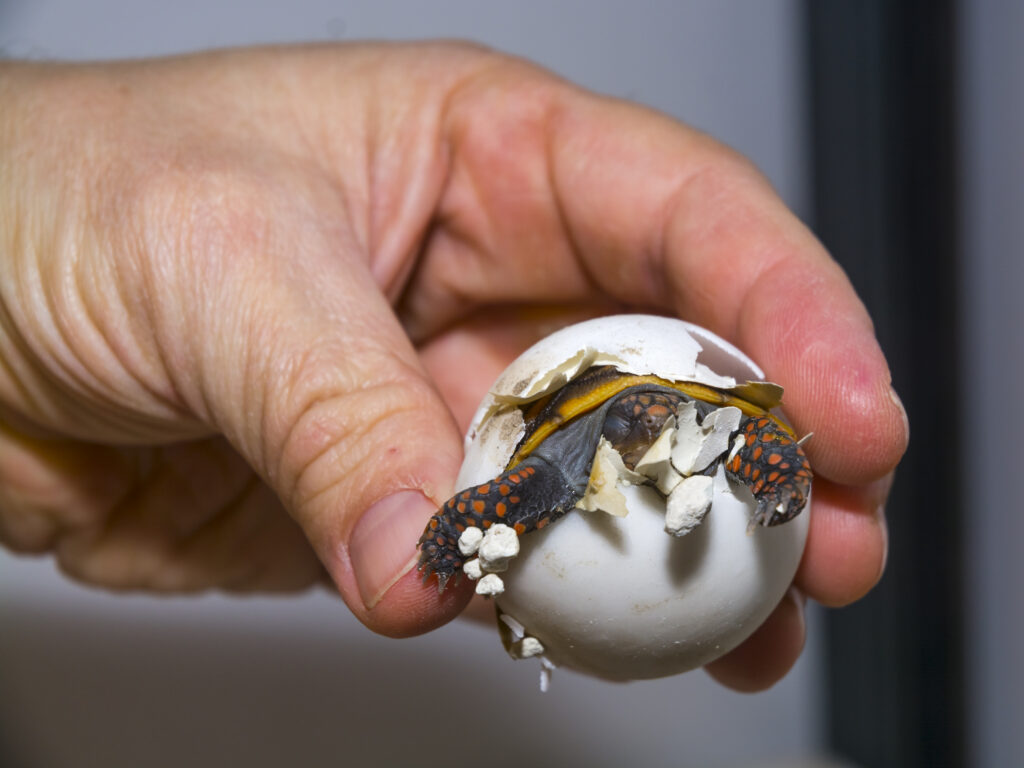
Red-footed tortoise baby, its scienfitic name is Chelonoidis carbonarius
They live here too

Harbour seal

Harbour seal (Phoca vitulina) abitat: Coastal waters of the Atlantic and Pacific OceansDiet: Carnivorous The harbor seal has one of the widest distributions among seal species,...

White-faced saki

White-faced saki (Pithecia pithecia) Habitat: Tropical rainforests of South America Diet: Omnivorous White-faced sakis usually live high in the forest canopy, often at heights of 15–20 meters....

Galah

Galah (Eolophus roseicapilla) Order: PsittaciformesFamily: Cacatuidae IUCN Red List: LC (Least Concern) II. Habitat The Galah is widespread across Australia, except for some coastal regions. Information Diet: omnivorous. At one time,...

Orange-winged amazon

Orange-winged amazon (Amazona amazonica) Order: PsittaciformesFamily: Psittacidae IUCN Red List: LC (Least concern) II. Habitat In its native range, it primarily inhabits woodlands, where it can be seen in...

White stork

White stork (Ciconia ciconia) Order: CiconiiformesFamily: Ciconiidae IUCN Red List: LC (Least Concern) Habitat Africa, Europe, Asia Information Habitat: white storks are widespread across three continents. In Hungary, they...