
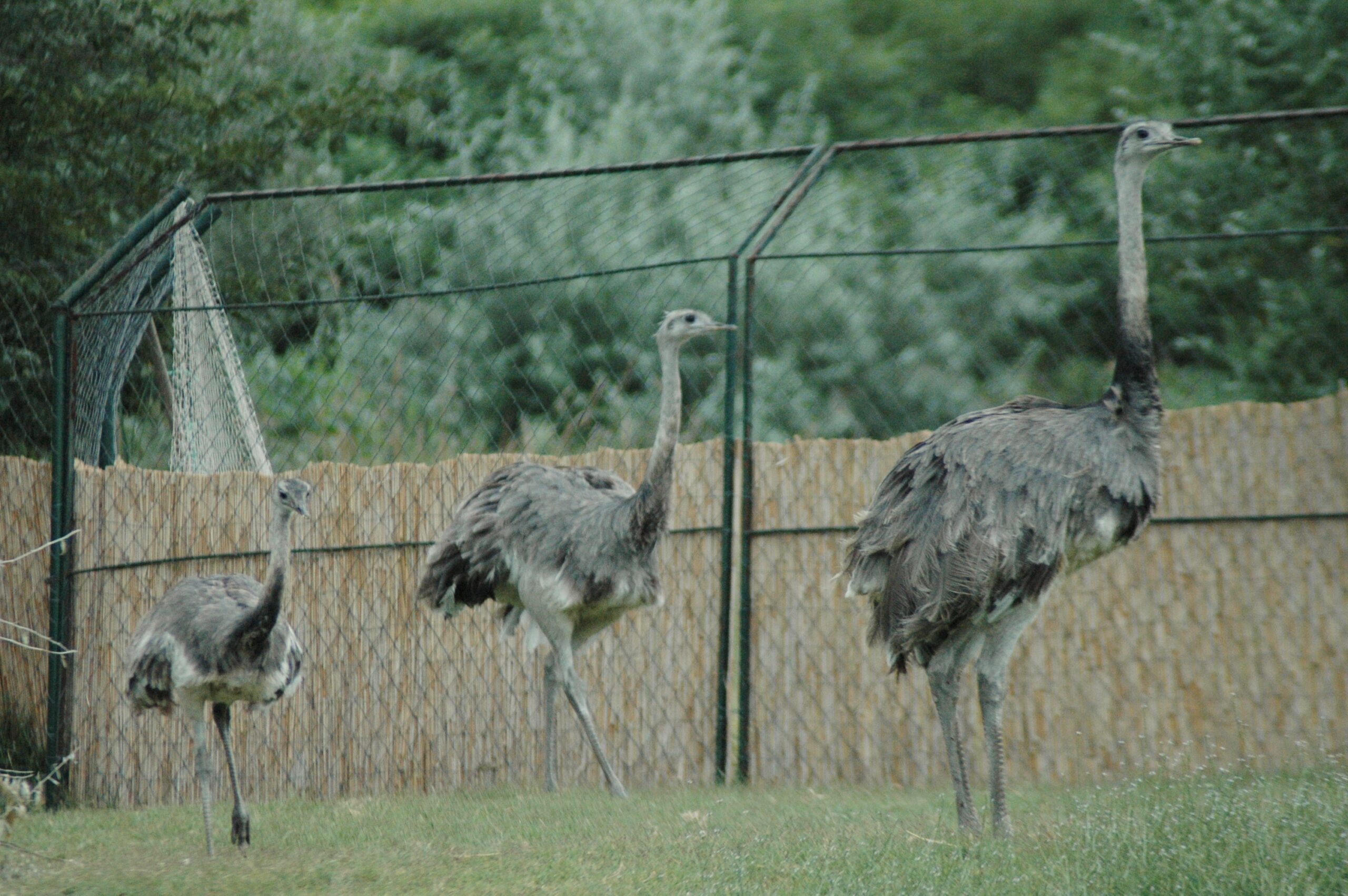
Greater rhea (Rhea americana)
Order: Struthioniformes
Family: Struthionidae
IUCN Red List: NT (Near threatened)

II.
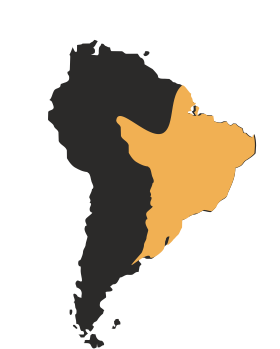
Habitat
South America. It is primarily found in the continent’s open, grassy regions.
Information
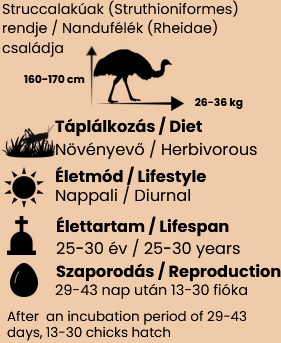
Diet: seed, fruit, insects
The Greater rhea is South America’s largest bird species. Males and females are difficult to distinguish from one another. It builds its nest on the ground by scraping a small depression and lining it with plant matter. One male may mate with several females; all the females in a single male’s harem lay their eggs in the same nest. After laying, the females may move on to mate with other males. The task of incubating the eggs and raising the young is the sole responsibility of the male.
Like other ratites, the rhea is flightless. Its body is covered with long, loose plumage. Its wings play a crucial role during running, helping with balance and sudden changes in direction. They live in small groups. Due to their alertness, herds of deer often join rhea groups for protection.
Even though they are considered food competitors for sheep in some areas, the local people welcome their presence. This is because they eat “clinging” seed pods (similar to thistles), saving farmers from the difficult task of untangling burrs from sheep’s wool.