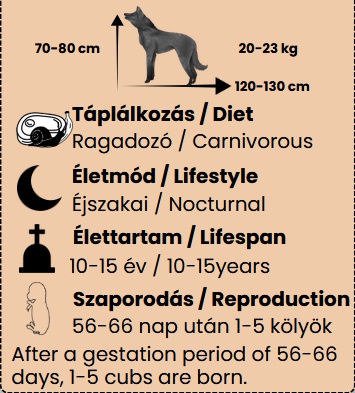

Maned wolf (Chrysocyon brachyurus)
Habitat: maned wolf is found in grassland, savanna, dry shrub forest, swampy areas, forest-edge habitat, and river areas. The maned wolf is distributed from the mouth of the Parnaiba River in northeastern Brazil west to the Pampas del Heath in Peru and South through the Chaco of Paraguay to Rio Grande do Sul, Brazil.
Food habits: it eats armadillos, rabbits, rodents and other small mammals, fish, birds, bird eggs, reptiles, gastropods and other terrestrial mollusks, insects, seasonably available fruits, and other vegetation.
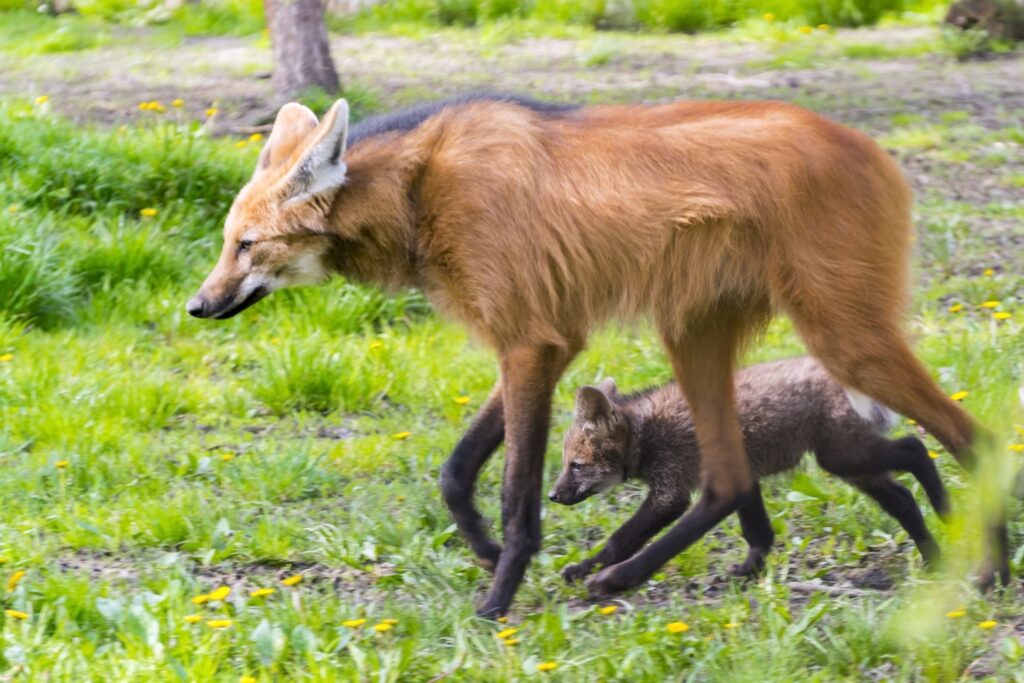
Although a member of the canid family, the maned wolf is remarkably unique. Despite its name, its reddish coat, slender body, and large ears bear a closer resemblance to a fox. One of its most striking physical features is its extraordinary leg length; relative to its body size, it possesses the longest legs among all carnivorous mammals—an adaptation that allows it to scan over the tall grasses of the South American pampas.
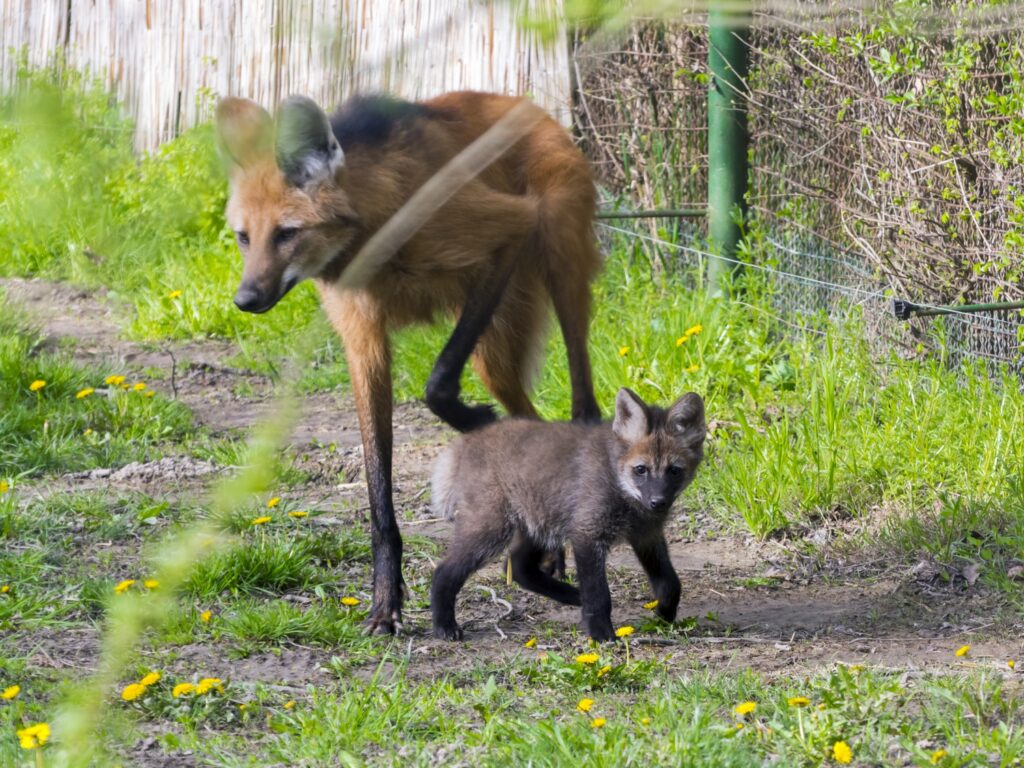
Its gait is also characteristic: it utilizes a “pacing” movement, where it moves both legs on the same side of the body simultaneously, creating a distinctive swaying motion. During a hunt, it stalks its prey silently before executing a sudden, powerful pounce. Uniquely among canids, it uses its teeth rather than its paws for digging.
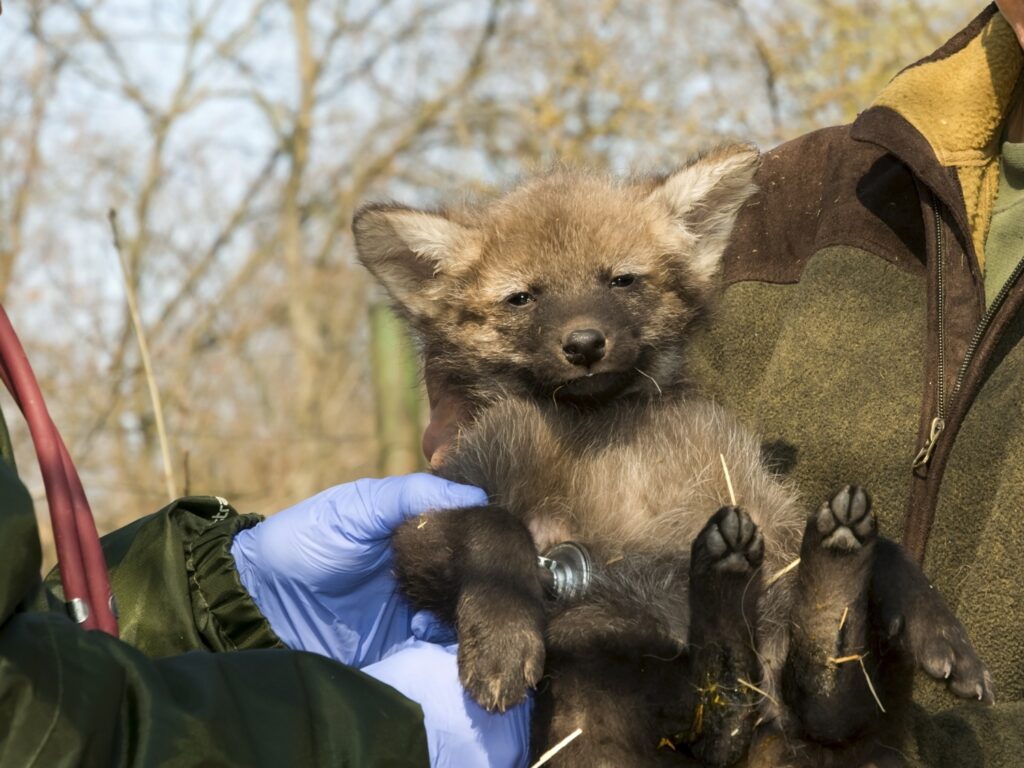
While technically a carnivore, a significant portion of its diet consists of fruit, particularly the “wolf apple” (Solanum lycocarpum), which aids digestion and helps reduce internal parasites. Its urine possesses a potent, distinctive odor often compared to the scent of marijuana, and can be detected from a great distance.
The maned wolf is primarily solitary. Unlike true wolves, it does not howl; instead, it marks its territory and communicates using high-pitched, bark-like vocalizations. With its singular appearance and behavior, it remains one of the most intriguing predators of the South American grasslands.
Carnivora / Canidae
IUCN Redlist: NT (Near Threatened)



II.