
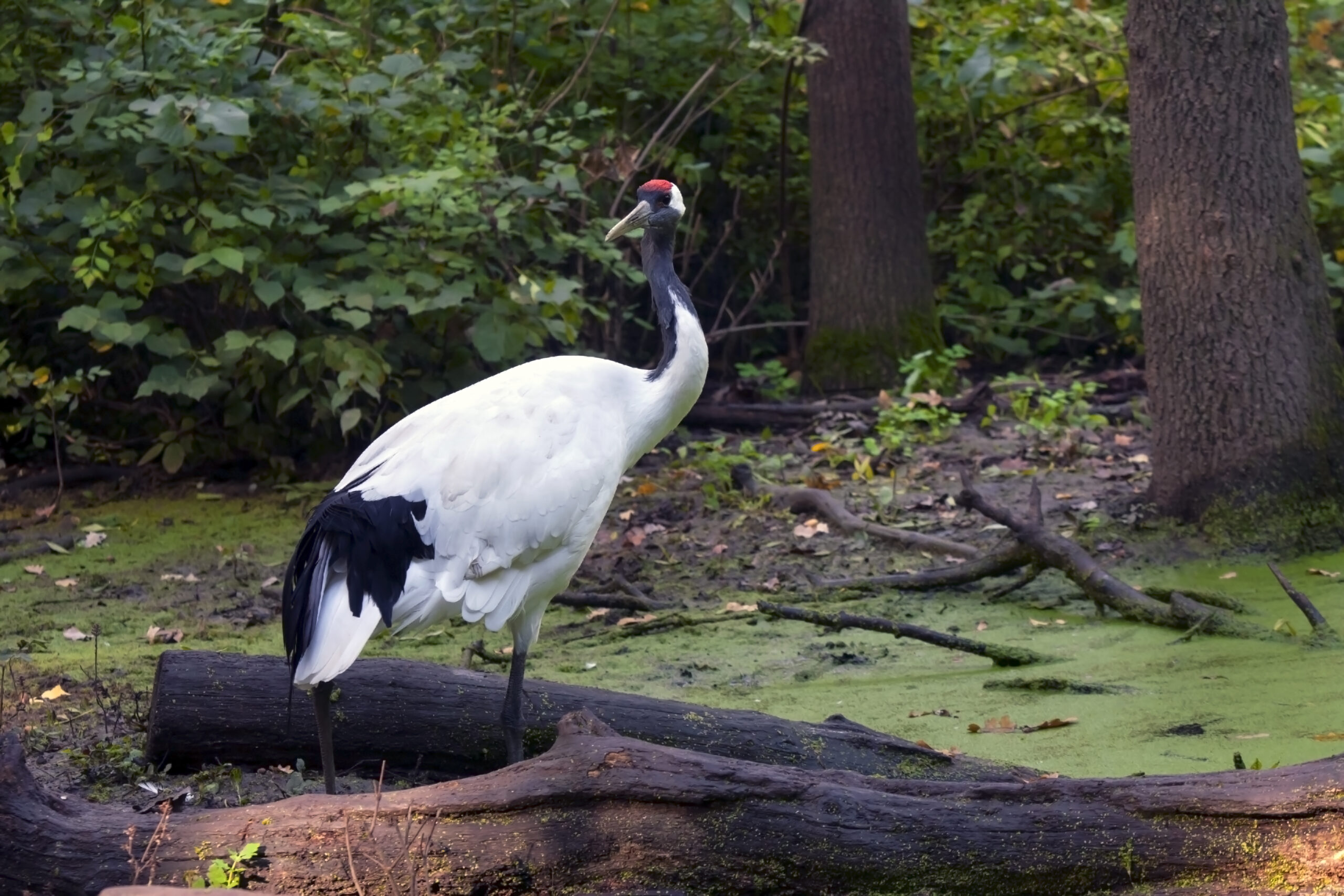
Red-crowned Crane (Grus japonensis)
Order: Gruiformes
Family: Gruidae
IUCN Red List: VU (Vulnerable)


I.
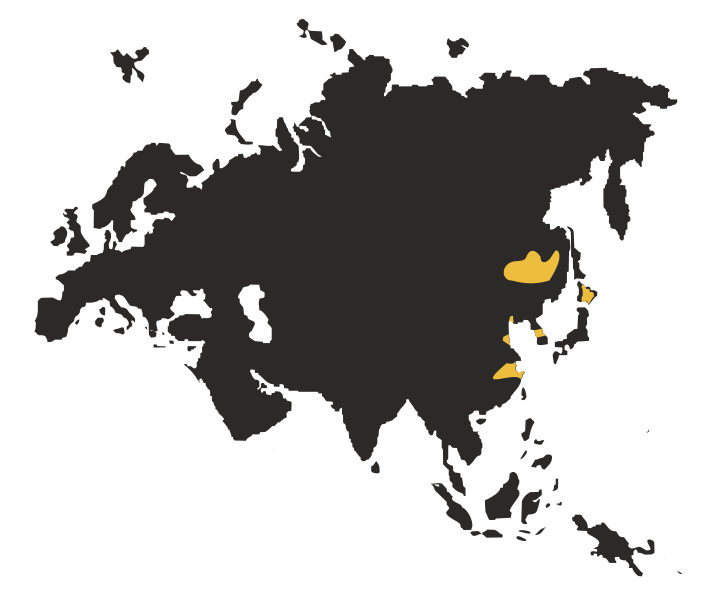
Habitat
Asia
Information
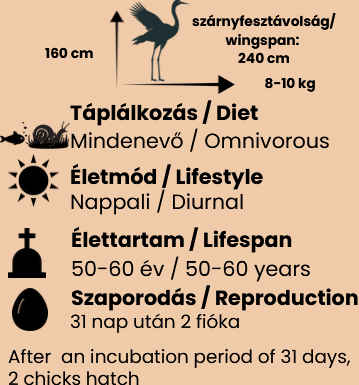
Diet: omnivorous. Its bill is sharp and pointed; it uses it like a spear to easily catch its prey, which consists of various aquatic organisms. It is also capable of foraging in deeper waters.
The Red-crowned crane, also known as the Manchurian crane or Japanese crane, is the second rarest crane species in the world. It is named for the patch of red skin on the top of its head. These cranes mate for life. During courtship, the male woos the female with an outstretched neck and a raised head. The chicks are initially brown; their plumage only begins to resemble that of their parents after 1.5 to 2 years.
Most populations spend the spring and summer in the temperate regions of East Asia and winter in the marshes of China, Japan, and the Korean Peninsula. However, there is a specific population in Japan that remains in the same area throughout the entire year.
The Red-crowned crane plays a vital symbolic role in Japanese culture and art, where it has been featured for thousands of years. It is a symbol of longevity, happiness, fidelity, and strong social bonds.