
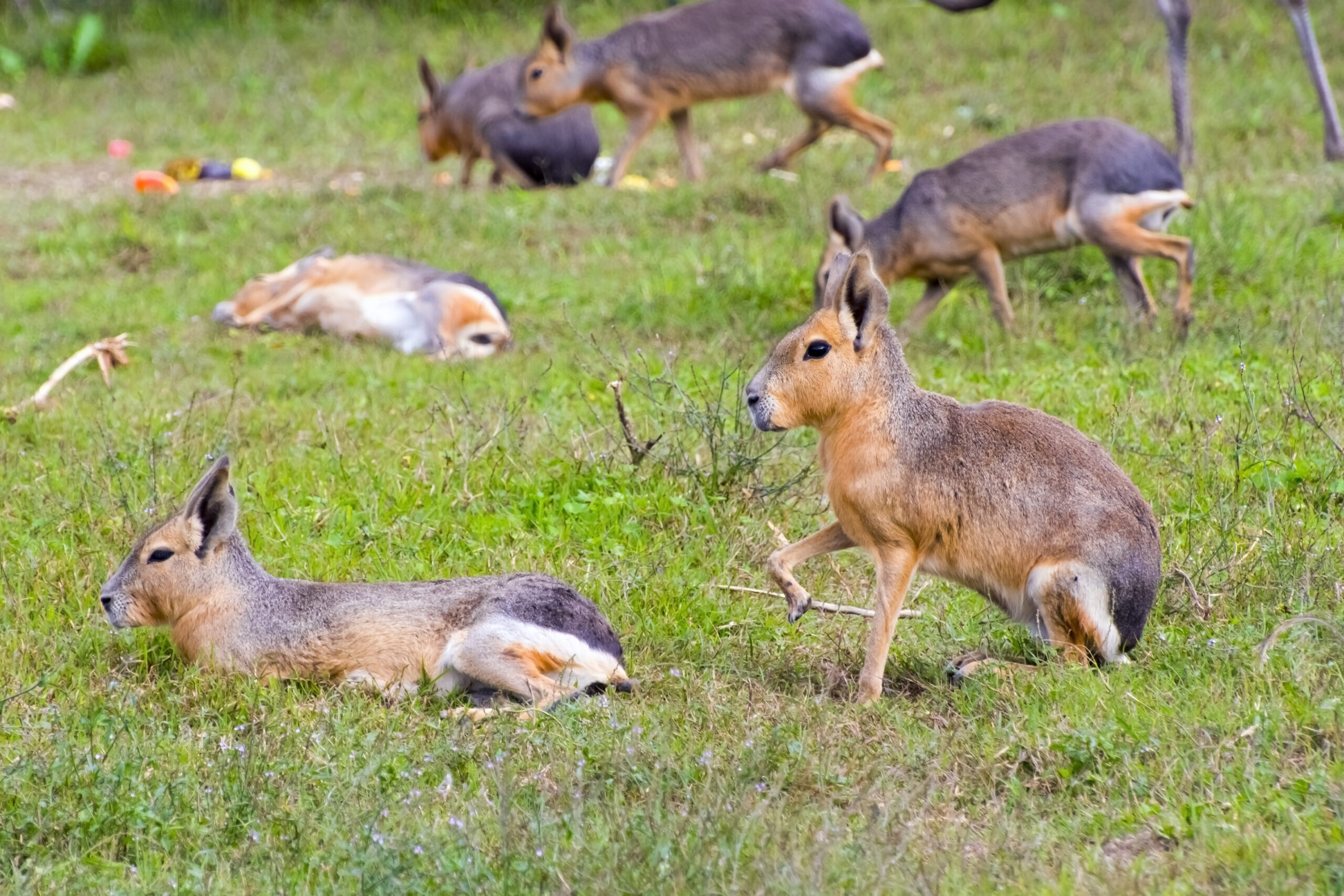
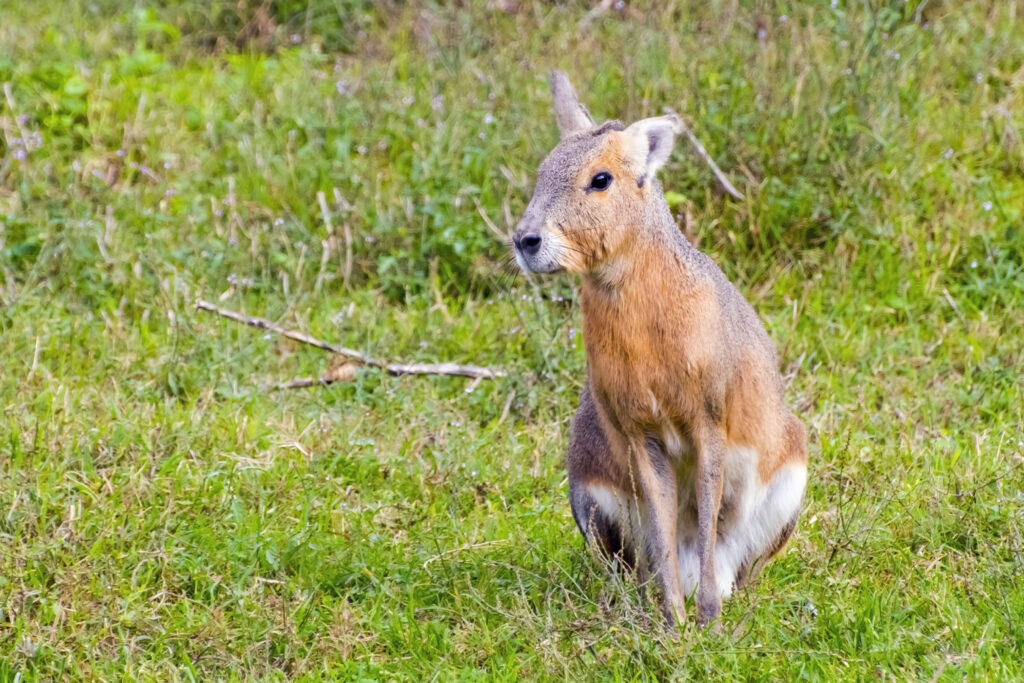
Patagonian mara (Dolichotis patagonum)
Order: Rodentia
Family: Caviidae
IUCN Red List: NT (Near Threatened)
Habitat
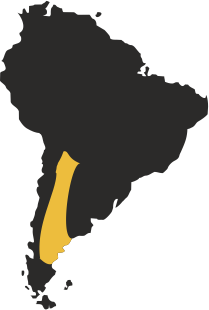
Dry grasslands and shrublands of South America
Informations
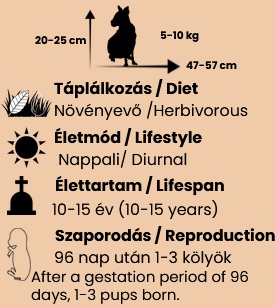
The Patagonian mara is one of the largest species in the rodent order. It lives in the open grasslands of South America, especially in the dry steppes of Patagonia.
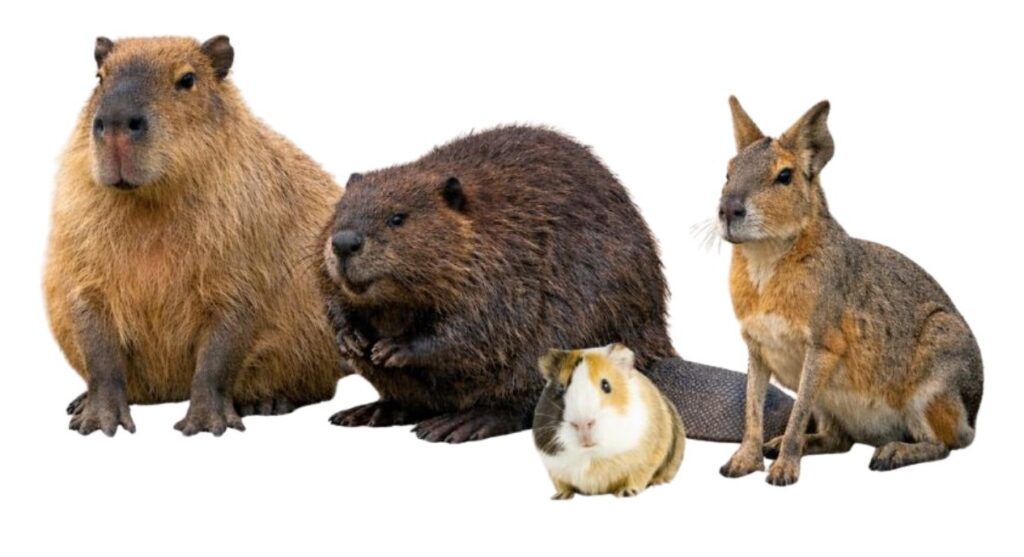
Its appearance can be misleading: its body shape resembles both European hares and small deer. The mara usually moves slowly while walking, but when necessary it can run quickly and make powerful leaps, sometimes jumping forward with all four legs at once. Despite its rabbit-like look, it is not related to hares; its closest relatives are guinea pigs.
Its senses are well adapted for detecting danger at an early stage. With its large ears it can hear even the faintest sounds, and thanks to its side-positioned eyes it has a wide field of vision, allowing it to notice distant movements. It can flee instantly from almost any body position. For this reason, females nurse their young while sitting upright, so they can quickly retreat with them into underground burrows if danger appears.
Maras form long-term pairs, and the male actively participates in raising the offspring. Females often use a shared burrow system, which further increases the survival chances of the young.