Domestic donkey (Equus africanus f. asinus)
Order: Perissodactyla
Family: Equidae
It was domesticated about 5,000–7,000 years ago.
IUCN Red List: EN – Endangered


II.
Élőhely
Afrika

Adatok
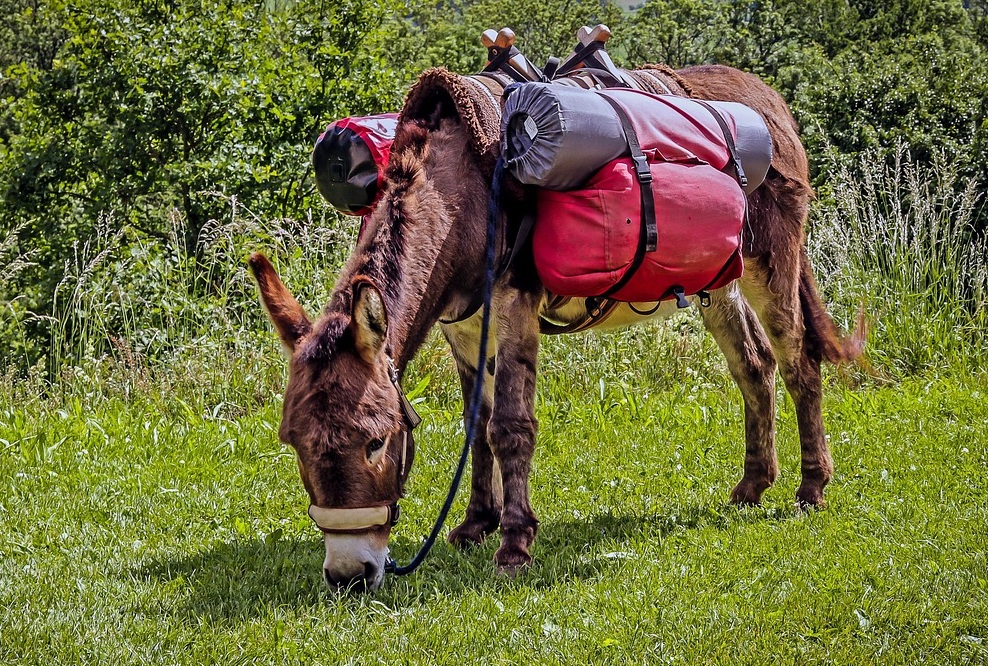
The domestic donkey is descended from the African wild donkey and is one of the earliest animals domesticated by humans. It has been used for more than six thousand years, mainly as a pack animal for carrying loads. Its well-known “stubbornness” is actually the result of caution. Instead of fleeing instinctively when faced with danger, a donkey first assesses the situation. If necessary, it defends itself by kicking with its hind legs, striking with its front legs, or biting.
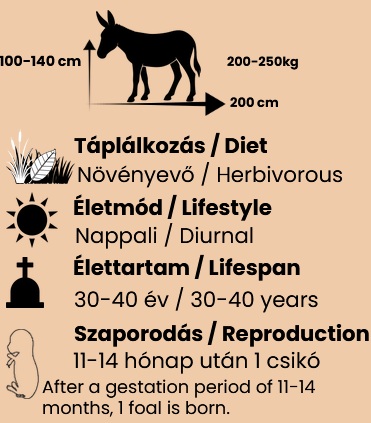
Donkeys are extremely sure-footed and move with ease on steep, rocky slopes. Despite their relatively small size, they are capable of carrying heavy loads. Under proper conditions, they can live for 30–40 years. They adapt well to harsh climates, require relatively little food, and are generally resistant to many diseases.
Donkeys are social animals and typically live in herds. Their large ears not only provide excellent hearing but also help regulate body temperature by releasing excess heat. Over time, many different breeds and varieties have developed. In Hungary, the traditional “parlagi” donkey is considered a native domestic breed.

The donkey also holds cultural and religious significance. In ancient Egypt it was associated with Seth, the god of destruction. In Christian tradition, the donkey that carried Jesus became a symbol of humility, peaceful intentions, and voluntary poverty.
Our animals
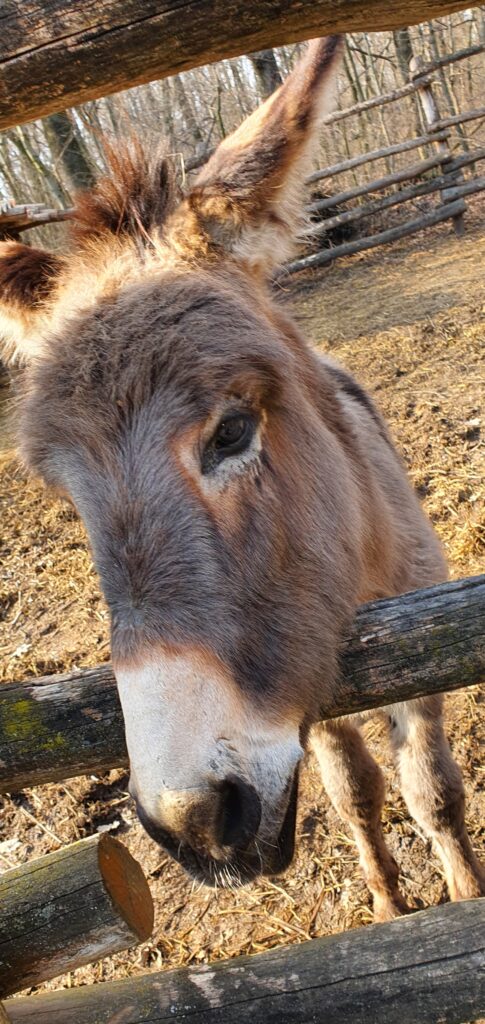
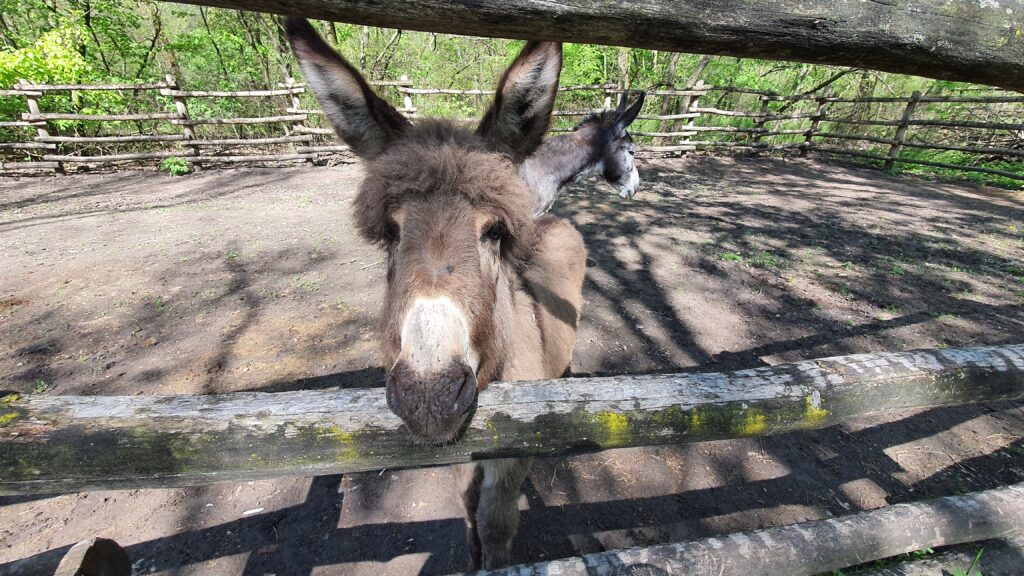
Kelemen, a jack. His son is Bonifác.
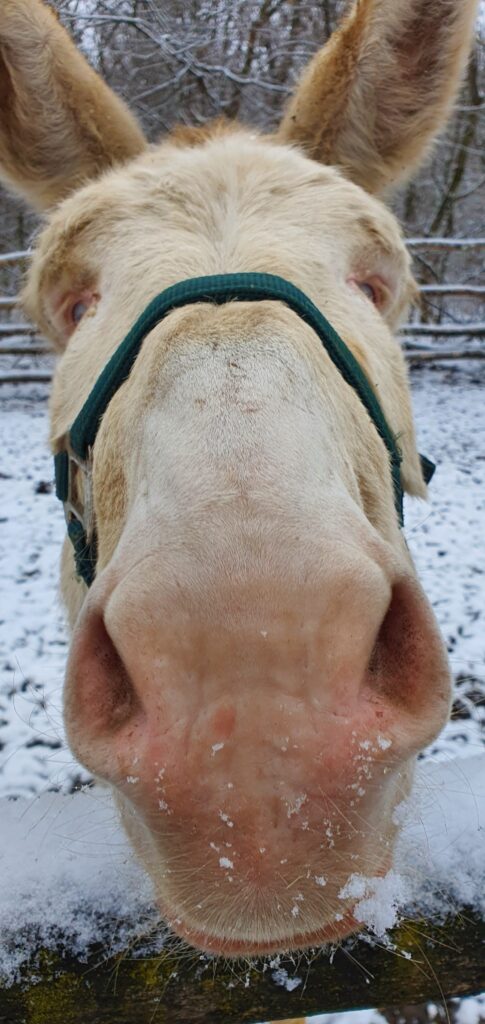
Bonifác, a jack, was born on January 4, 2021. His father is Kelemen.