
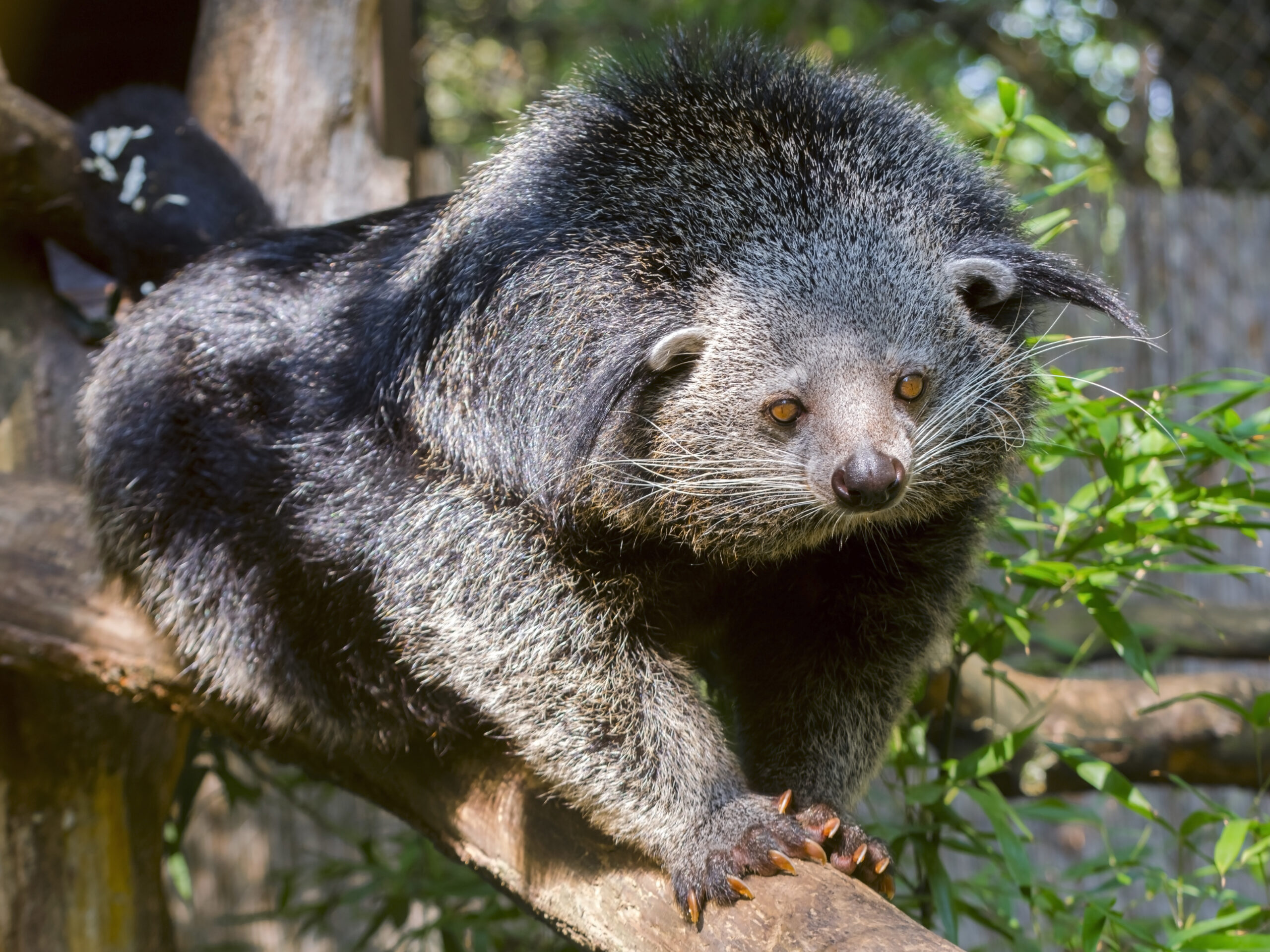
Binturong (Arctictis binturong)
Order: Carnivora
Family: Viverridae
IUCN Red List: VU (Vulnerable)

III.
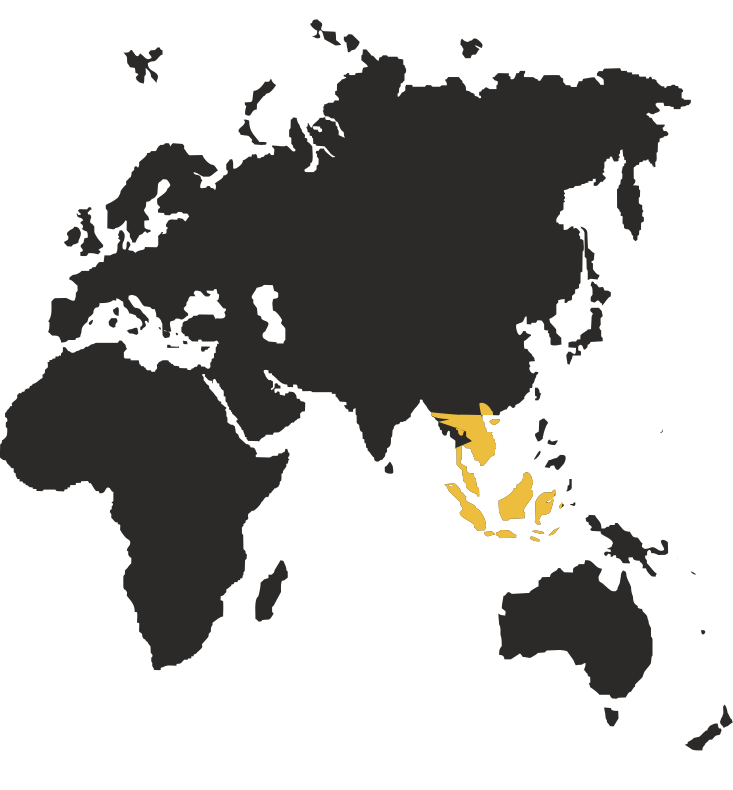
Habitat
The tropical rainforests of Asia
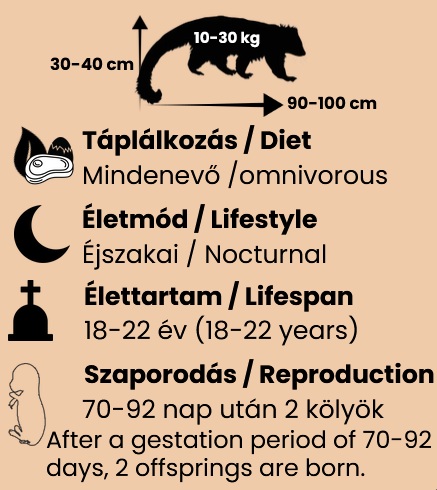
Information
The binturong was once called a “bearcat” because of its appearance, and at times it was even thought to be related to raccoons based on its teeth. Today it is classified in the civet family. The name “bearcat” is still sometimes used, but it can be misleading, as that name is also applied to the red panda. The binturong is the only known Old World mammal with a fully prehensile tail, which it can use to grip branches.
Scent plays a very important role in communication between individuals. Binturongs leave scent marks using both gland secretions and urine. Observations show that they sometimes drag their tails on the ground and dip them into their urine, leaving scent trails wherever they go. Interestingly, their smell is often compared to popcorn, caused by a specific chemical compound.
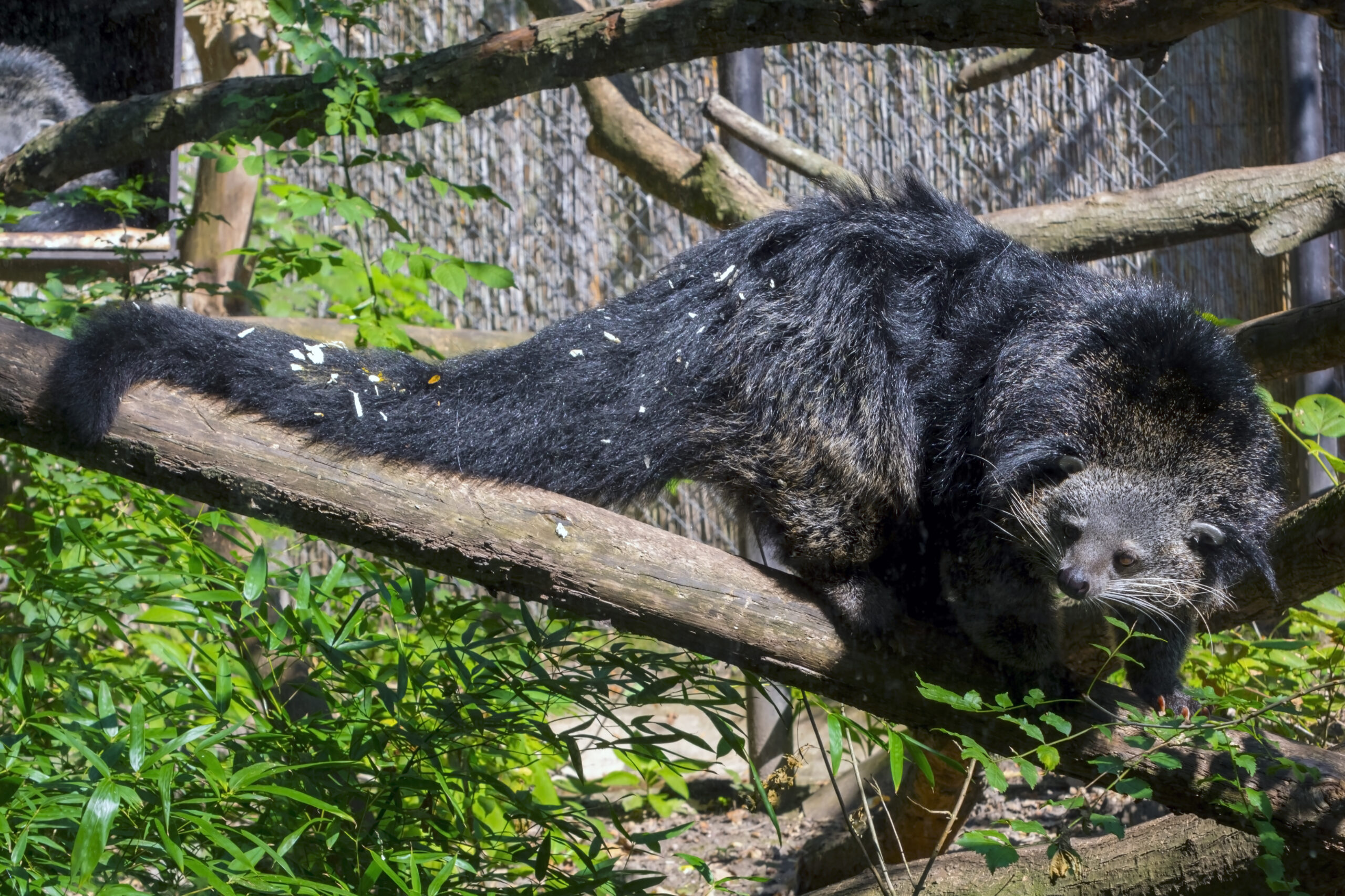
Binturongs live either alone or in small groups consisting of adults and their not yet mature young. Although they are omnivorous, fruit forms a major part of their diet, especially figs, making them important seed dispersers in tropical forests. They also eat insects, small vertebrates and bird eggs. They are mostly nocturnal and spend the daytime resting in the canopy of trees.
Our animal
Rimba