
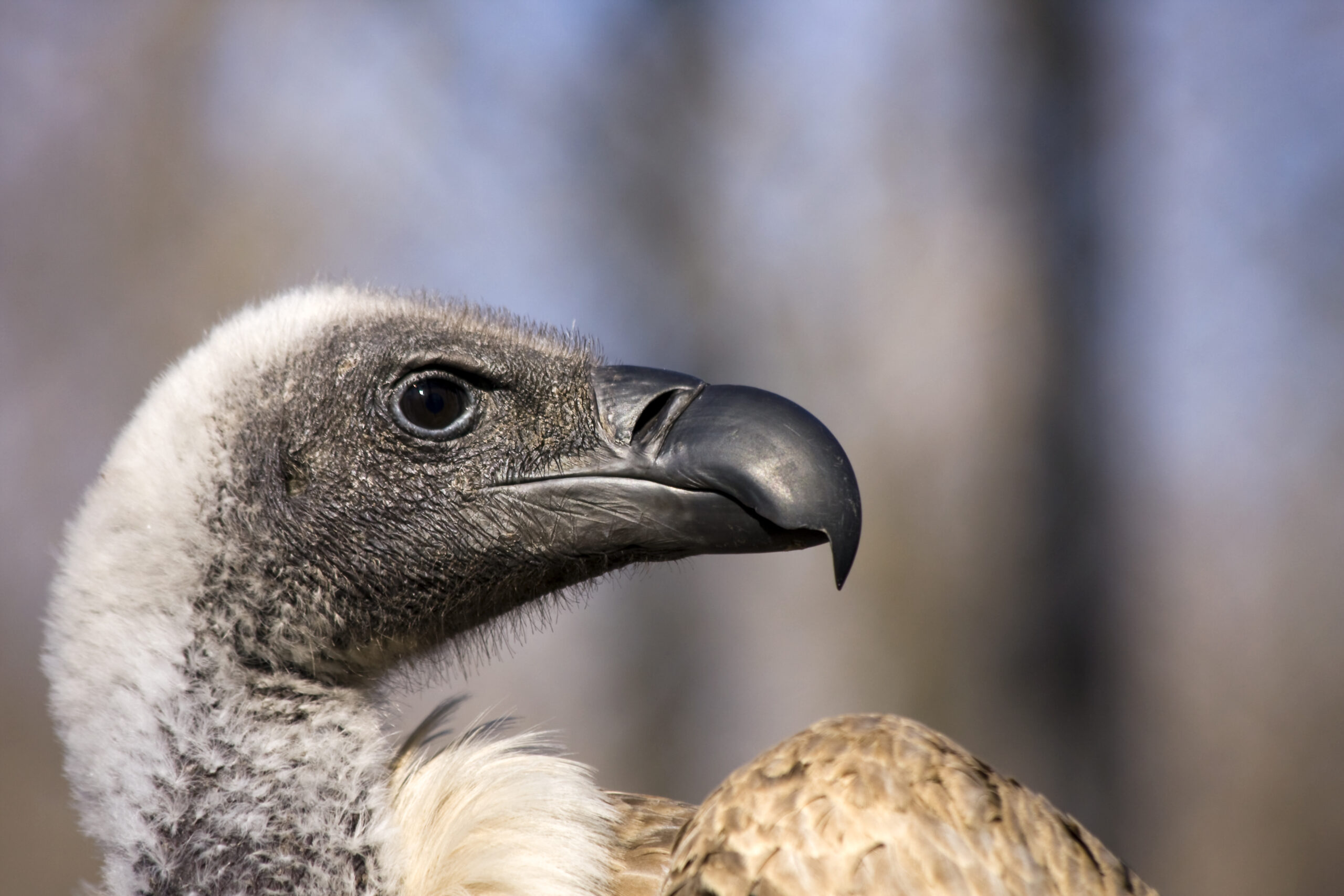
White-backed vulture (Gyps africanus)
Order: Accipitriformes
Family: Accipitridae
IUCN Red List: CR (Critically endangered)


II.
Habitat
Africa

Information
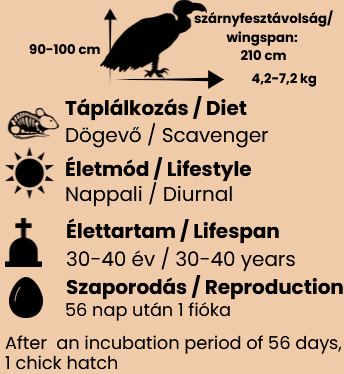
Diet: scavenger. The White-backed vulture is named after the whitish plumage on its back, which is particularly striking during flight. It inhabits the African savannas, primarily favoring open, wooded grasslands.
It requires tall trees for nesting and lives in colonies. Each clutch consists of a single egg. The development of the chick is slow, taking approximately 4 to 5 months before it is ready to fledge.
These vultures have excellent eyesight. They circle at great altitudes searching for food while simultaneously keeping an eye on one another. If one vulture descends, the others follow; consequently, as many as 200 individuals can gather around a carcass within a short time. During these feedings, other vulture species may also appear, competing with one another for the best scraps.
During flight, they utilize thermals—upward-moving air currents created when the sun’s rays heat the Earth’s surface and the layer of air closest to the ground.
Poisoning, habitat loss, illegal trade, and collisions with power lines all contribute to the decline of their population.