
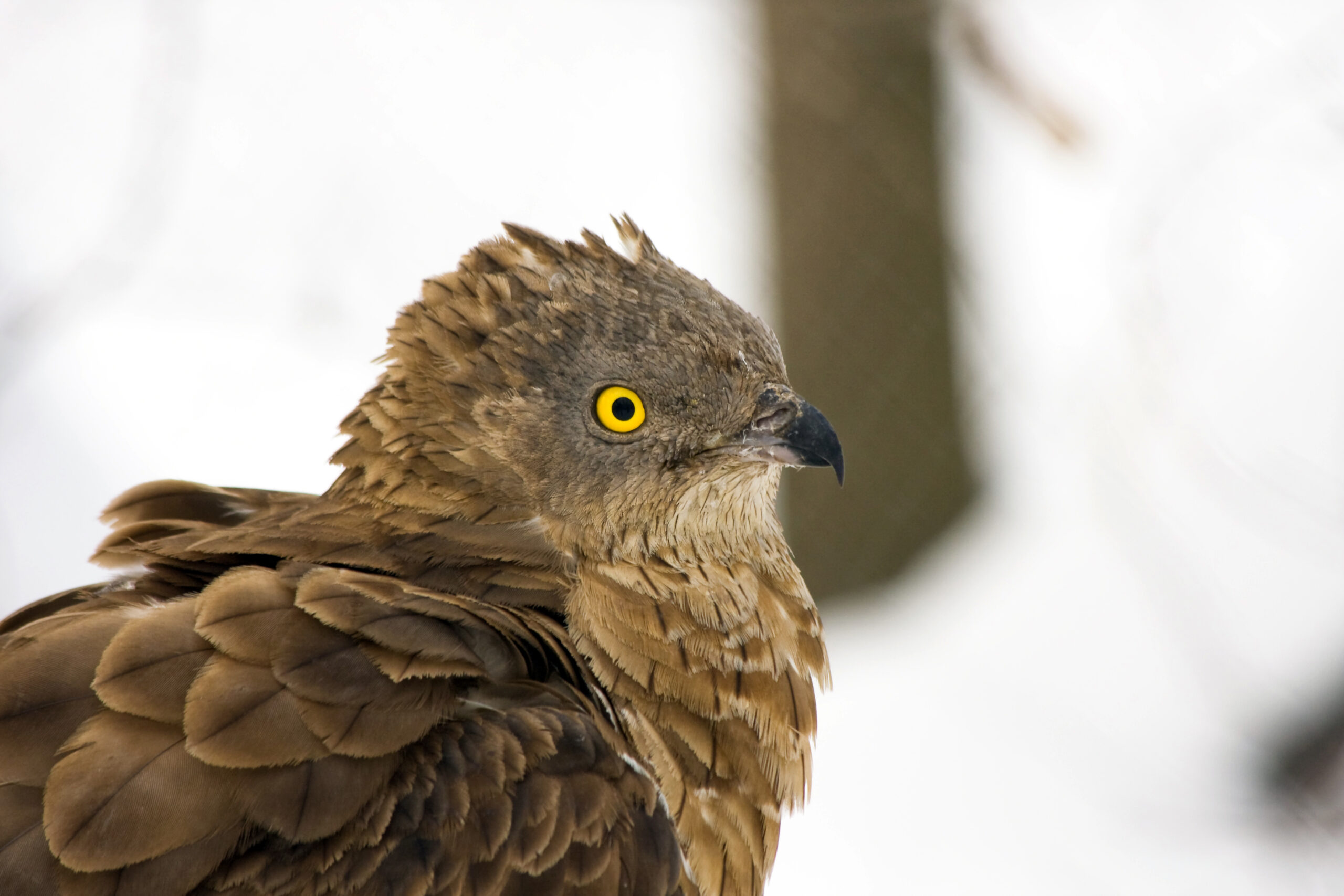
European Honey-buzzard (Pernis apivorus)
Order: Accipitriformes
Family: Accipitridae
IUCN Red List: LC (Least Concern)

II.
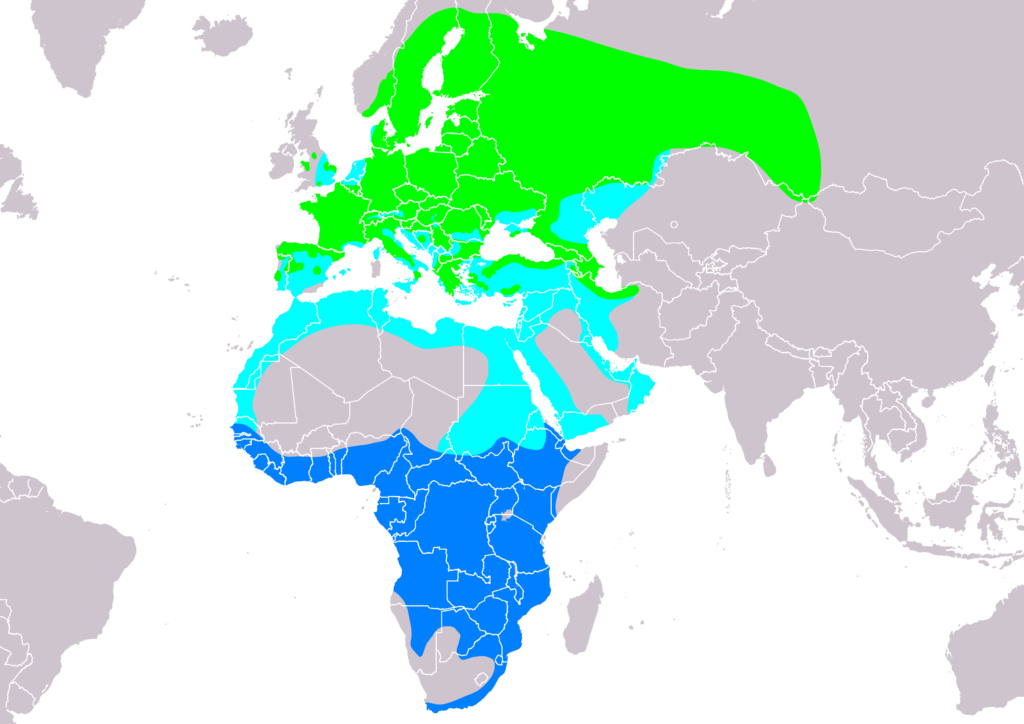
Habitat
Africa, Europe, Asia

Information
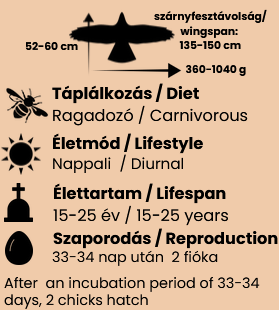
Diet: the Honey-buzzard is a dietary specialist. It primarily feeds on the larvae and pupae of wild bees and wasps, though it also consumes adult individuals. It is protected from stings by specialized scale-like feathers on its head. If necessary, it also eats grasshoppers and lizards.
It builds its nest in oak trees, lining it with leafy branches. Both parents take turns incubating the eggs. After hatching, the female guards the chicks while the male searches for food. It is a regular breeder in Hungary, found throughout the medium-high mountains, but it also settles in larger forests in hilly regions and plains.
In winter, it migrates as far as Africa, returning from its wintering grounds in late April or early May. Upon arrival, it immediately begins renovating the previous year’s nest or building a new one. The nest is difficult to find due to its small size and because it is built after the trees have fully leafed out; however, pieces of honeycomb found nearby are a tell-tale sign of the Honey-buzzard’s presence.
The most significant threat to the species is the shooting of individuals during their migration. In Hungary, the main problem is the disturbance of nests, while in their wintering areas, poisoning causes significant losses.