
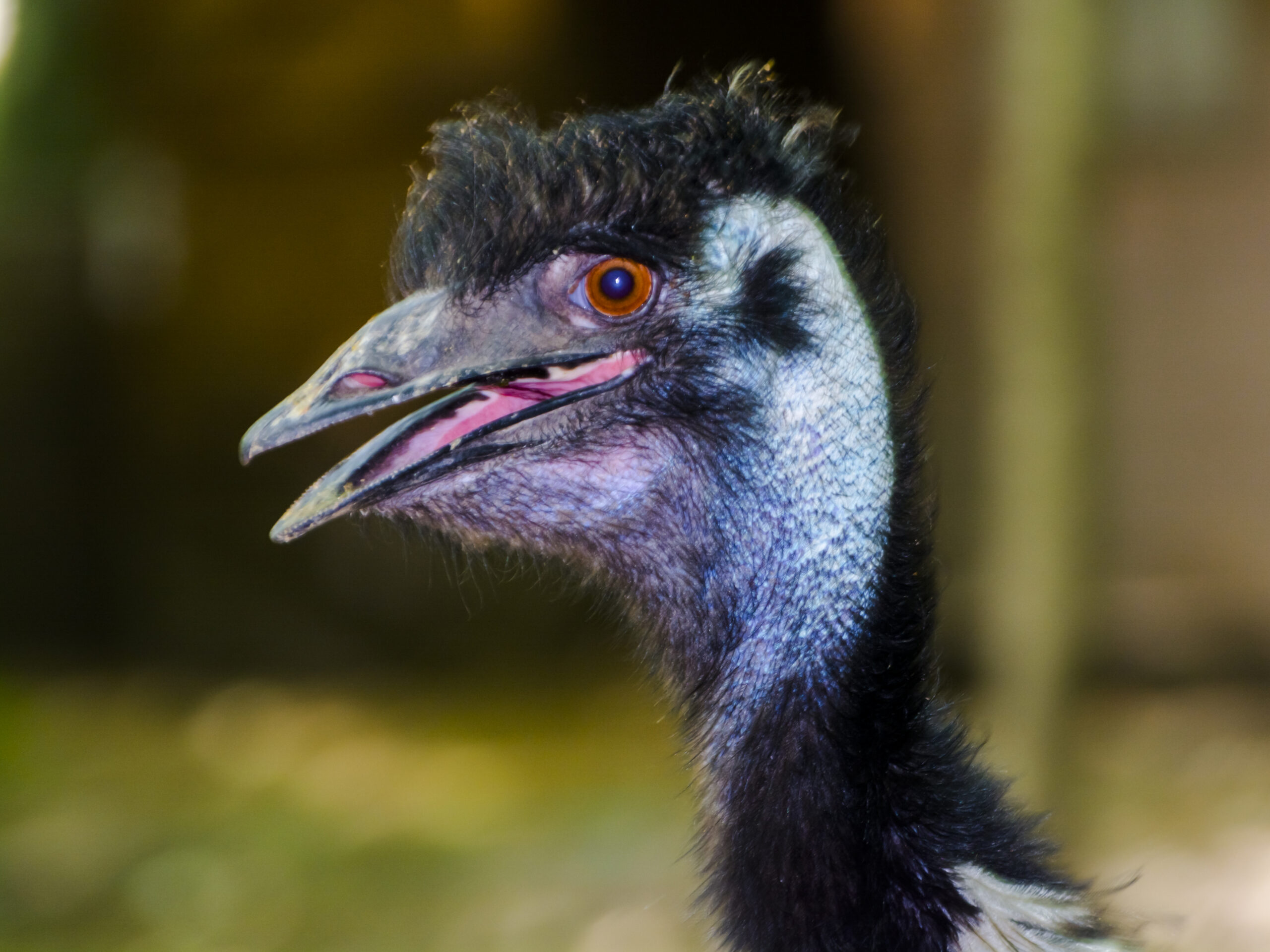
Common emu (Dromaius novaehollandiae)
Order: Struthioniformes
Family: Dromadiidae
IUCN Red List: LC (Least Concern)
Habitat
Australia

Information
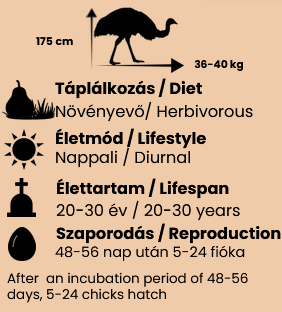
Diet: herbivorous. While it is not uncommon among birds for the male to participate in incubating eggs or raising chicks, this role division is almost entirely reversed in the case of emus. Although the female lays the eggs, incubation is the sole responsibility of the male. The female often remains nearby to actively defend the territory, but it also happens that she moves on to mate with other males. Consequently, it is not rare for a single nest to contain eggs sired by several different males. During the incubation period, the male hardly eats and may lose up to one-third of his body weight. The newly hatched chicks are striped, and the male carefully supervises and guides them until they are about five months old.
color of an emu egg is green. Their feathers serve only for appearance and thermal insulation; uniquely, two separate shafts (vanes) emerge from a single quill.