
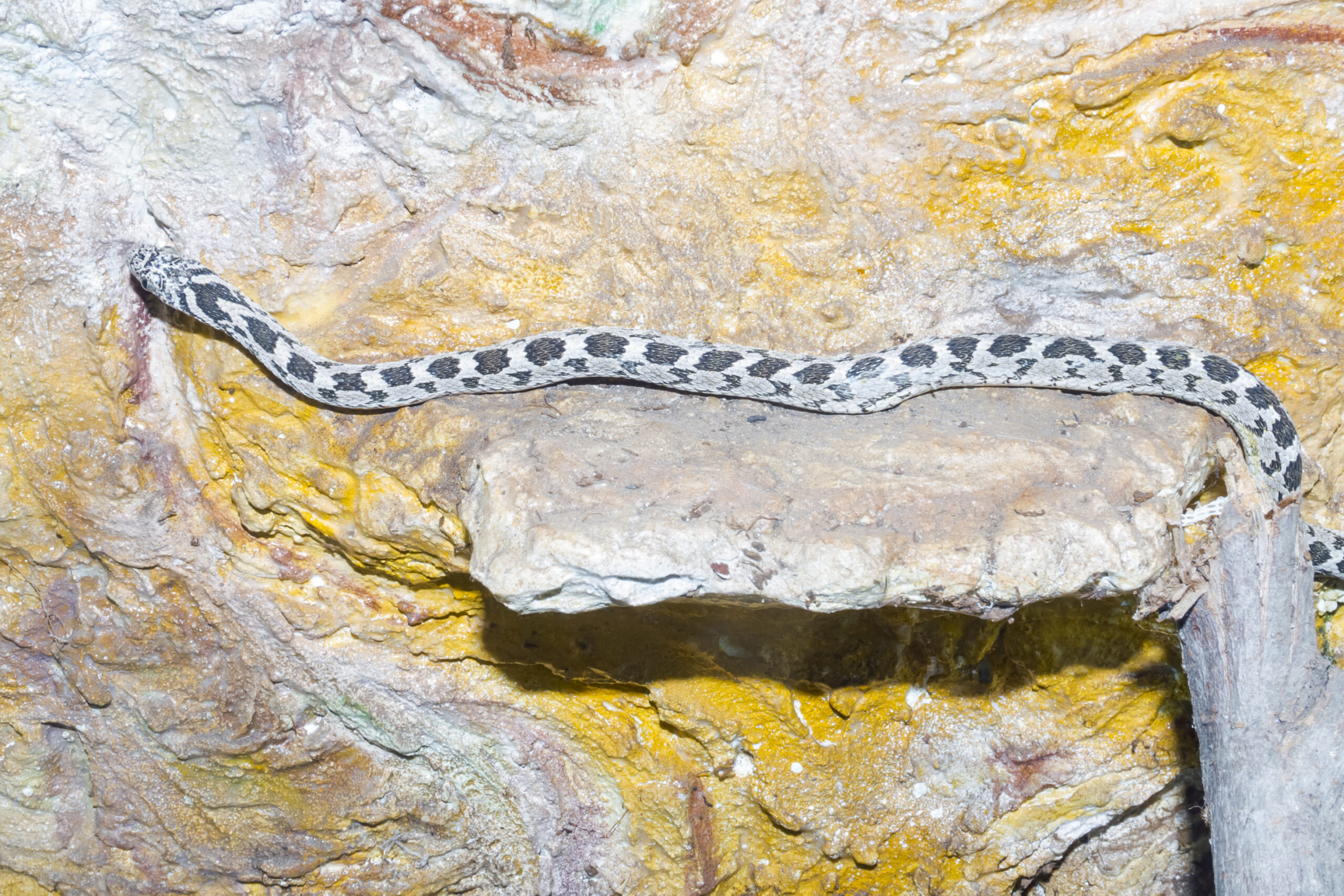
Rhombic egg eater (Dasypeltis scabra)
Order: Squamata
Family: Colubridae
IUCN Red List: LC (Least Concern)
Habitat
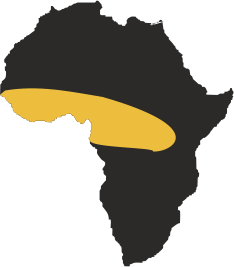
This species inhabits savannas, scrublands, and open woodlands south of the Sahara.
Informations
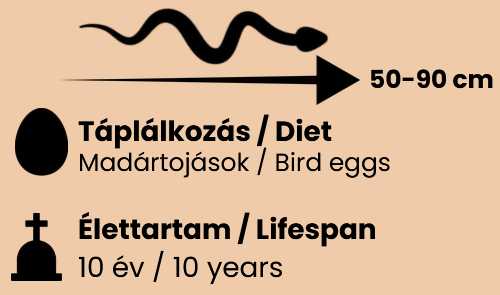
Diet: the rhombic egg eater is a species that feeds exclusively on bird eggs. It serves as a remarkable example of evolution, as nearly all of its physical attributes have adapted specifically for egg consumption. Despite its small size, it is capable of consuming relatively large eggs because its jawbones are connected by flexible ligaments, allowing it to open its mouth extremely wide. While it possesses tiny teeth, they do not puncture the eggshell during ingestion.
The snake swallows the egg whole. Once inside, spike-like vertebral projections located in its esophagus slit the shell. Through powerful body contractions, it then crushes the egg; the liquid contents flow into the stomach, while the crushed shell is later regurgitated as a pellet.
This species inhabits savannas, scrublands, and open woodlands south of the Sahara. It is a non-venomous snake, but for self-defense, it often mimics the behavior of venomous vipers: it flattens its body and hisses loudly. Its physical appearance also resembles that of vipers, a trait that further aids in its protection.