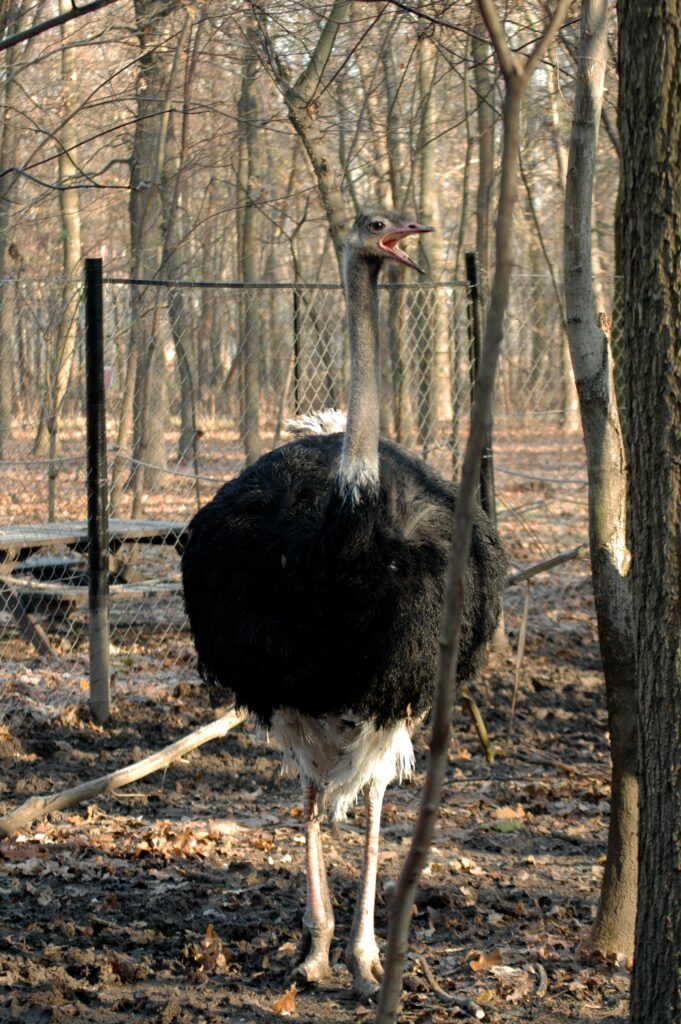
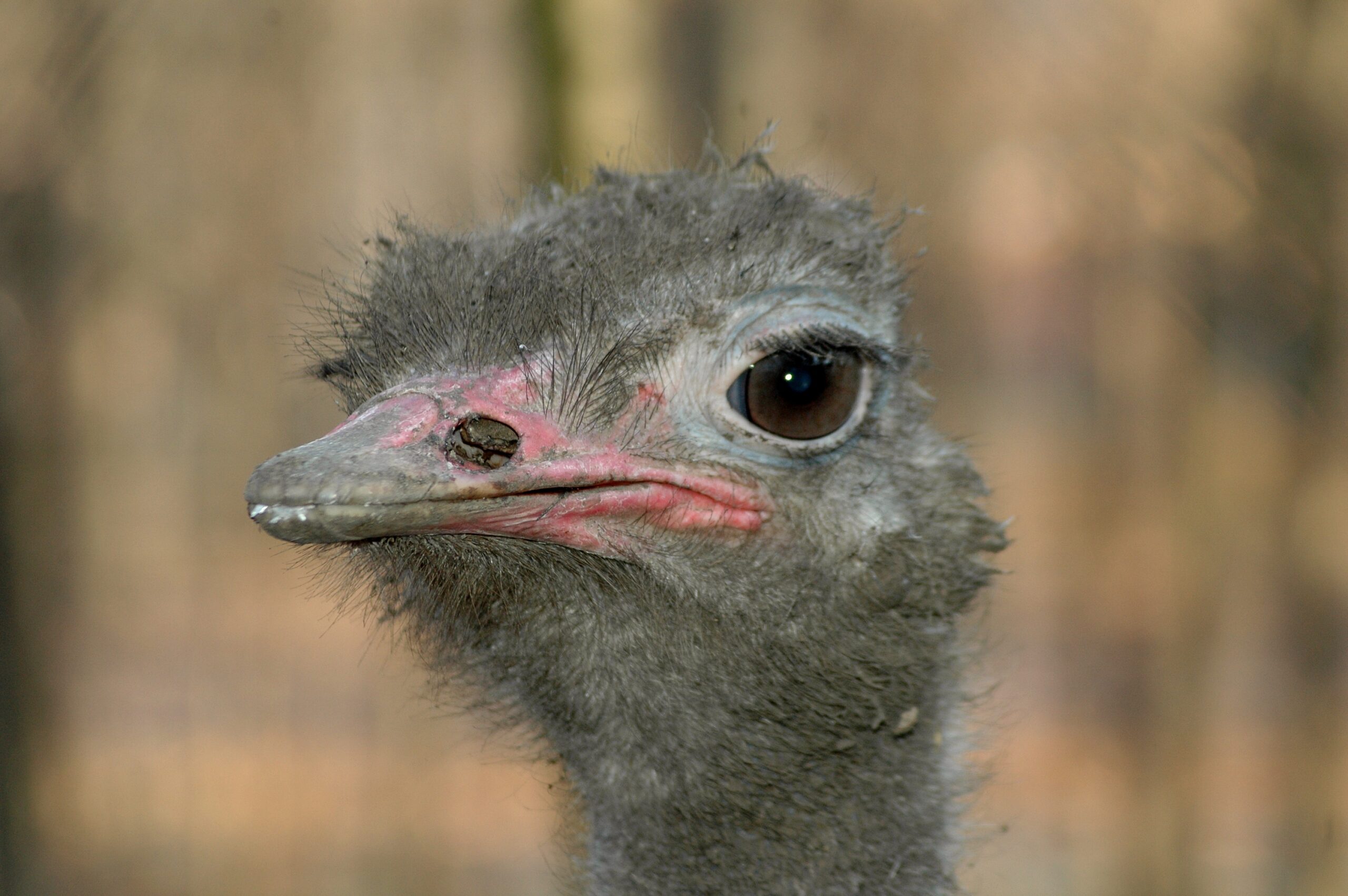
Common ostrich (Struthio camelus)
Order: Struthioniformes
Family: Struthionidae
IUCN Red List: LC (Least Concern)

II.
Habitat
Africa

Information
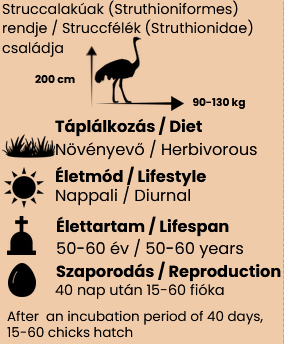
Diet: They mainly feed on seeds, shrubs, grass, fruit, and flowers.
The ostrich is currently the largest living bird on Earth. While it is flightless, it is a fast runner, aided by its long legs and the fact that it has only two toes, the inner one being the stronger. It can reach speeds of up to 70 km/h while running.
The chick uses its strong neck muscles to break through the eggshell. Ostriches defend their nests aggressively, keeping intruders away with powerful and dangerous kicks. During the day, the female incubates the eggs; her brown color allows her to blend easily into the environment. At night, the male takes over; his black feathers make him nearly invisible in the dark. Several females may lay eggs in a single nest, which can be up to three meters in diameter.
The ostrich does not bury its head in the sand: while incubating or resting, it lowers its head to the ground, camouflaging itself from a distance to look like a dry bush.