
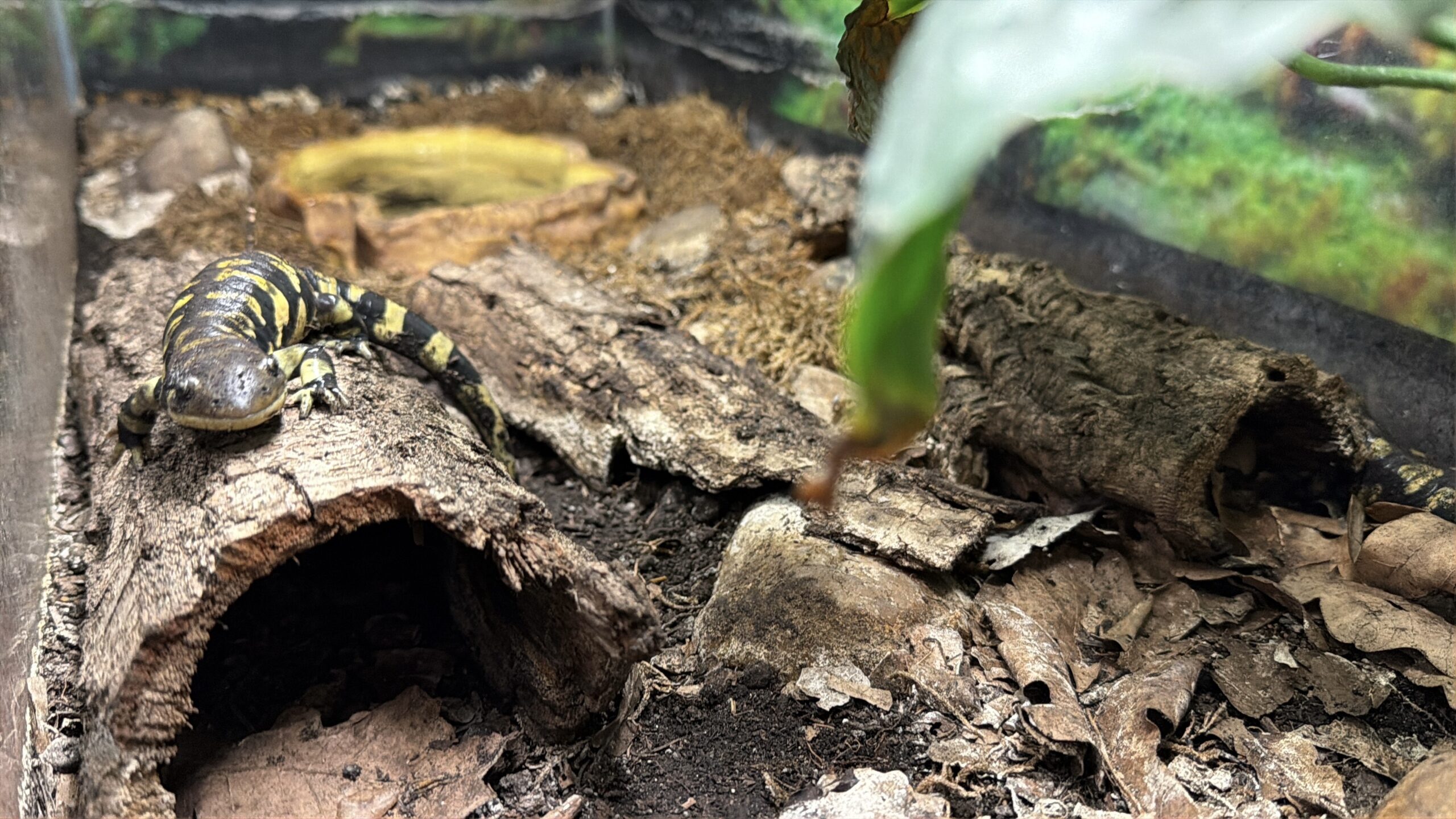
Tiger salamander (Ambystoma tigrinum)
Order: Caudata
Family: Ambystomatidae
IUCN Red List: LC (Least Concern)
Habitat
North America

Informations
It is one of the largest salamanders in North America. Fully metamorphosed adults lead a terrestrial existance and, depending upon where in the country they are found, some may inhabit forests, grasslands, or marshy areas.
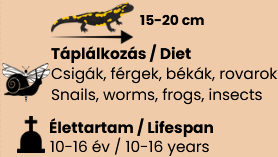
Diet: the tiger salamander’s food source consists of worms, snails, insects, and slugs in the wild; while captive specimens rely on smaller salamanders, frogs, newborn mice, and baby snakes.
Its body features a dark base color with yellow, orange, or olive-green spots and stripes that create a unique pattern for each individual. Its body length is typically 15–20 cm, though in rare cases, it can reach 30–35 cm.
Its development is remarkable: in some populations, neoteny occurs, where the aquatic larvae reach sexual maturity while retaining their external gills. Its skin produces a toxic secretion that deters predators.
They breed in the spring. In their natural environment, tiger salamanders typically live 10–15 years, while in captivity, they can reach ages of up to 20 years.