
Fosa (Cryptoprocta ferox)
Habitat: Fossas are found throughout forested areas of Madagascar.
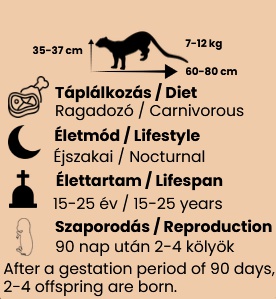
Diet: fossas are the largest mammalian carnivores on the island of Madagascar. Their diet consists of small mammals, birds, reptiles, amphibians, and insects. Fossas also prey on lemurs.
Madagascar, the world’s fourth-largest island, followed a unique evolutionary path throughout geological history. As a result, during the late Pleistocene and early Holocene, it was inhabited by extraordinary species such as the gorilla-sized giant fossa, which preyed upon giant lemurs. Research suggests that this giant relative may have existed until a few thousand years ago, likely going extinct following the arrival of humans (approximately 2,000–2,500 years ago). Nevertheless, the island’s unique biodiversity persists to this day.
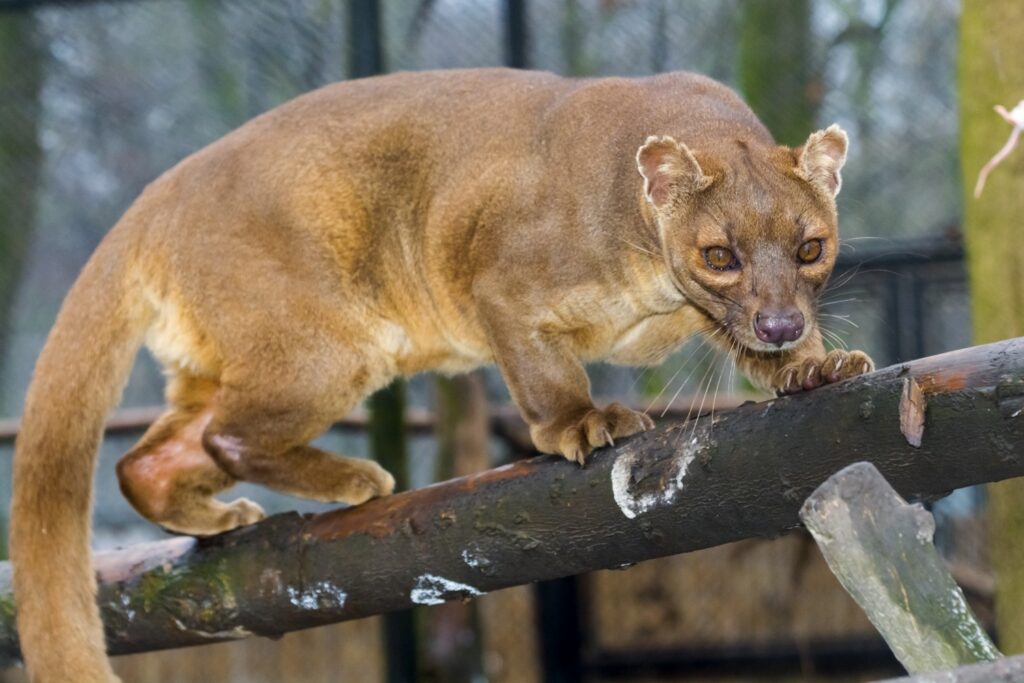
Madagascar is home to countless endemic species found nowhere else on Earth. The fossa is the island’s largest carnivore; while it resembles a cat or a large weasel, it is actually a member of the Malagasy carnivore family (Eupleridae). It is an exceptionally skilled climber: its ankle joints can rotate up to 180°, allowing it to climb down trees head-first—a vital adaptation when chasing its favorite prey, lemurs, through the canopy. Its body is flexible, and its movements are silent and feline-like, enabling it to glide through the forest almost undetected. Its primary diet consists of prosimians and birds.
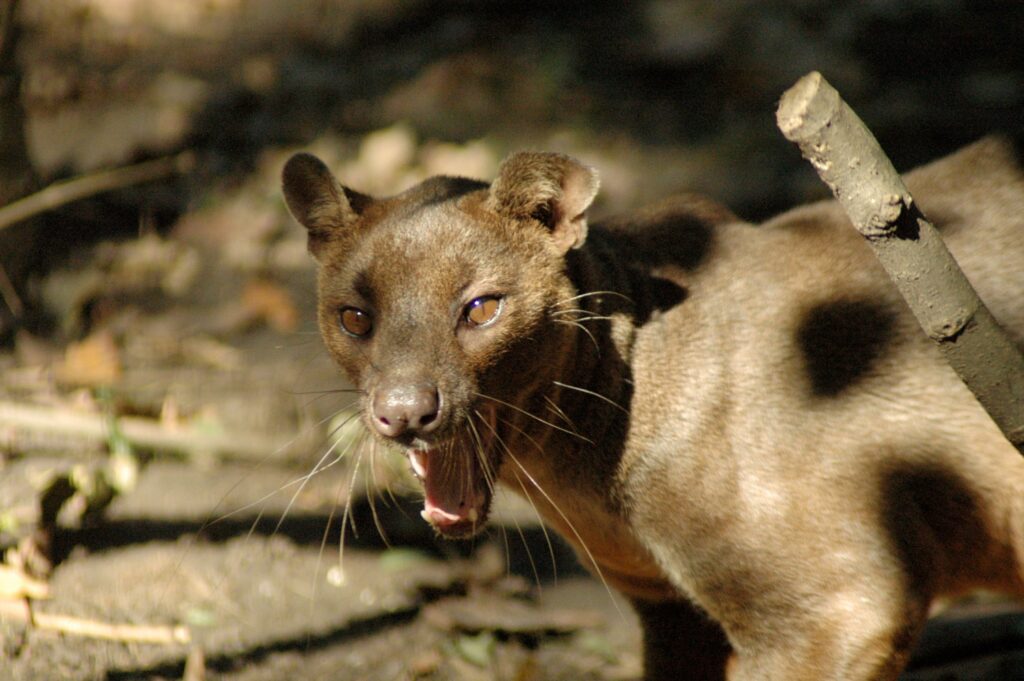
The fossa marks its territory with scent glands, producing a smell that is recognizable from a distance. Its mating habits are also unique: every year, the female returns to the same “mating tree,” where males wait for days for her arrival. Despite being Madagascar’s apex predator, its population is endangered due to habitat loss. Although local folklore long regarded the fossa as a malevolent or ominous creature, it is, in fact, a keystone species for the ecological balance of the rainforests.
Carnivora / Eupleridae
IUCN Redlist: VU (Vulnerable)



II.