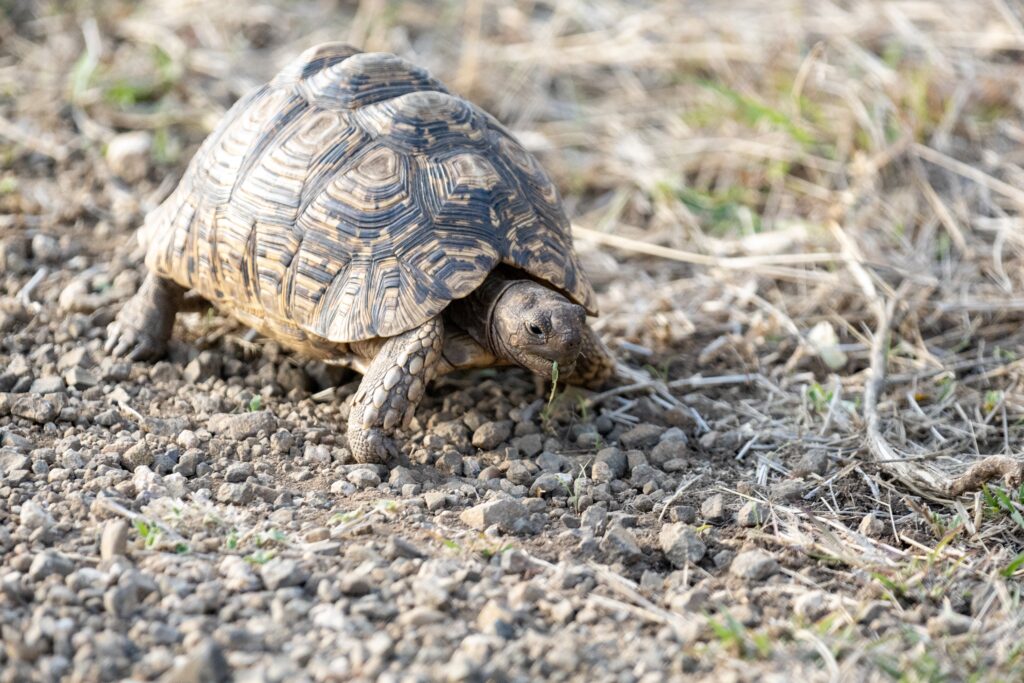
Leopard tortoise (Stigmochelys pardalis)
Order: Testudines
Family: Testudinidae
IUCN Red List: LC (Least Concern)

II.
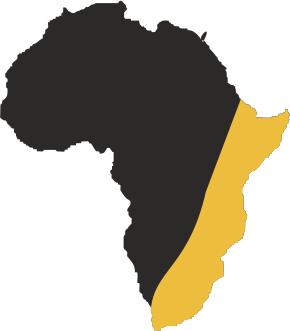
Habitat
Savannas of Africa
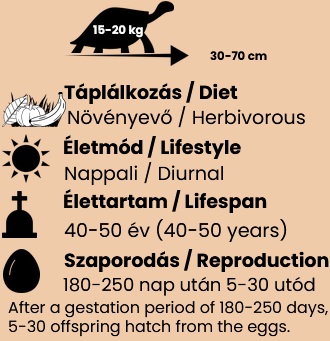
Informations
The leopard tortoise is one of the most striking land tortoise species in Africa. Its name comes from the distinctive pattern on its shell, which resembles the spots of a leopard. It is mainly found in savanna and semi-arid regions, where it leads an active life.
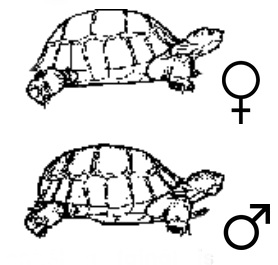
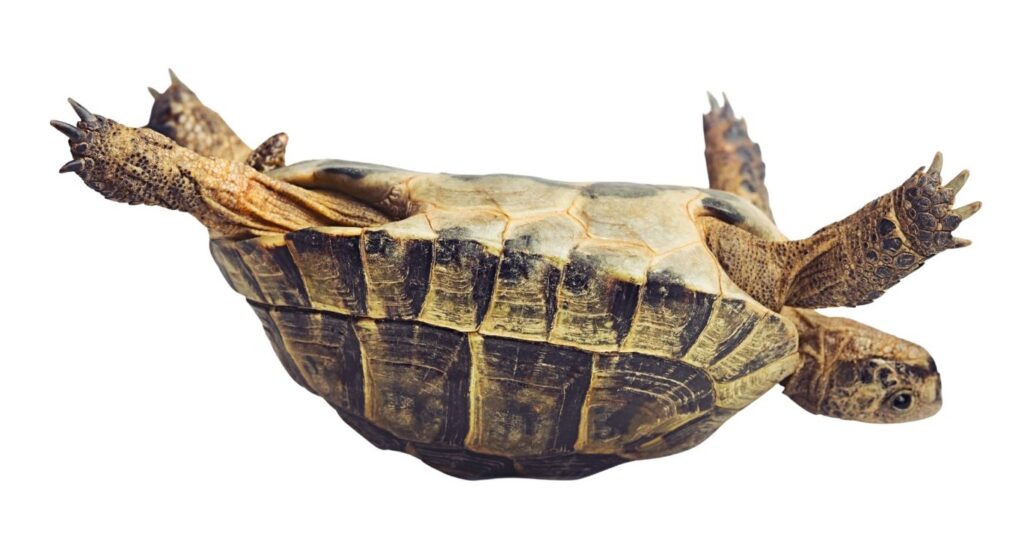
In this species, the sexes can usually be distinguished quite easily. Males typically have a slightly concave plastron (the underside of the shell), while females have a flat or slightly convex one. This difference helps during mating from an evolutionary perspective. When both sexes can be observed together, males can also be recognized by their thicker tails and stronger claws.
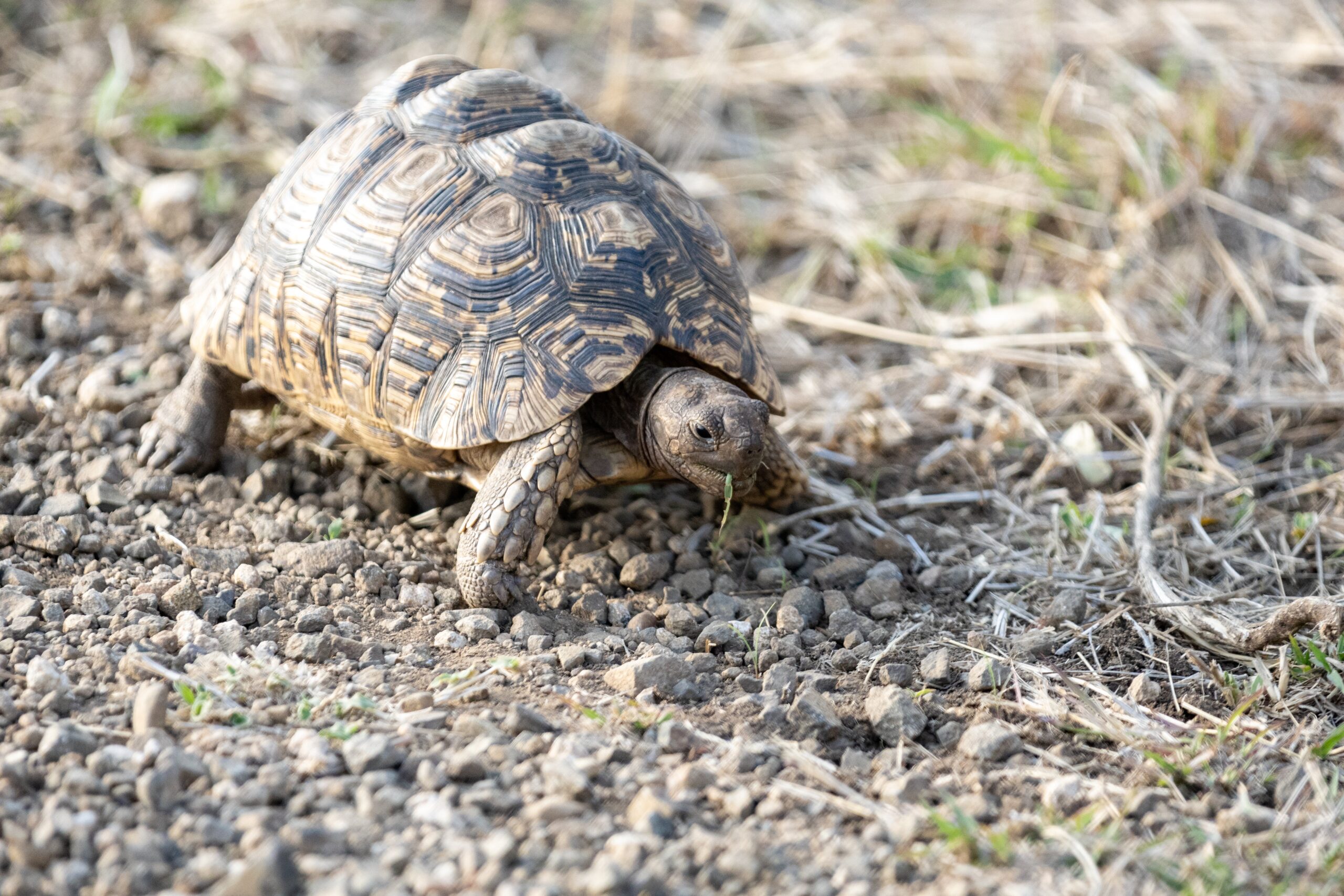
It is not uncommon for tortoises to end up on their side or even on their back. In such situations, the shape of the shell plays an important role in how they manage to turn upright again. Individuals with flatter shells often use their strong neck muscles to push themselves back onto their feet, while more rounded species — like the leopard tortoise — can rock themselves back using gravity, much like a self-righting toy.