
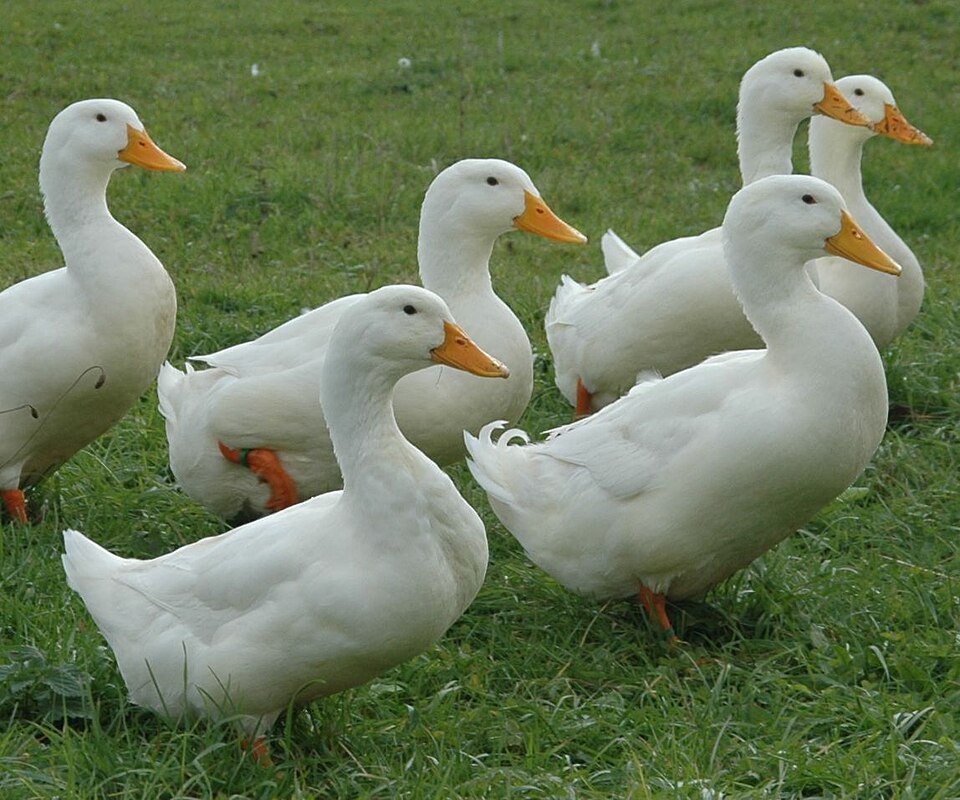
Domestic duck (Anas platyrhynchos domestica)
Order: Anseriformes
Family: Anatidae
IUCN Red List: –
Domestication
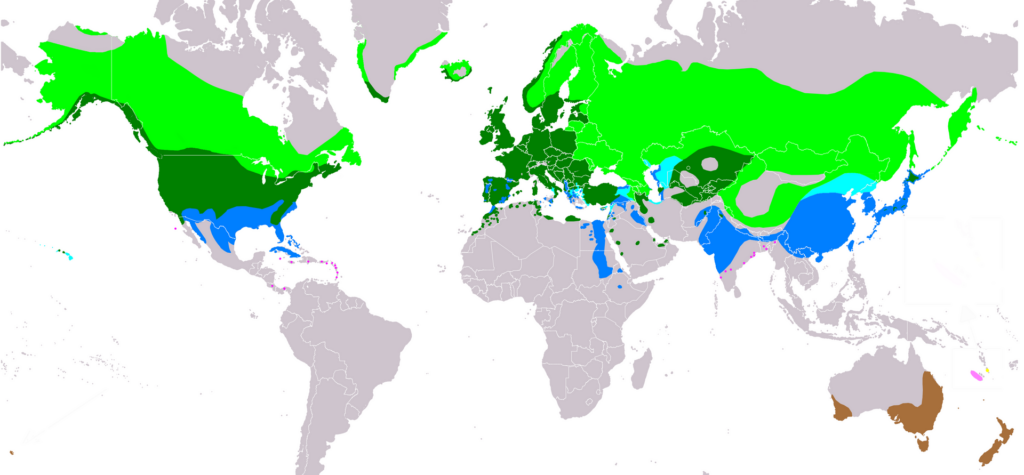
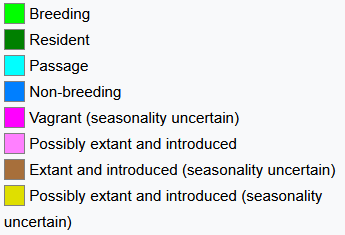
The anchestor of the domestic duck is the mallard.
Information
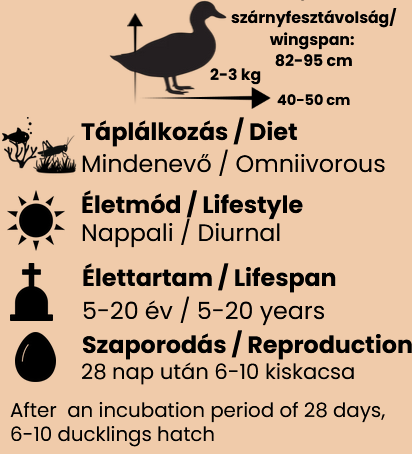
They have a lamellate (sieve-like) bill, which they use to feed on aquatic plants, small snails, and insects.
The domestic duck is a highly versatile farm animal; its meat, feathers, fat, liver, and cracklings are all utilized. Its eggs must only be consumed when thoroughly cooked, as they can be infected with paratyphoid bacteria. While bred worldwide, ducks are less popular in the Western world than chickens, as chickens are easier to keep in confined spaces and provide more lean white meat. In China, however, the duck remains immensely popular.
Domestic ducks are very resilient and tolerate extreme conditions well. Their webbed feet and boat-shaped bodies make them excellent swimmers. Their feathers do not get soaked because they spread oil from the preen gland (uropygial gland), located at the rear of their body, onto their plumage. A thick layer of fat under the skin protects them from the cold. A male domestic duck is called a drake.
Among the numerous varieties of domestic ducks, there is a specific Hungarian breed known as the “Parlagi” duck. It is considered an indigenous Hungarian breed that developed within the Carpathian Basin and has been a protected domestic animal since 2004. Its wild ancestor is the Mallard.