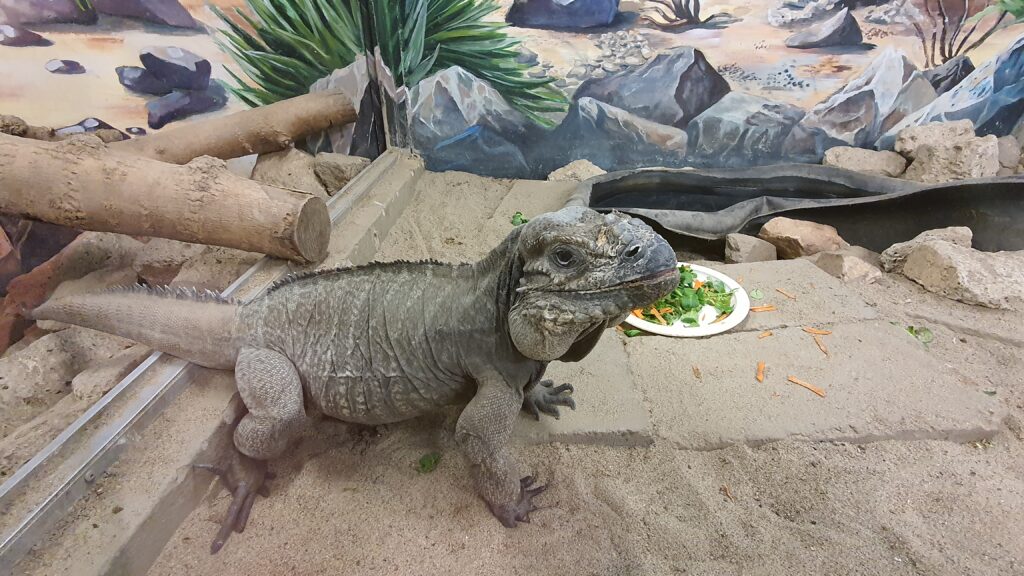
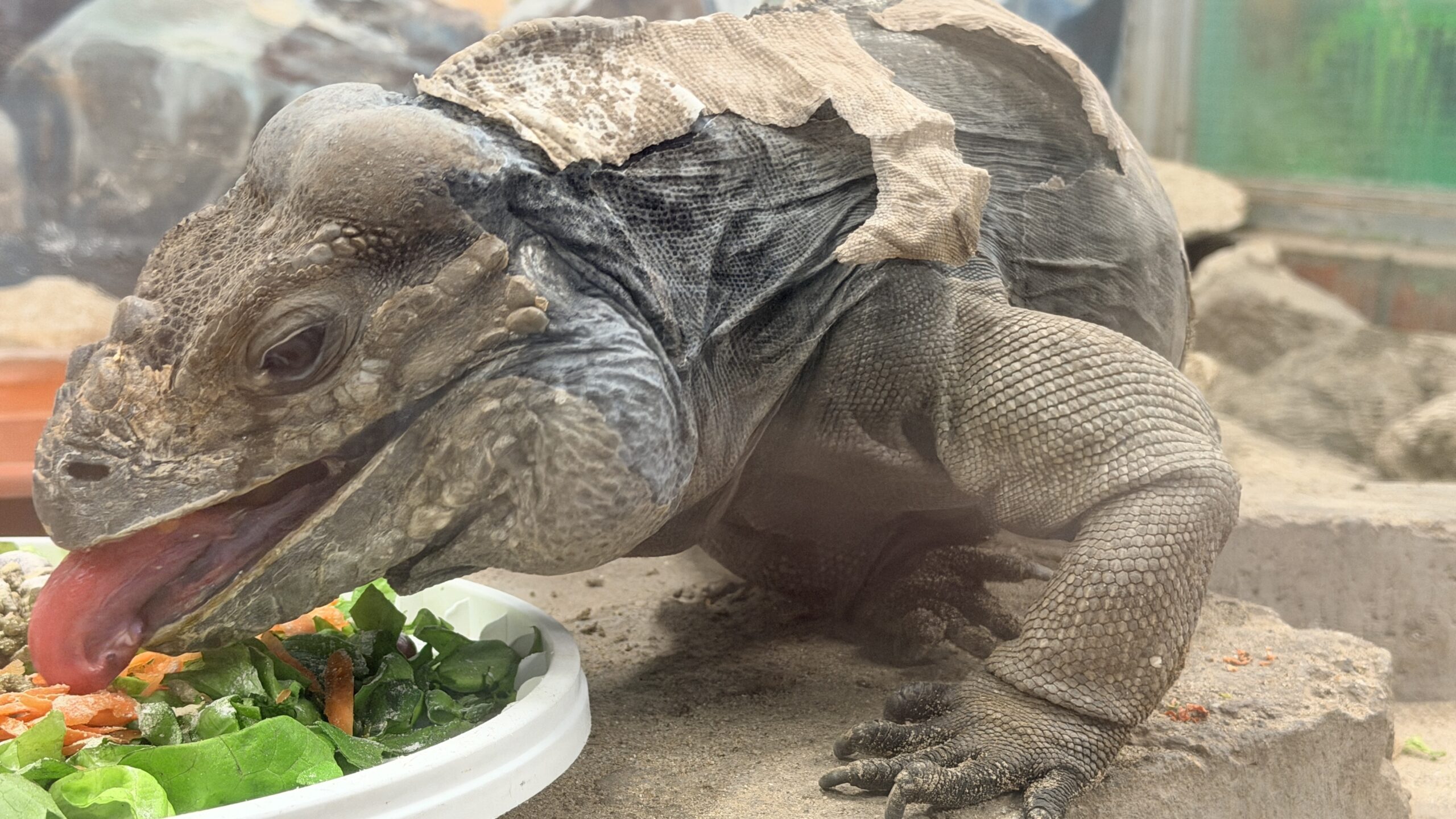
Rhinoceros Iguana (Cyclura cornuta)
Order: Squamata
Family: Iguanidae
IUCN Red List: EN (Endangered)

I.
ESB
Habitat
Central America: dry forests, scrublands, deserts (Hispaniola)

Informations
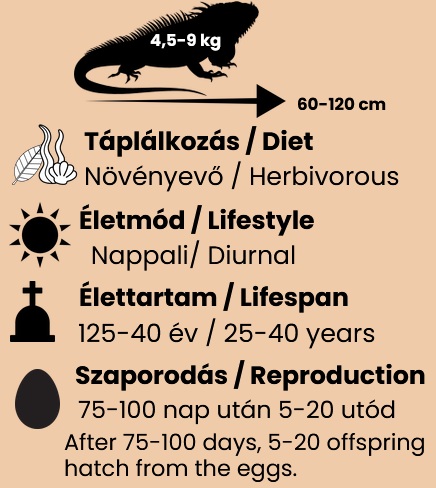
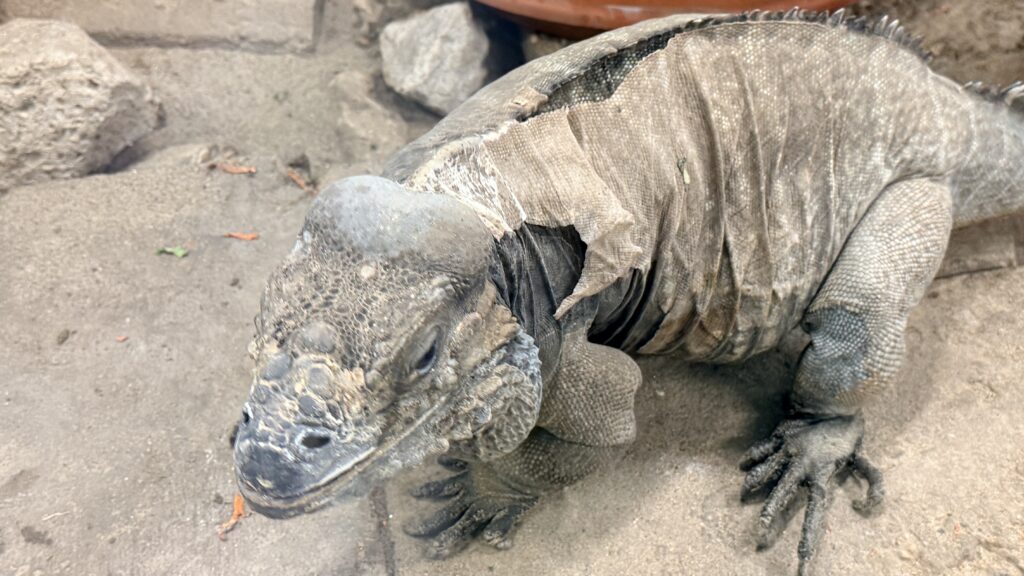
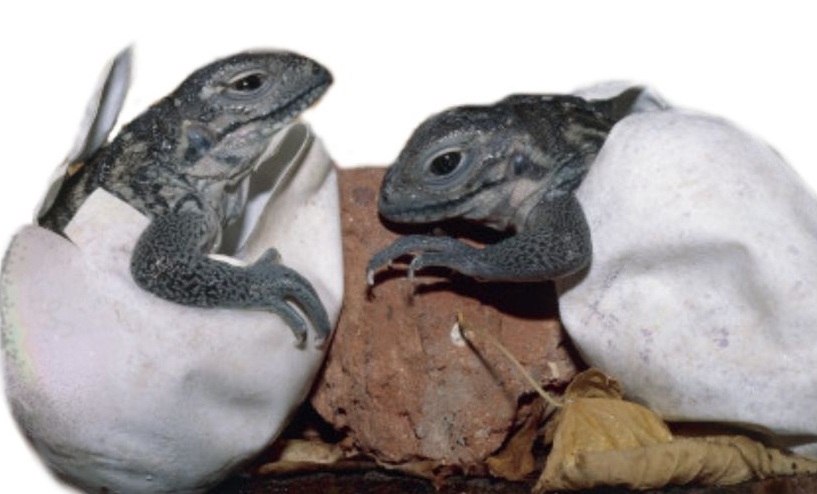
The rhinoceros iguana is one of the most distinctive members of the iguana family. It gets its name from the bony horn-like projections on its snout, which are especially well developed in males. Including its tail, it can reach a length of up to 1.4 meters. The species is native to the island of Hispaniola, where it lives in dry forests, rocky areas and coastal habitats. It is mostly active during the day and feeds mainly on plant material. Rhinoceros iguanas are also strongly territorial.
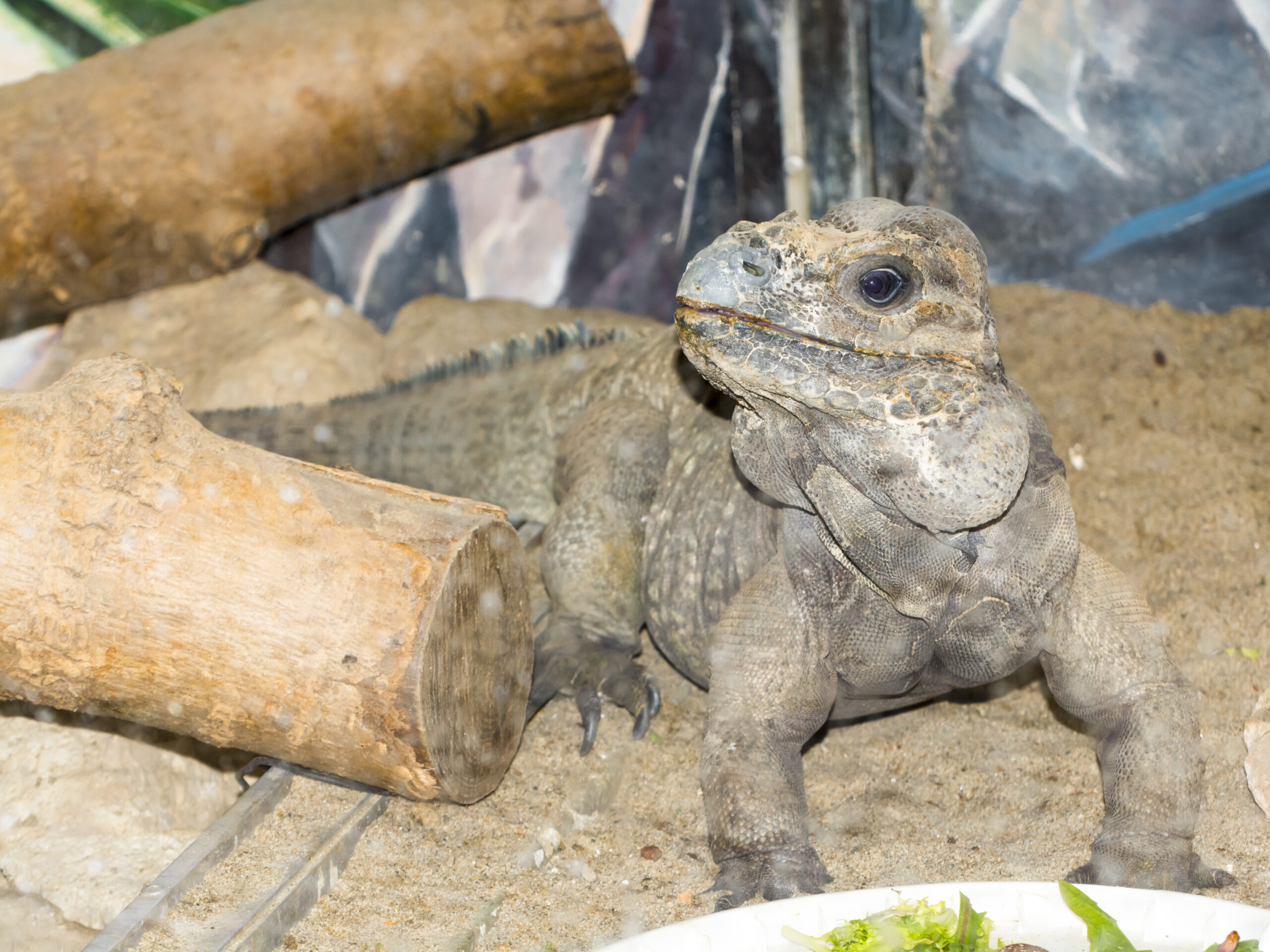
Iguanas have extremely well-developed vision. Their eyes contain a large number of color-sensitive receptors, allowing them to perceive ultraviolet light. Their ability to detect changes in light and shadow and to sense movement is aided by the so-called parietal or “third eye” located on the top of the head. This feature occurs in several reptile groups, although in adults it is often covered by scales and its light-sensing role becomes less important.
The parietal eye is connected to the pineal gland, an internal organ responsible for hormone production. This gland is also present in humans, located deep inside the skull, where it produces melatonin and plays an important role in regulating the daily sleep–wake cycle.
Our animals
Freddie