
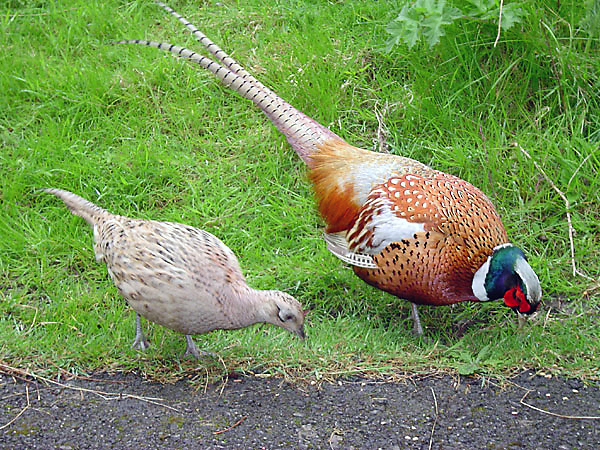
Common Pheasant (Phasianus colchicus)
Order: Galliformes
Family: Phasianidae
IUCN Red List: LC (Least concern)
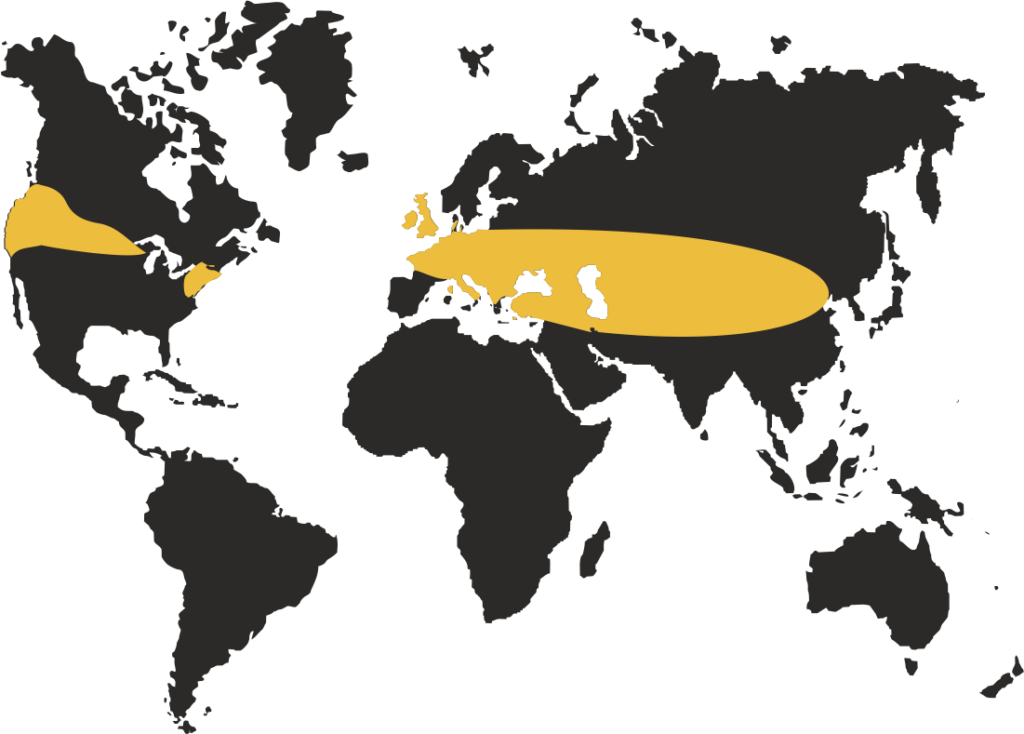
Habitat
Europe, Asia, America
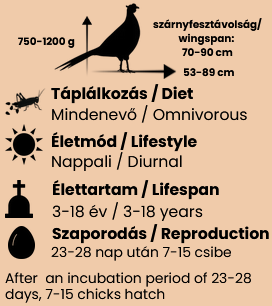
Informations
The common pheasant is native to a vast area of Asia, stretching eastwards from the Caucasus. It was introduced to Europe in ancient times by the Greeks, and subsequently by the Romans, who kept the birds as ornaments for their estates and spread them to occupied territories, including the Carpathian Basin.
In Hungary, the species is found almost everywhere, with the exception of dense forests and permanently flooded wetlands. They particularly favor shelterbelts and forest edges. Approximately 70% of the domestic population is concentrated in the Great Plain.
The male pheasant possesses striking plumage, while the female is drab and cryptic. This allows the female to remain hidden; her eggs match the color of the soil and nesting material, and the chicks are born with camouflaging down. Pheasants are ground-nesters, and the hen alone is responsible for raising the young. The chicks are precocial, meaning they leave the nest shortly after hatching. During their first 3–4 weeks, they consume animal-based food: initially soft-bodied insects, then chitinous beetles from the second week onward. Adults primarily feed on plant seeds.
Numerous pheasant farms operate in Hungary to raise birds for hunting purposes. The survival of the species is ensured by the strict prohibition of shooting females and by the fact that hunting associations release a large number of young birds from breeding facilities into the wild every year.