
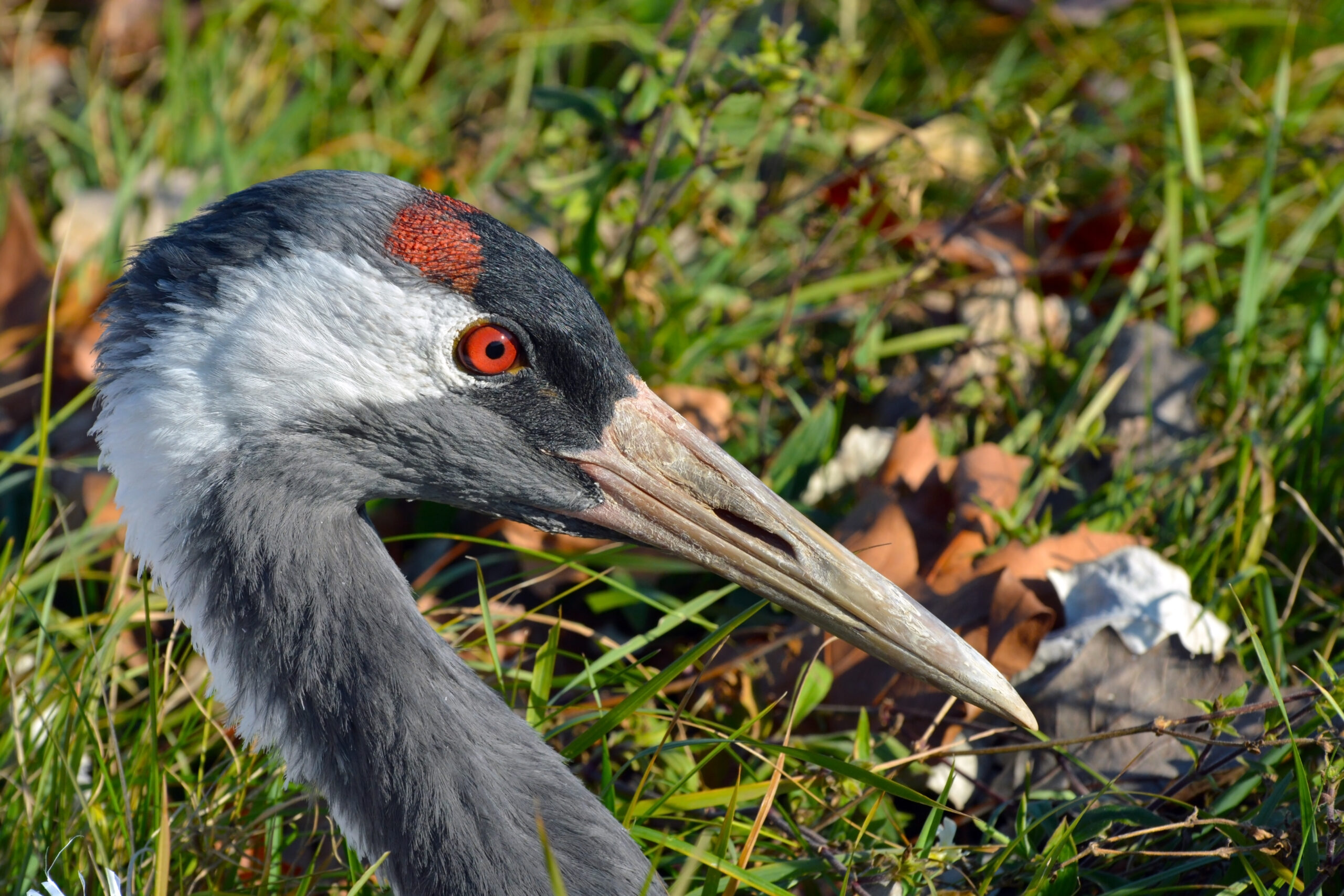
Common crane (Grus grus)
Order: Gruiformes
Family: Gruidae
IUCN Red List: LC (Least Concern)

II.
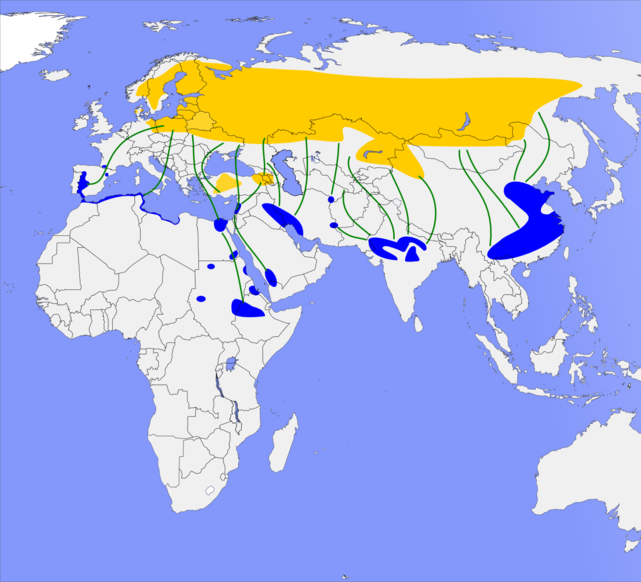
Habitat
Africa, Europe, Asia
Yellow- breeding
Blue- non-breeding
Information
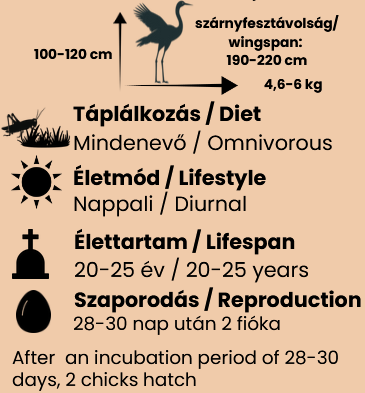
Diet: omnivorous. The Common crane once bred in large numbers in Hungary. Today, they pass through the country in massive flocks during their autumn migration, though overwintering groups are becoming increasingly common. The Hortobágy is a high-priority gathering site for the European population, while Lake Fehér near Szeged is a major migratory stopover in the Southern Great Plain.
Cranes resting in Hungary seek out feeding grounds in agricultural fields. When the weather turns cold, they continue their journey to wintering grounds in North Africa and Asia Minor. They breed in peat bogs, marshes, wet meadows, and grassy steppes. The occupation of a breeding site is marked by a spectacular courtship dance.
The crane holds great importance in Hungarian folklore. It is the heraldic animal featured in the emblem of the Hortobágy National Park. Traditionally, a hat adorned with a crane feather served as a significant status symbol among the Hungarian people.