Cheetah (Acinonyx jubatus)
Order: Carnivora
Family: Felidae
IUCN Red List: VU (Vulnerable)


I.
Habitat
Savannas of Africa and Asia, although it is now considered extinct in most of Asia

Information
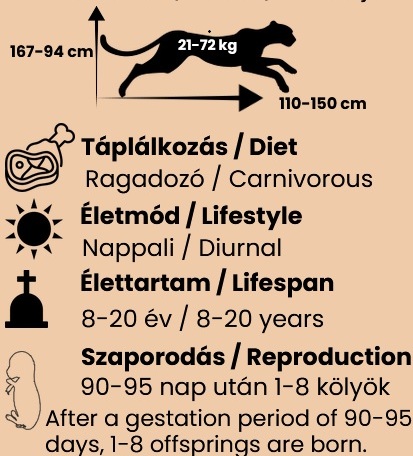
Female cheetahs usually live solitary lives, while males—often brothers—frequently form small groups known as coalitions. The cheetah is capable of extraordinary acceleration: it can reach speeds of up to 93 km/h in just three seconds. Earlier measurements using handheld devices suggested top speeds of 110–120 km/h, but modern technology has provided more accurate data.
At full speed, cheetahs move in leaps of 7–8 meters, though they can sustain such bursts only for short periods before becoming exhausted. Even at around 40 km/h, a cheetah can stop within a single stride. If its prey manages to evade capture for about 20 seconds, it often has a good chance of escaping.
Every part of the cheetah’s body is adapted for speed. Its flexible spine, slender body, and relatively small head reduce air resistance, while its long tail helps maintain balance during sudden turns. The absence of a fully developed collarbone allows greater forward extension of the front legs, and its large heart and lungs enable increased oxygen intake during high-speed chases. Unlike most cats, the cheetah cannot fully retract its claws, which provide extra grip when running. The black “tear marks” on its face help reduce glare from the sun while hunting. In ancient Egypt, cheetahs were already trained for hunting and later became symbols of prestige and status among rulers.
Our animals
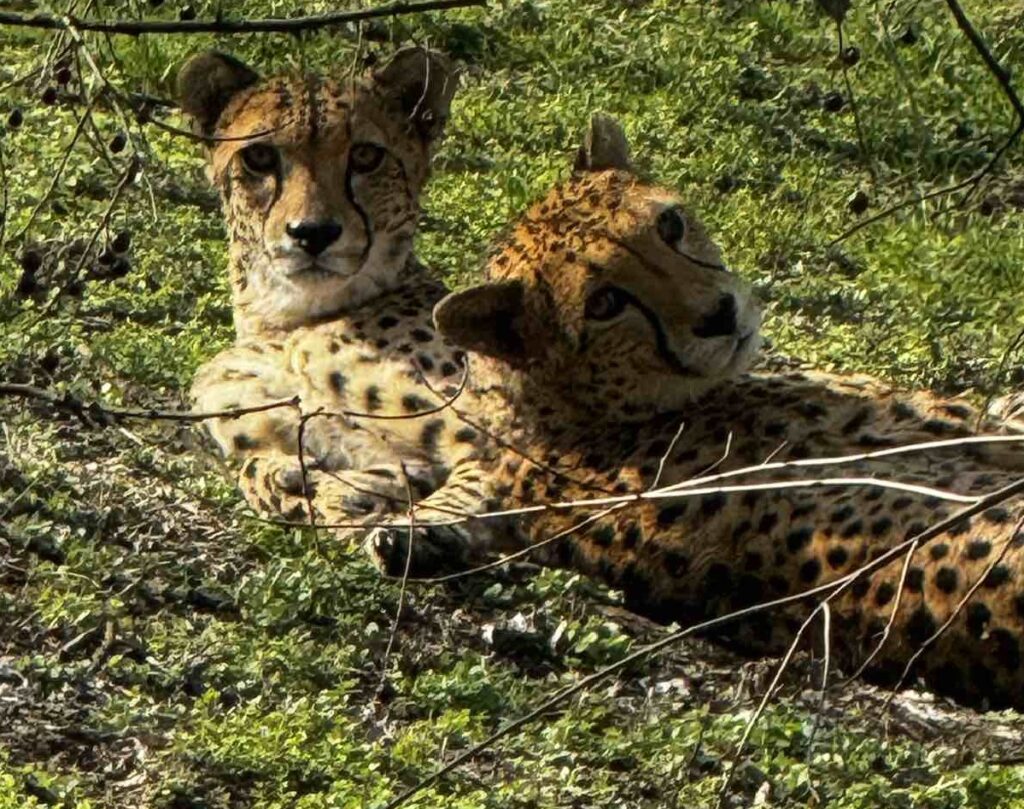
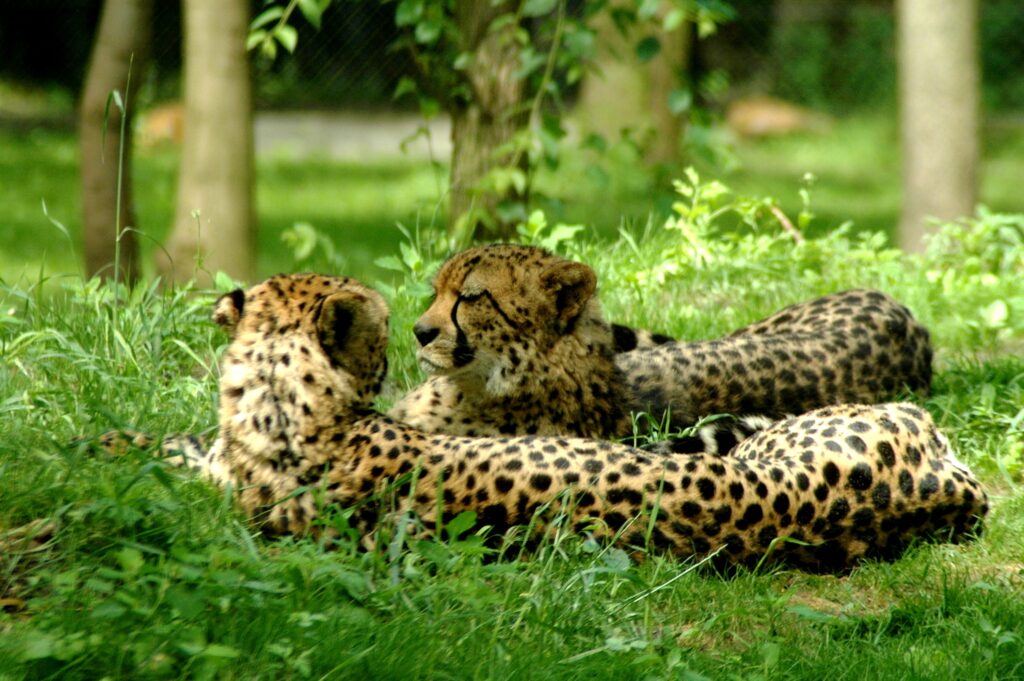
Our two cheetahs, Kani and Ruan, are brothers who were born in 2017. They arrived in Szeged from the Salzburg Zoo in December 2023.