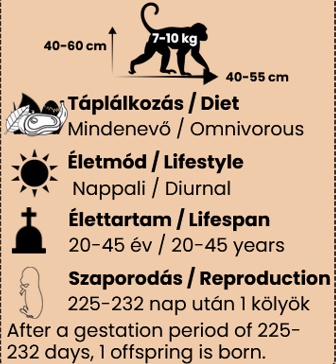

Colombian spider monkey (Ateles fusciceps robustus)
Habitat: Tropical rainforests of South America
Diet: Omnivorous
With its long limbs and highly sensitive, prehensile tail—functioning almost like a fifth limb—the Colombian spider monkey moves effortlessly from branch to branch, rarely touching the ground. It gets its name from its spider-like posture, often hanging beneath branches using all its limbs and tail. Among primates, it is considered exceptionally intelligent. Early explorers once claimed that spider monkeys formed living chains to cross rivers, but there is no evidence for this—though their agility certainly impressed observers.
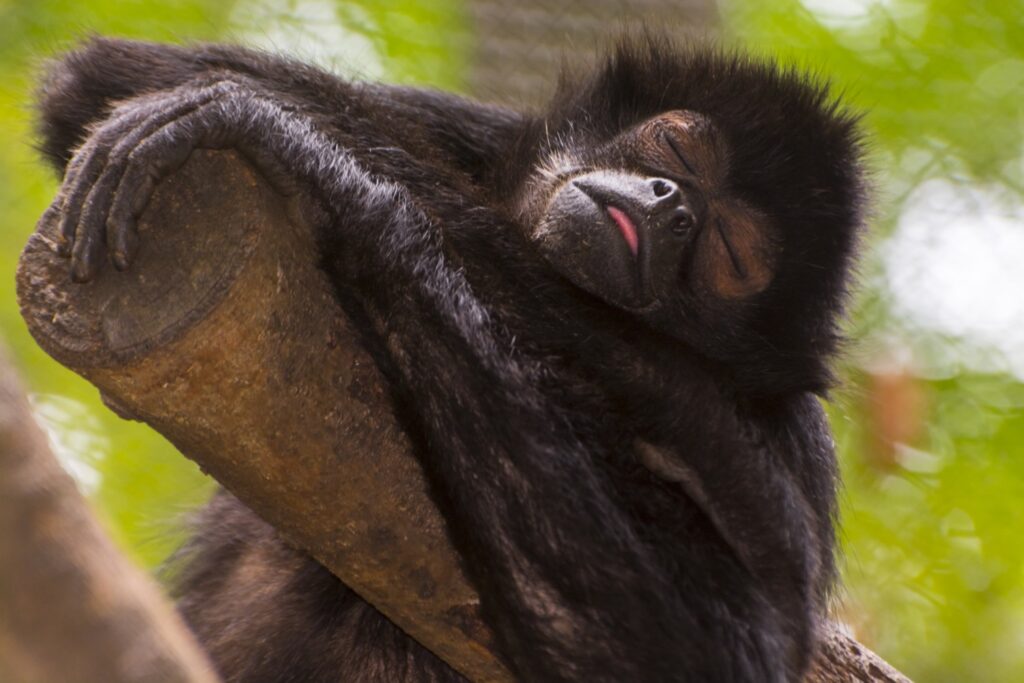
Their social structure is flexible. Large groups split into smaller, more mobile subgroups during the day, making it easier to find food. Males usually stay together and cooperate in defending their territory, while females leave their birth group once they reach maturity.
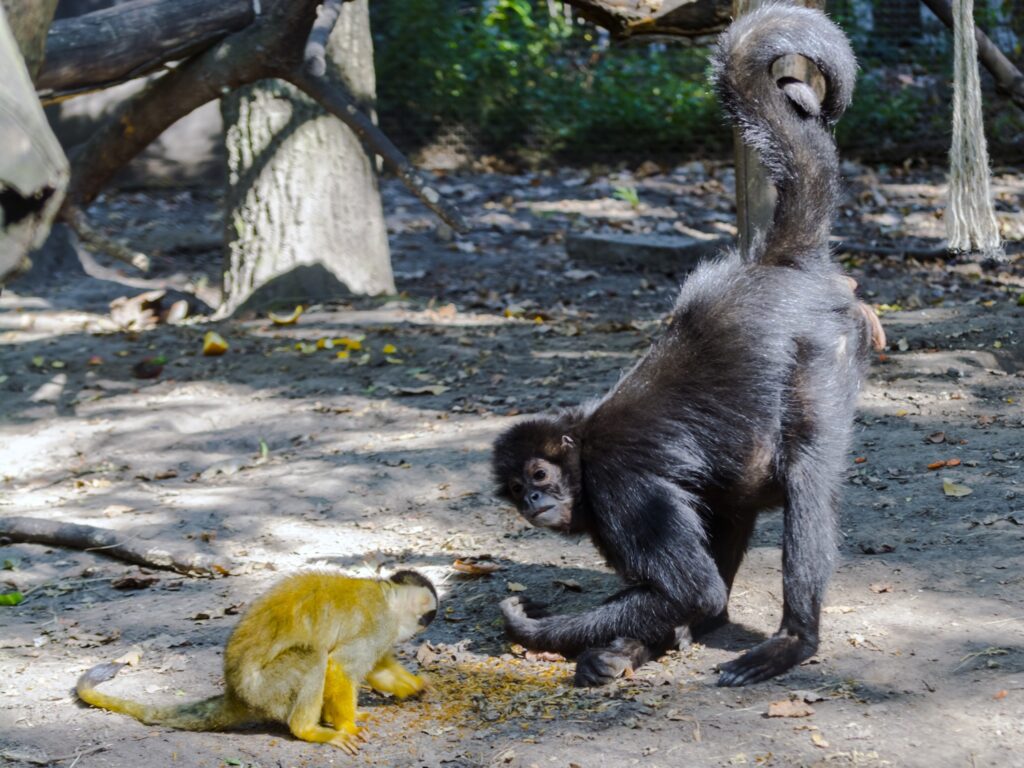
The broader lineage of spider monkeys is thought to have appeared in the New World around 40 million years ago, likely arriving from Africa by drifting across the ocean. Today, the Colombian spider monkey is endangered due to the destruction and fragmentation of tropical rainforests. Coordinated conservation programs in European zoos play an important role in preserving the species. In wildlife parks, spider monkeys can reach remarkable ages—several individuals, including ours, are over 45 years old.
Primates / Atelidae
IUCN Redlist: VU (Vulnerable)



II.