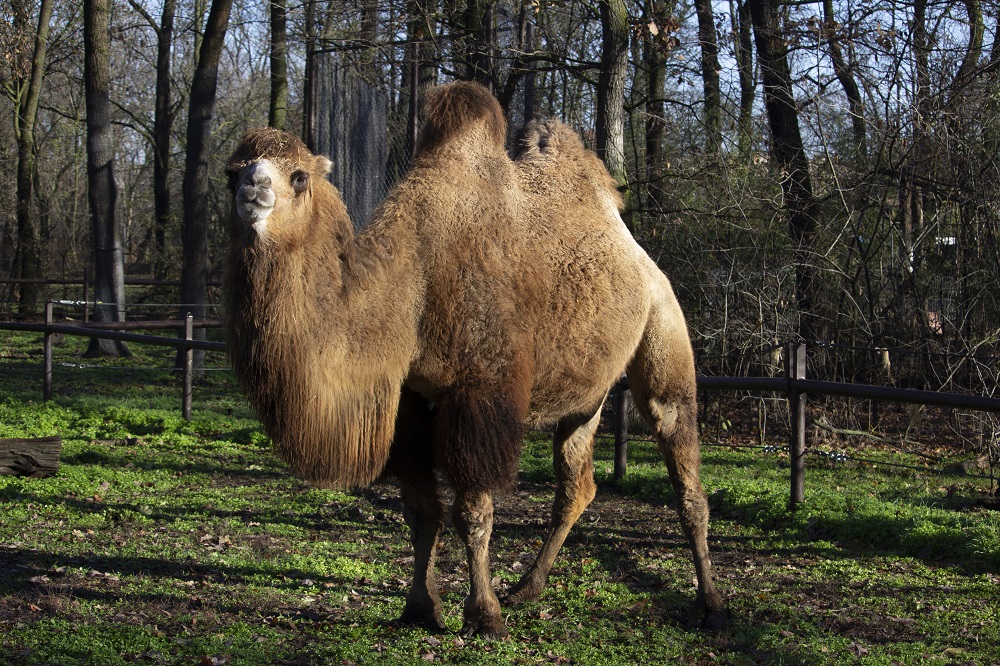
Bactrian Camel (Camelus bactrianus)
Order: Artiodactyla
Family: Camelidae
IUCN Red List: NE (Not evaluated)
The wild form of this species is now on the brink of extinction!
It was domesticated approximately 4000-4500 year ago
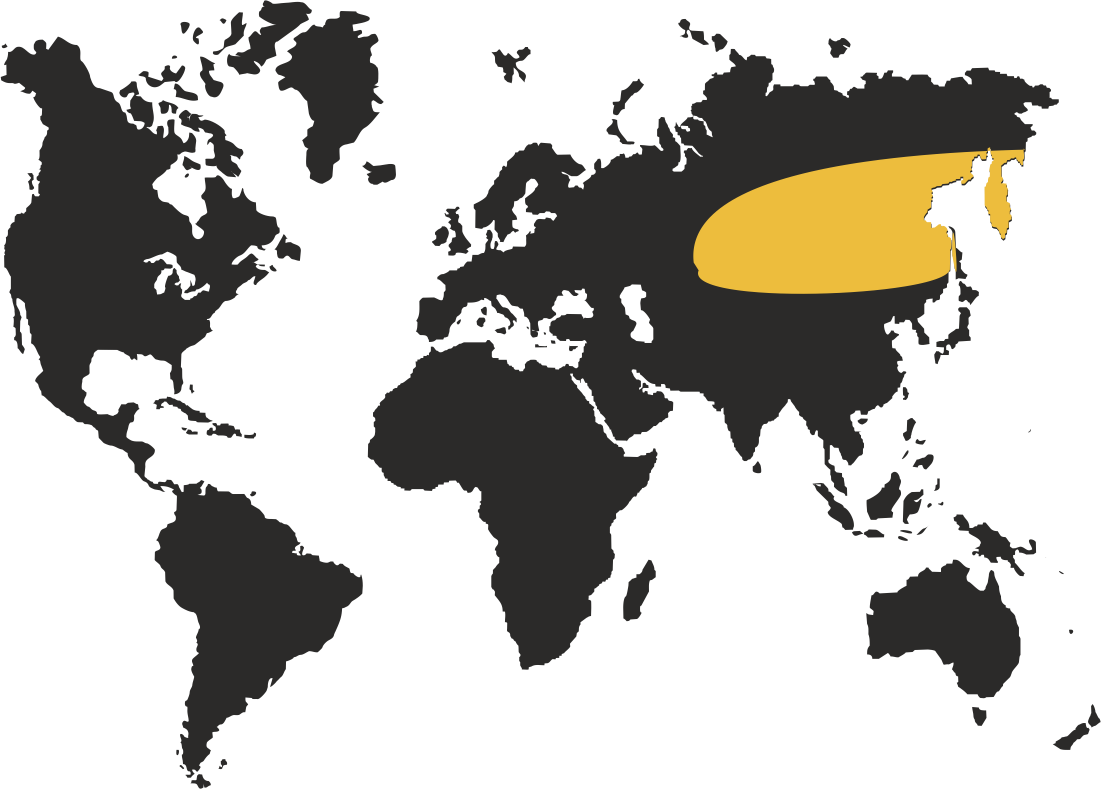
Habitat
Ázsia, a Himalájától északra
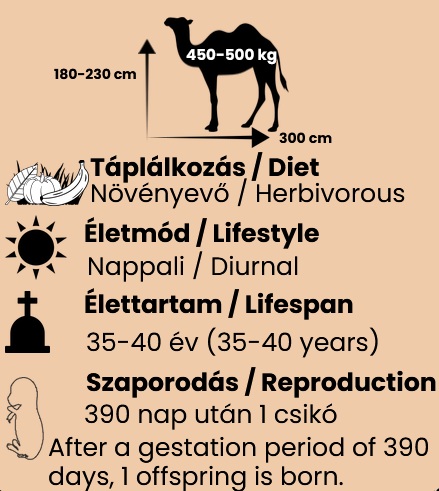
Informations
The Asian two-humped camel and the African one-humped camel are often called the “ships of the desert.” This nickname comes not only from their swaying walk but also from the fact that for centuries they were the most reliable means of transportation across vast, dry landscapes. Their bodies are perfectly adapted to the extreme conditions of desert life. Today, the wild Bactrian camel survives only in a few areas of the Gobi Desert, living in small groups of around 30 individuals.
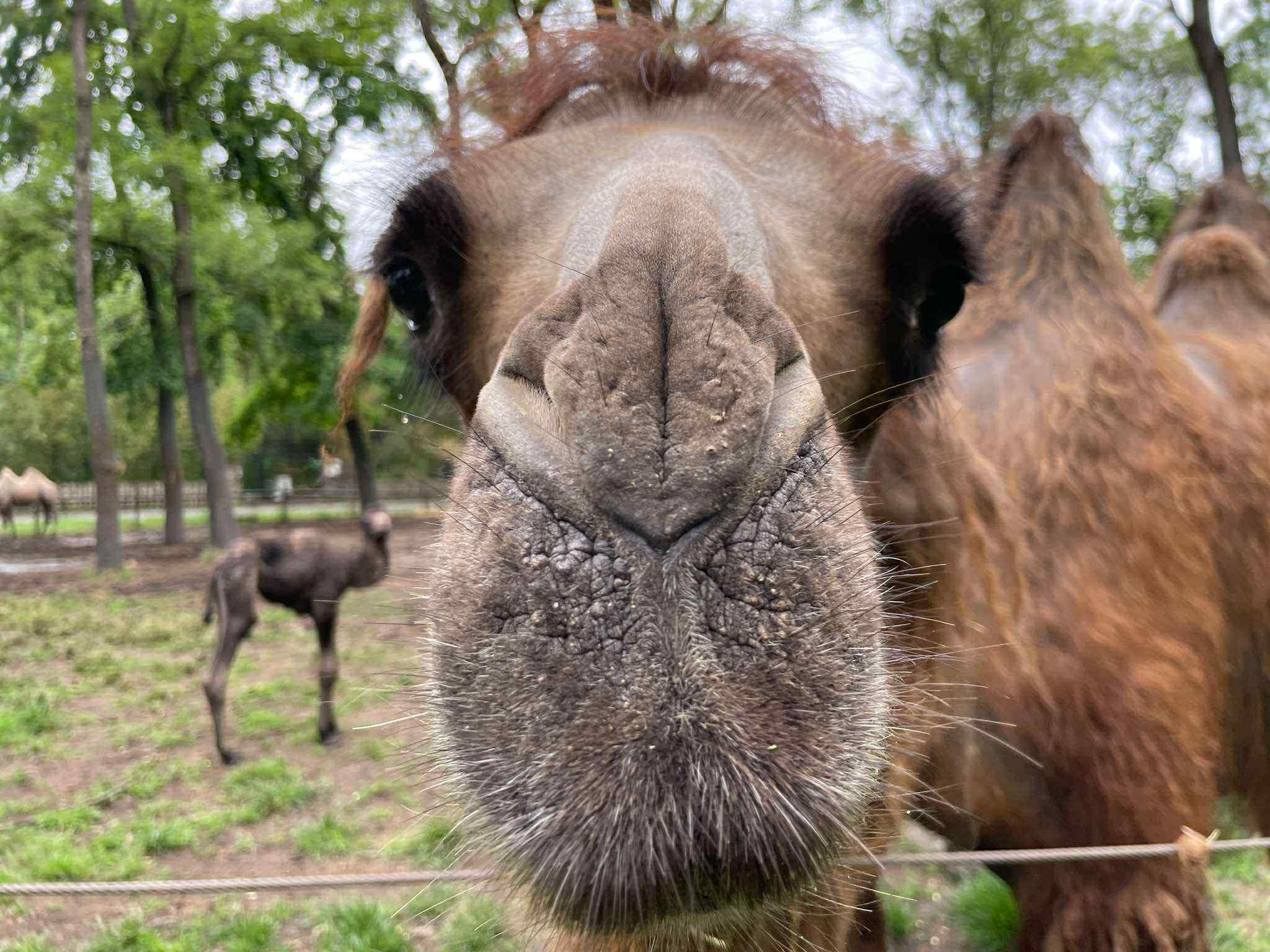
The humps of the camel store fat reserves, which the animal can convert into energy and water when needed. Its red blood cells have a special shape that allows the blood to thicken more slowly, enabling the camel to survive without drinking water for up to two weeks. Its eyes are protected from the sun and blowing sand by long eyelashes, and it can close its nostrils to keep sand out. If necessary, it can even survive by feeding on the remains of dead animals.
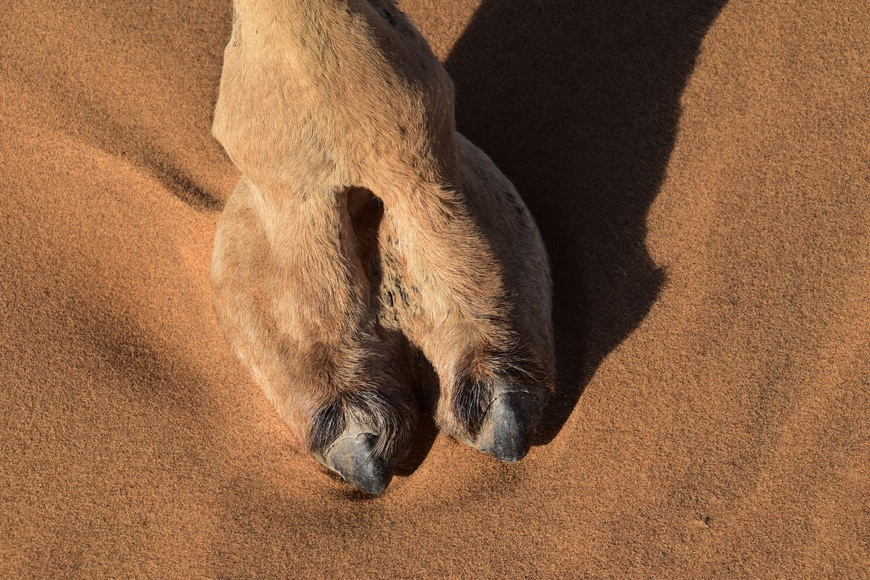
In winter, the camel grows a thick and dense coat to withstand severe cold, while in summer its fur becomes much shorter. Its broad feet prevent it from sinking into the sand. Most of its body weight rests on thick foot pads, while the hoof touches the ground only slightly, helping it move steadily across sandy terrain.