
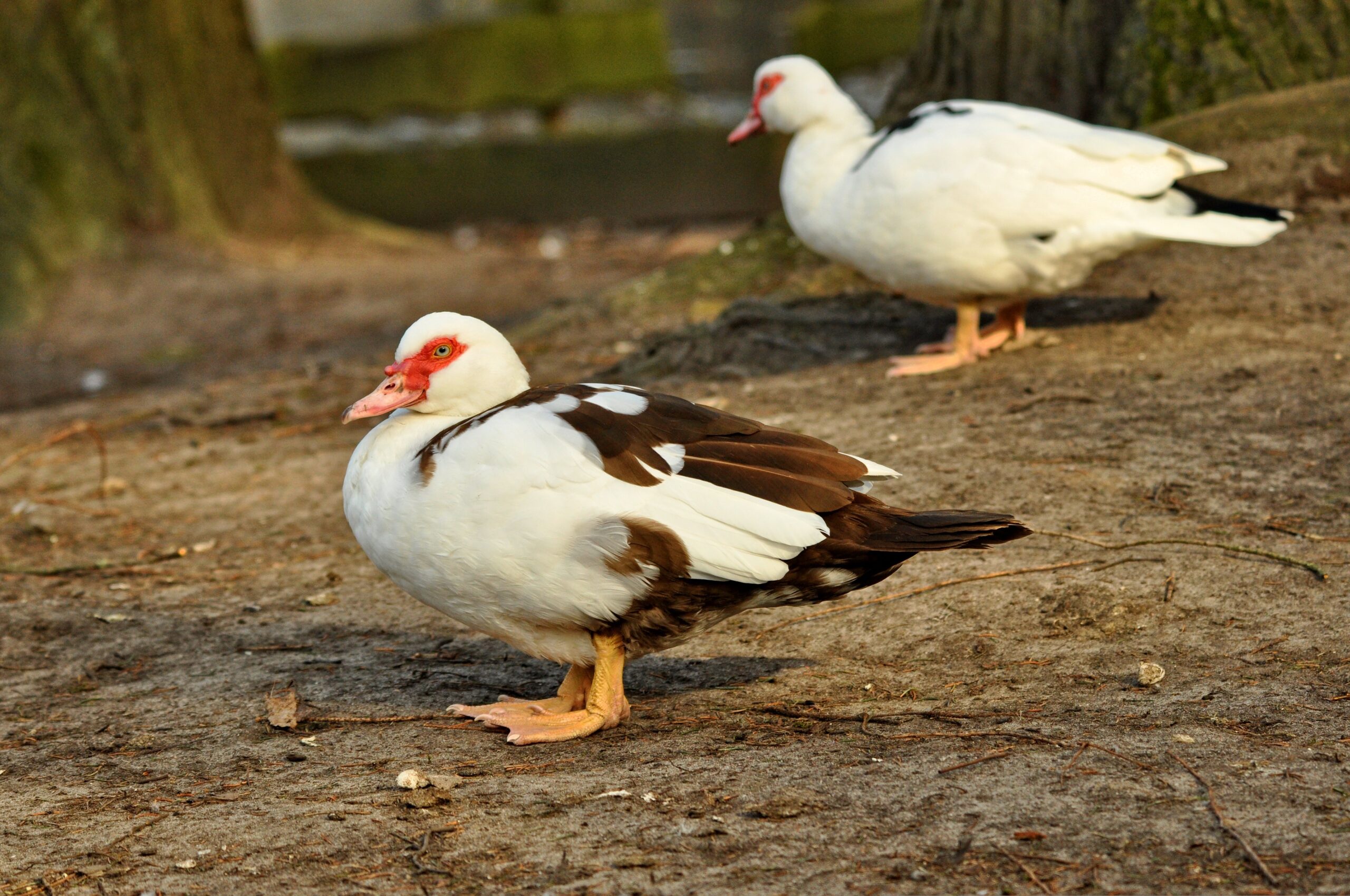
Muscovy duck (Cairina moschata)
The Muscovy duck comes from the Americas. Wild Muscovy ducks live mainly in wooded areas near water, while domesticated birds are now kept in many parts of the world. The Muscovy duck is a different species from the common domestic duck, which descends from the mallard.
It is easy to recognise by the red, fleshy growths around its eyes and bill. Domesticated Muscovy ducks can be white, black, pied or many other colours. Males are usually much larger than females and may have more prominent red facial markings.
Despite its name in Hungarian, which means “mute duck”, it is not silent. Instead of the loud quacking typical of common domestic ducks, males usually make hissing and puffing sounds. They also communicate through their posture and tail movements.
Muscovy ducks are omnivores. They eat plant matter and seeds, as well as insects, snails and other small animals. Their webbed feet help them move through water, while their strong claws allow them to grip the ground and tree branches.
The female usually lays several eggs and incubates them for about 33–35 days. Soon after hatching, the ducklings can follow their mother, who guides and protects them until they become independent.