
Southern three-banded armadillo (Suricata suricatta)
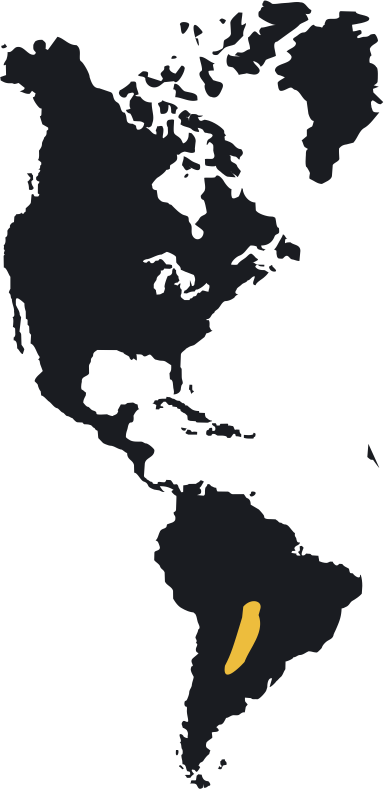
Habitat: Dry forests and grasslands of South America
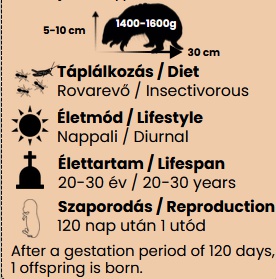
Diet: Insectivorous
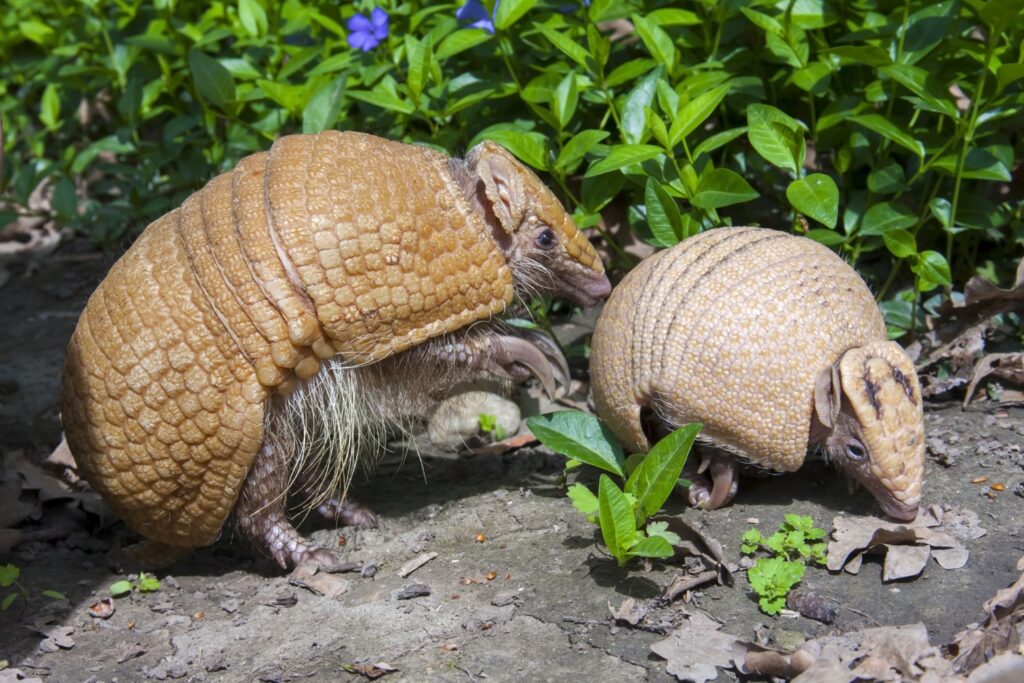
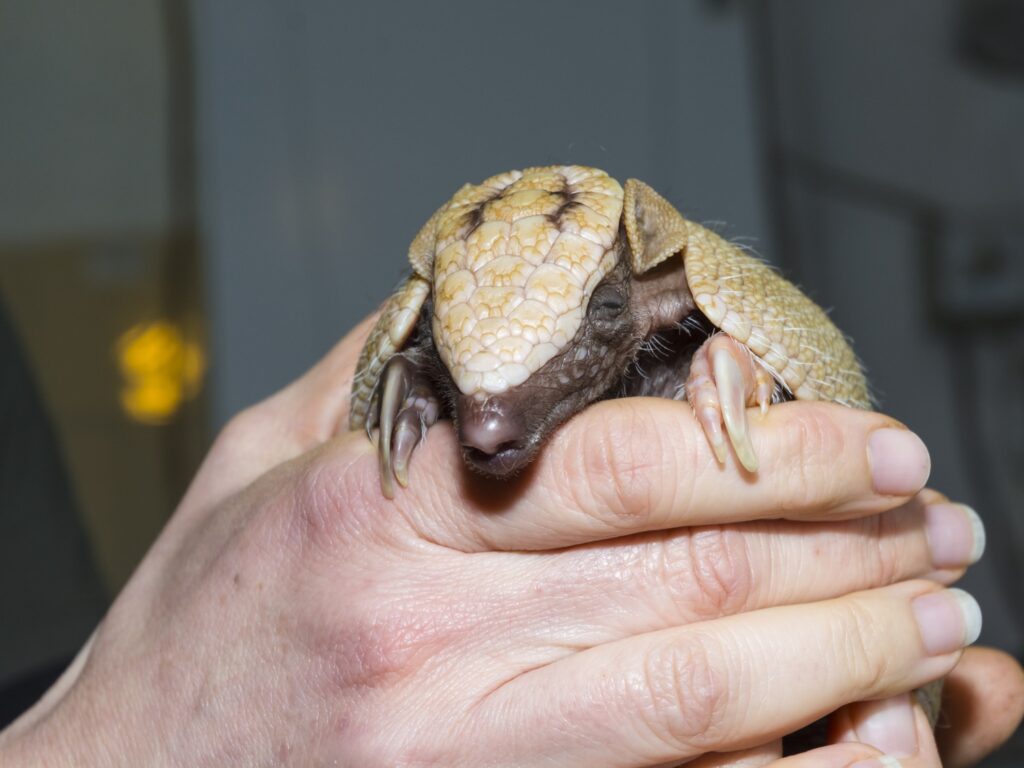
The southern three-banded armadillo, also known as the mataco, is a medium-sized species among the more than twenty known armadillo species. Around 10,000 years ago, giant armadillos of the genus Glyptodon became extinct—these impressive animals could reach 1.5 meters in height and up to 3 meters in length.
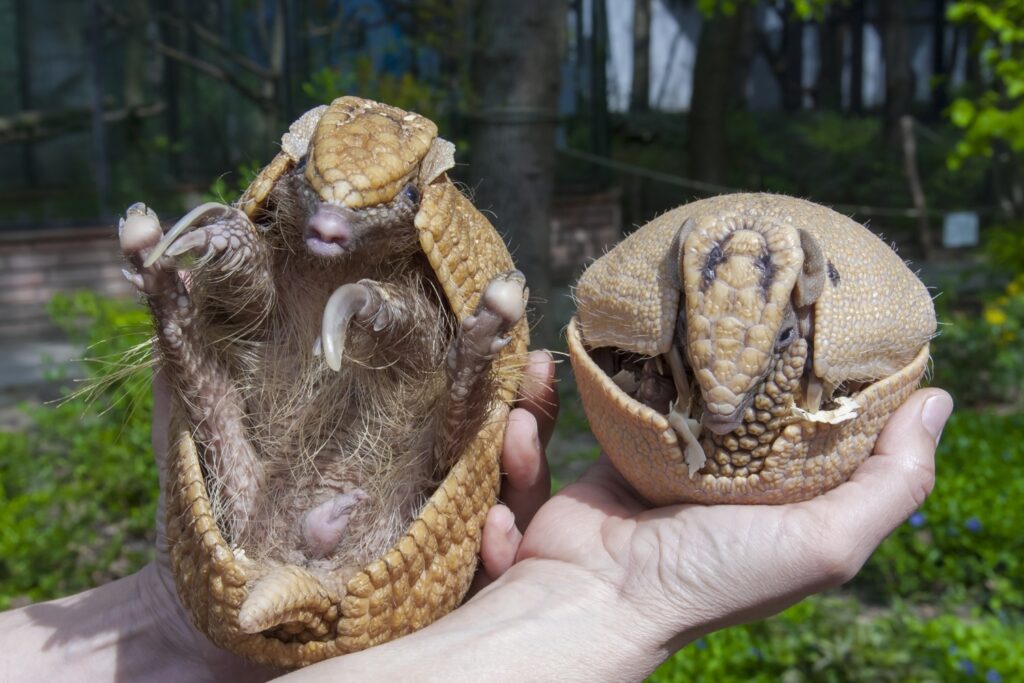
The mataco has the unique ability to roll itself into a complete ball, fully enclosing its body within its armored shell. In some cases, it can even trap a predator’s fingers during this defensive action. This closed posture also helps reduce heat loss. Its bony armor is not directly attached to the skeleton but is a skin-derived structure. At birth, young armadillos are covered with a soft, pinkish layer that gradually hardens as bone forms within the skin, developing into the protective shell.
Matacos mainly feed on ants and termites. Their sense of smell is highly developed, allowing them to locate food both underground and on the surface.
Armadillos, sloths and anteaters share a common classification: they all belong to the superorder Xenarthra. This name refers to the unique structure of their vertebrae, which have additional joints that provide extra stability.
Cingulata / Dasypodidae
IUCN Redlist: NT (Near threatened)