
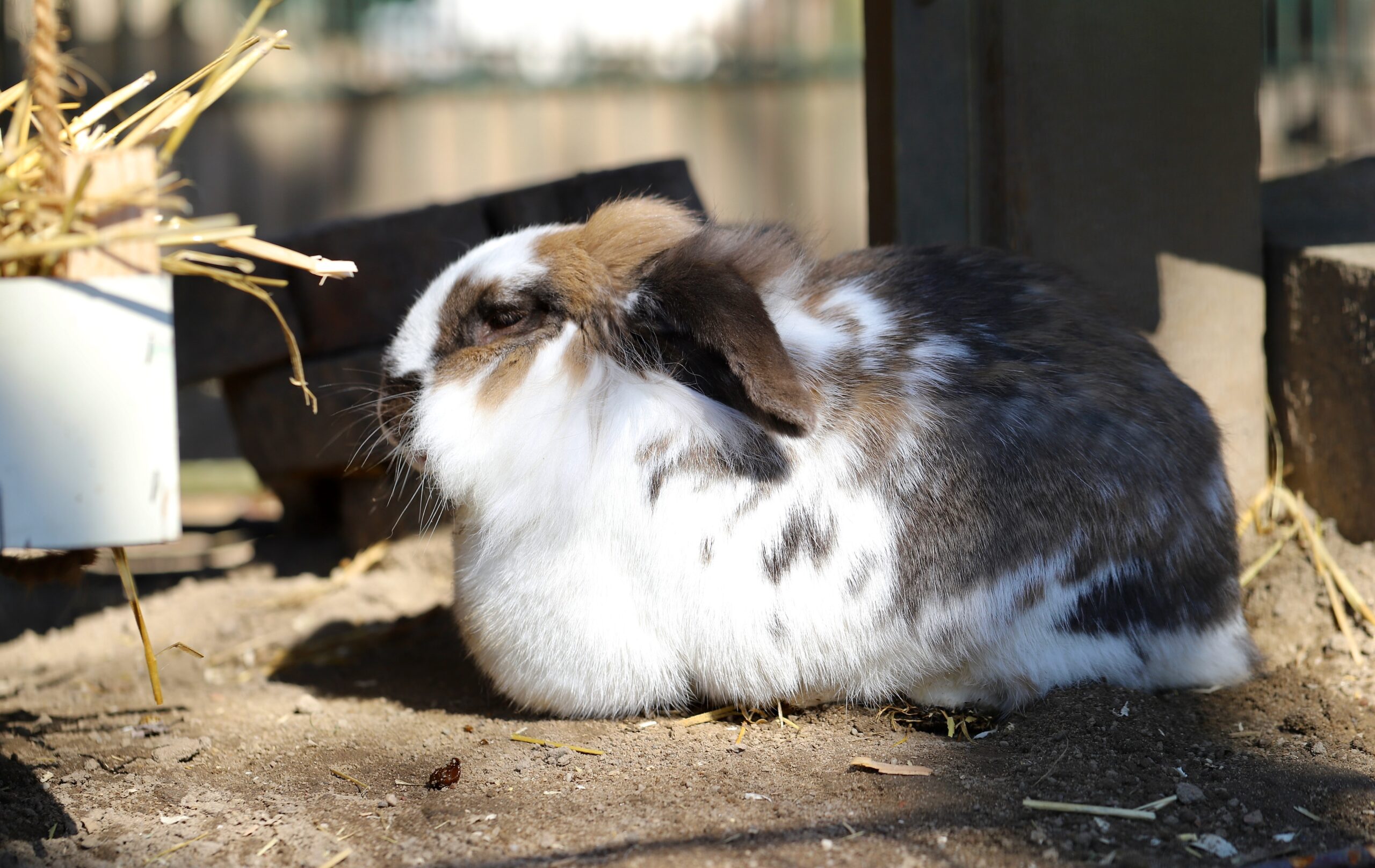
Domestic rabbit (Oryctolagus cuniculus domestica)
Order: Lagomorpha
Family: Leporidae
IUCN Red List: not listed.
Habitat
The ancestor of the domestic rabbit, the European rabbit, originally spread on the Iberian Peninsula. Domestication began about 2,000 years ago.

Informations
Rabbits have developed a unique digestive system that allows them to extract as many nutrients as possible from plant material. To access the valuable nutrients locked inside plant cells, they must first break down cellulose, the substance that strengthens plant cell walls. This process takes place in the cecum with the help of microorganisms.
After this initial digestion, many nutrients become available, but as the food continues through the large intestine, only part of them are absorbed while the rest are excreted. However, these nutrients are not lost. Rabbits consume this soft, grape-like droppings directly from the anus. Through this second digestion they can absorb nutrients that were not utilized the first time. This process is called cecotrophy. The final droppings are the familiar dry, hard rabbit pellets.
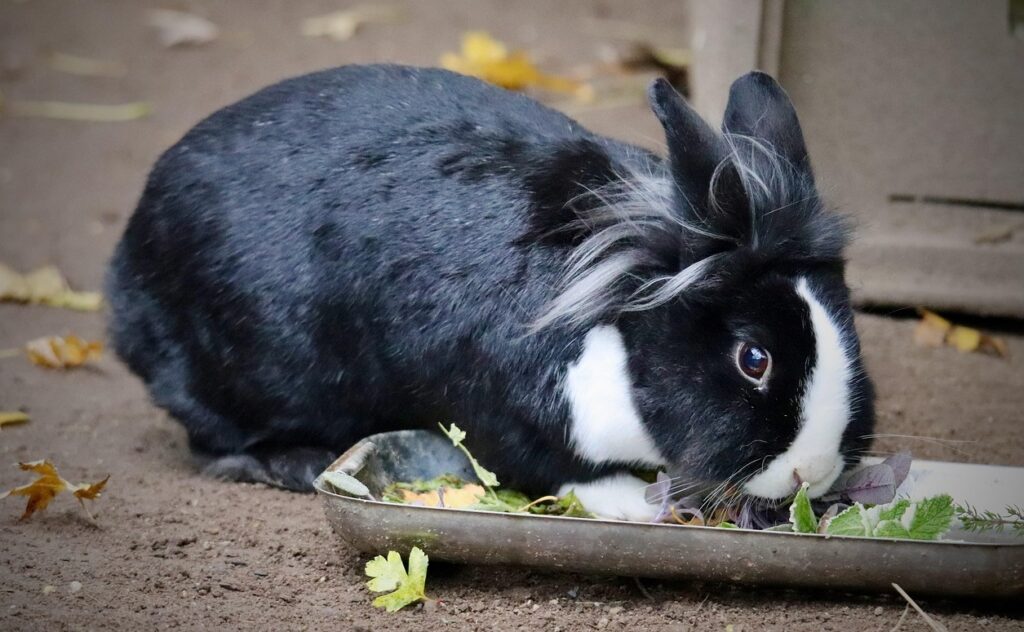
Like many animals kept by humans, domestic rabbits have been bred into numerous varieties. These range from dwarf to giant breeds, from smooth-coated to long-haired forms, and from small-eared to large-eared types. Rabbit teeth grow continuously throughout their lives, which is why they must constantly gnaw. They are social animals that communicate largely through body language.

In ancient Rome, the meat of newborn rabbits was considered a delicacy. During the Middle Ages, monks sometimes consumed rabbit meat as a fasting food.