Chicken (Gallus gallus domesticus)
Order: Galliformes
Family: Phasianidae
IUCN Red List: –
Habitat
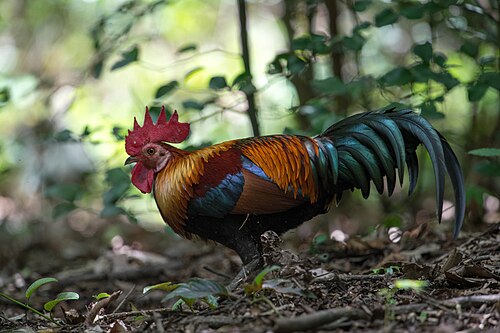
The chicken is a domesticated form of the red junglefowl (Gallus gallus), originally native to Southeast Asia. Chicken is one of the most common and widespread domesticated animals in the world.

Information
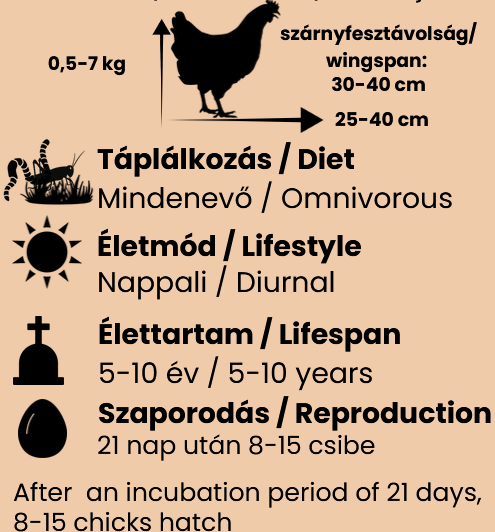
Diet: omnivorous. The domestic chicken is one of the most widely distributed and commonly kept domestic animals in the world. A hen is capable of laying between 240 and 280 eggs per year. Its meat is a staple food worldwide, and its feathers are also utilized. Its wings are small relative to its body size, allowing it to fly only short distances.
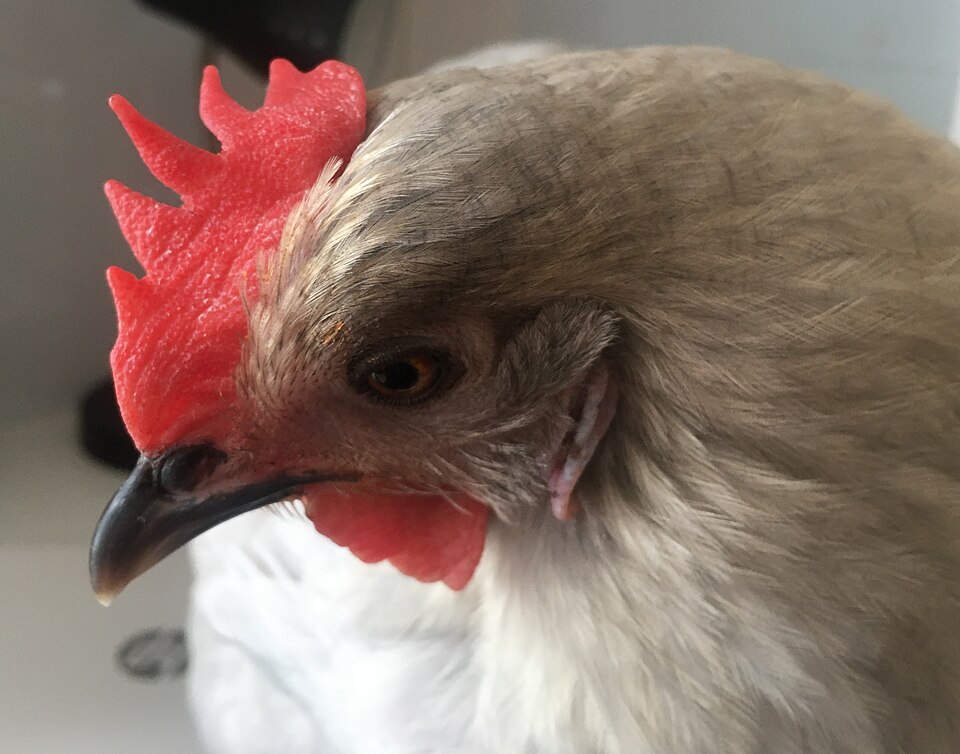
A fleshy wattle (beard) is located beneath the beak. The rooster’s comb is larger and its tail feathers are longer than those of the hen. Older roosters also have a spur on the back of their lower leg (tarsus). In addition to grain, chickens consume insects, earthworms, snails, and green plant matter. They love to scratch their food out of the ground and prefer environments that provide sufficient cover. Because their eyes are positioned on the sides of their head, they lack effective depth perception; therefore, they must move their heads back and forth while walking to map their surroundings.
Among countless varieties, many are kept solely as ornamental animals. Several Hungarian breeds are well-known, such as the White Hungarian, Yellow Hungarian, and Partridge-colored, but the most famous are the Transylvanian Speckled and the Transylvanian Naked Neck. Initially, they were not bred for consumption, but for cockfighting and religious reasons.
Famous for its crowing, the rooster symbolizes the sun and the rebirth of the soul in several cultures. For the Greeks, it also represents the arrival of spring. Weathercocks (wind vanes) sit atop Christian church steeples, while in China, the white rooster is believed to protect against evil spirits. It is a sacred animal in Japan, and for the Celts, it was seen as a messenger from the underworld.
Red junglefowl: