
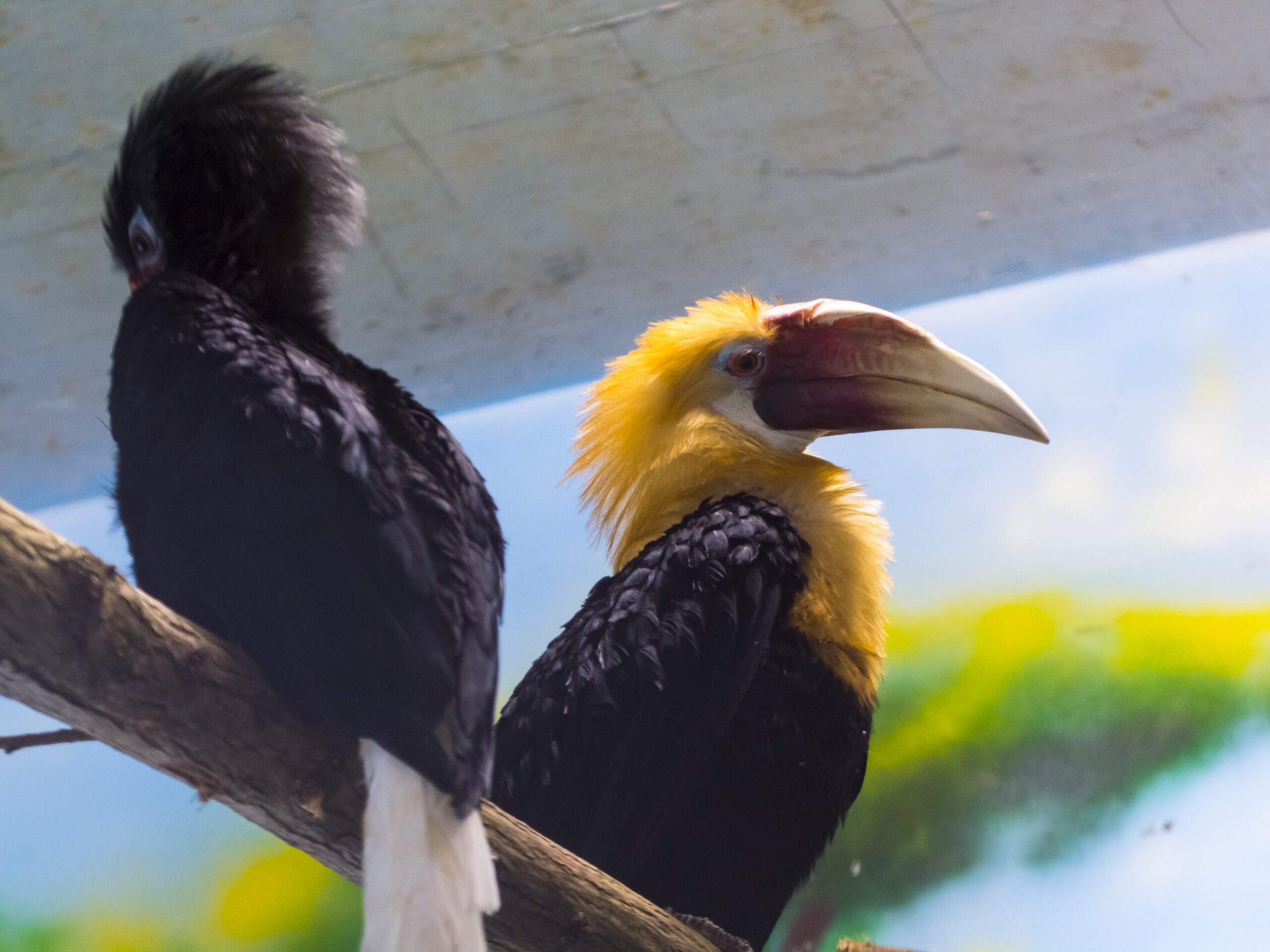
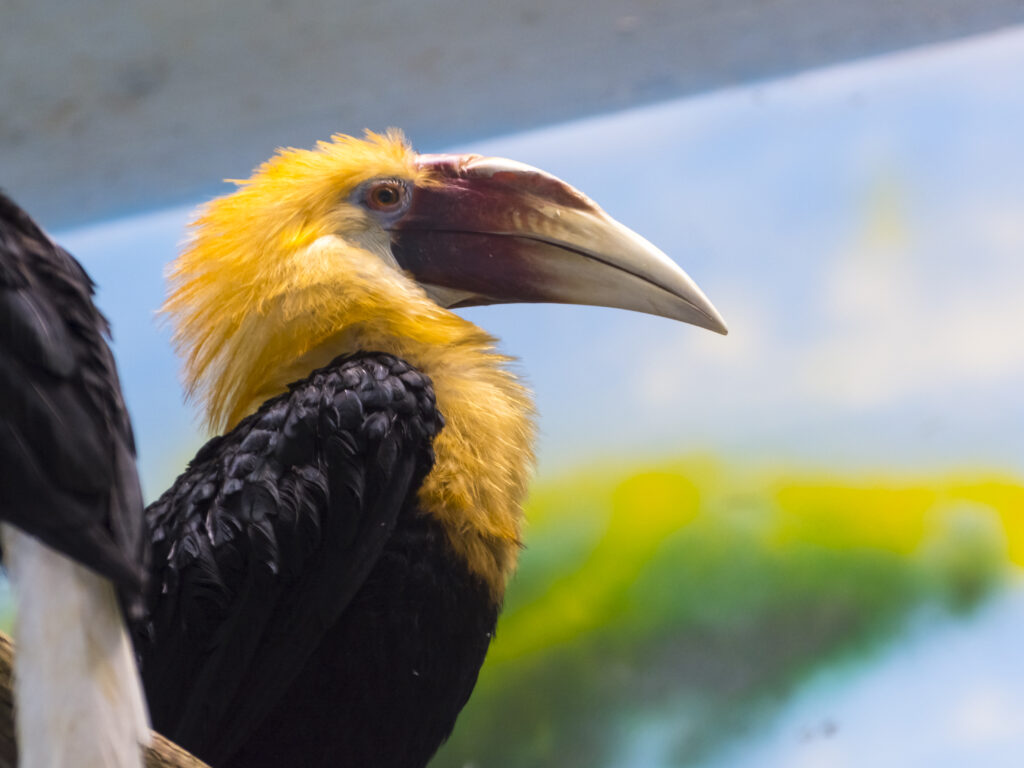
Papuan hornbill (Rhyticeros plicatus)
Order: Bucerotiformes
Family: Bucerotidae
IUCN Red List: LC (Least concern)


II.
Habitat
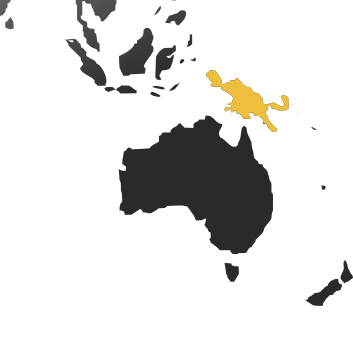
Maluku Islands, New Guinea, Solomon Islands, evergreen and deciduous riverside forests
Informations
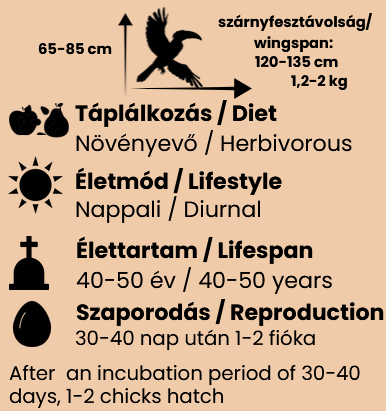
Diet: Herbivorous
The breeding behavior of Papuan hornbills is unique in the animal kingdom. They use tall rainforest trees for nesting. The female selects a tree cavity and remains inside for the entire breeding period. The male seals the entrance with mud, clay, and plant material, leaving only a narrow slit through which he passes food to the female. The female lays her eggs inside the sealed cavity, and the chicks only emerge once they are ready to learn to fly.
The hornbill’s characteristic bill helps both in feeding and in sealing the nest. Males and females can be easily distinguished by their coloration.
Similarly to tapirs and macaws, hornbills sometimes consume clay-rich soil, which helps neutralize toxins and provides essential minerals.
The greatest threat to the species is poaching. In New Guinea, it is an important source of meat for local people, and its bill and feathers are also used for ritual purposes.
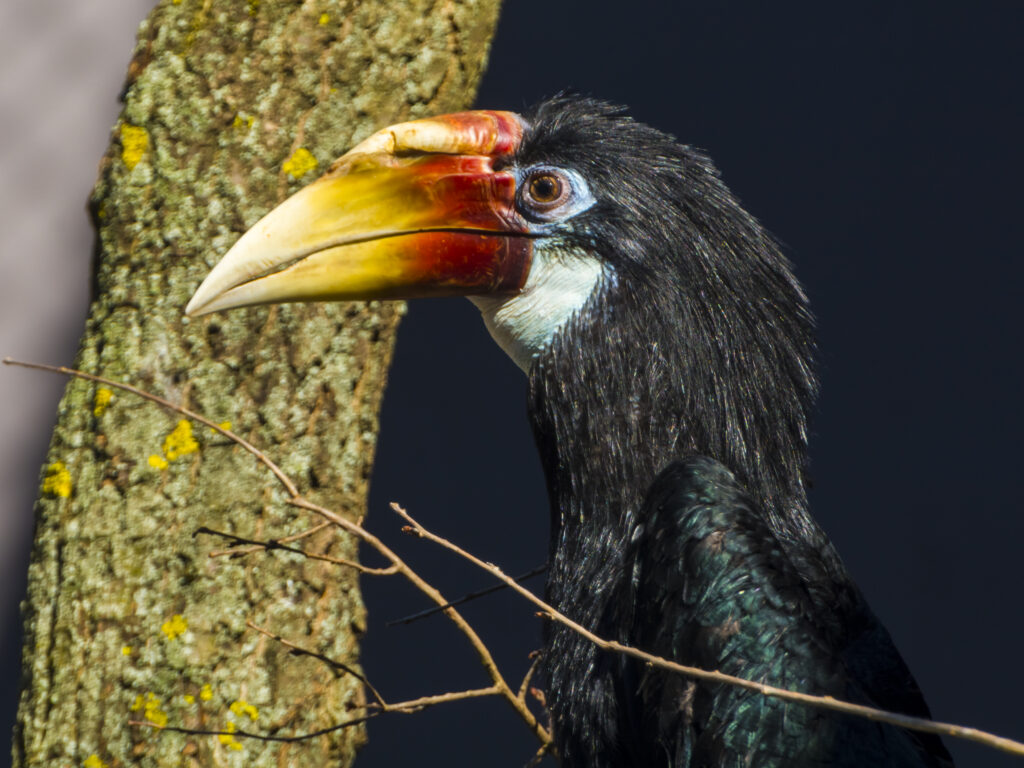
Female
Male