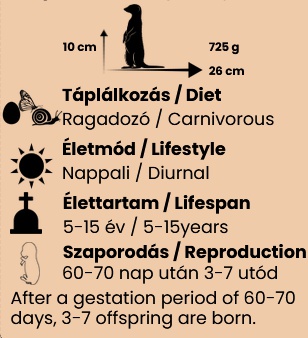

Meercat (Suricata suricatta)
Habitat: Open, dry, bushy and rocky areas of Africa
Diet: Carnivorous
Meerkats are popular animals in zoos thanks to their appearance and fascinating behavior. They dig complex underground burrow systems. While the average air temperature in their habitat can reach 43°C, the temperature inside their burrows is around 13°C. These burrows have multiple entrances, with tunnels and chambers inside.
They have excellent eyesight and can spot predators from a great distance. Sounds play a crucial role in their communication. When danger is detected, they give alarm calls and retreat into their burrows. Different types of threats trigger different warning calls. Meerkats may also try to scare predators away as a group, changing their posture to appear larger.
While the group is foraging, one individual usually stands guard on a higher vantage point, watching for danger and alerting the others. This role is shared among group members. During feeding—which can last 5–8 hours a day—they stay close to each other to maintain visual and vocal contact. They also change their foraging routes daily to avoid depleting food sources.
To regulate their body temperature, they often lie on their backs or sides in the sun to warm up, and rest on their bellies in the shade to cool down.
Carnivora / Herpestidae
IUCN Redlist: LC (Least concern)