
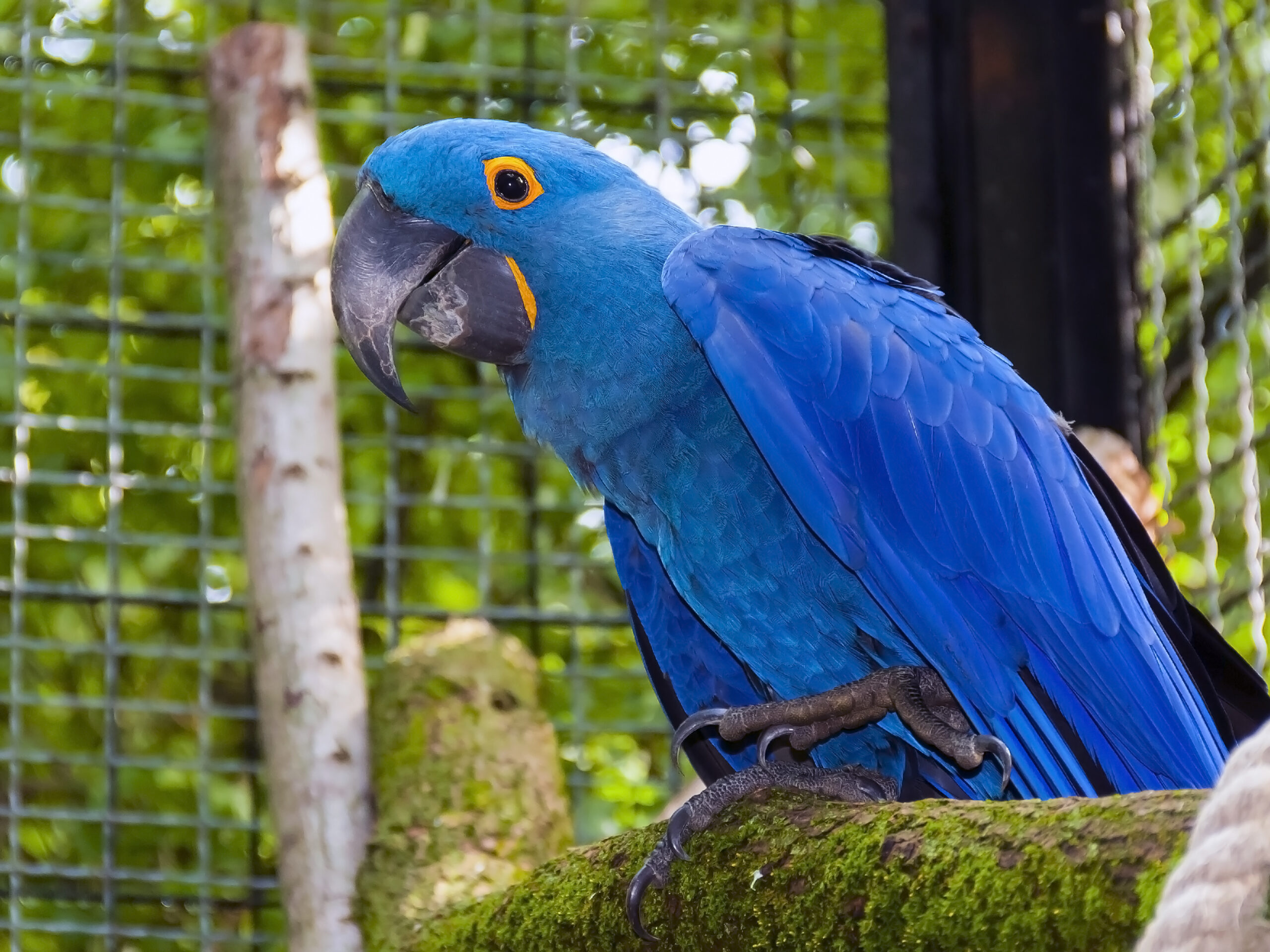
Hyacinth Macaw (Anodorhynchus hyacinthinus)
Order: Psittaciformes
Family: Psittacidae
IUCN Red List: VU (Vulnerable)


I.
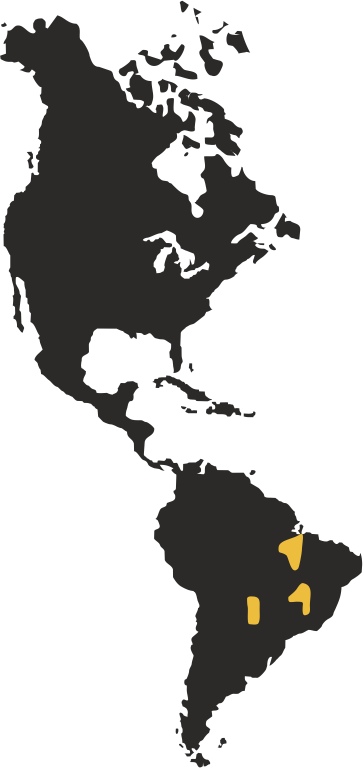
Habitat
Native to central and eastern South America.
Information
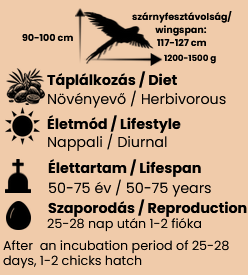
Diet: herbivorous.
The Hyacinth Macaw is the largest species of parrot by length. Their beaks are among the most powerful in the world, capable of easily cracking seeds: they first thin out hard shells and then crush them. They are among the longest-living parrot species.
They utilize tree hollows for nesting. The female typically lays two eggs, but it is rare for both chicks to survive. They are social birds, often moving in pairs or small flocks. They maintain contact with one another through deep, powerful vocalizations.
They are fast learners with a curious nature. Their ability to climb and grip trees is aided by their zygodactyl feet—where two toes point forward and two point backward.
Many may recognize this type of bird from the movie Rio, although the characters in the film are officially Spix’s Macaws (Little Blue Macaws). Similar to the movie Madagascar, the goal was to draw attention to the Spix’s Macaw, which was placed on the endangered species list in 2012 but was declared extinct in the wild in 2019.
Significantly larger than the Spix’s Macaw, the Hyacinth Macaw is also among the rarest species in the wild. This is due to the drastic reduction of its habitat: forests are being converted into pastures, and locals frequently use their feathers to manufacture handicraft products. Hunting and trapping also contribute to their declining numbers.