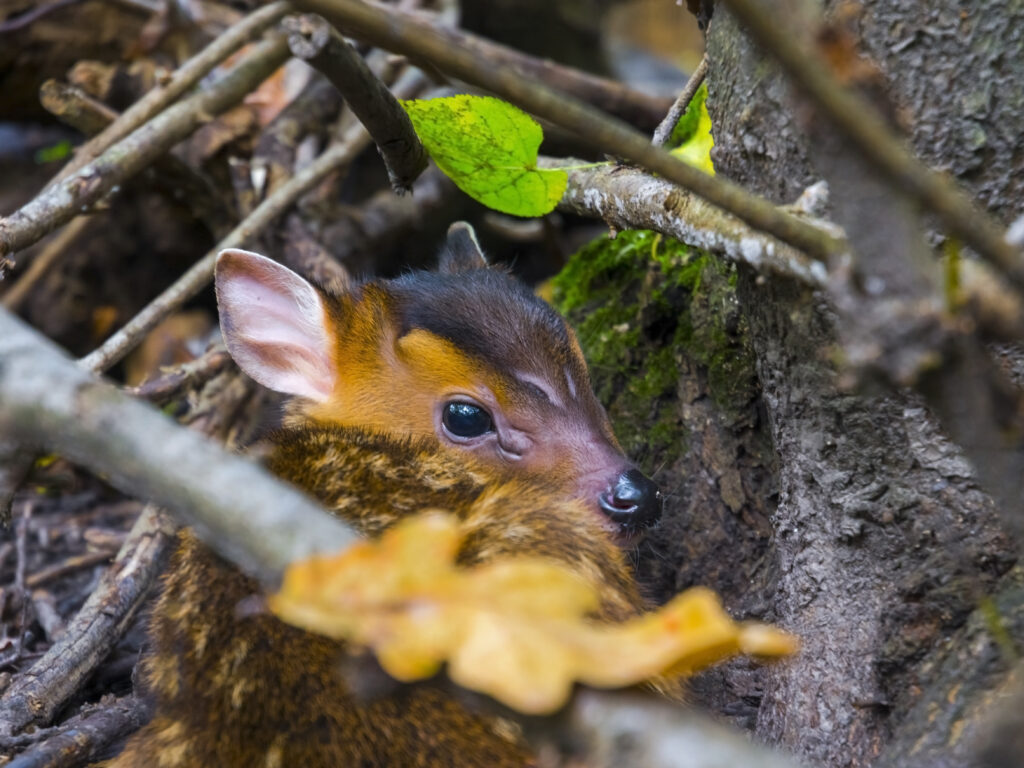
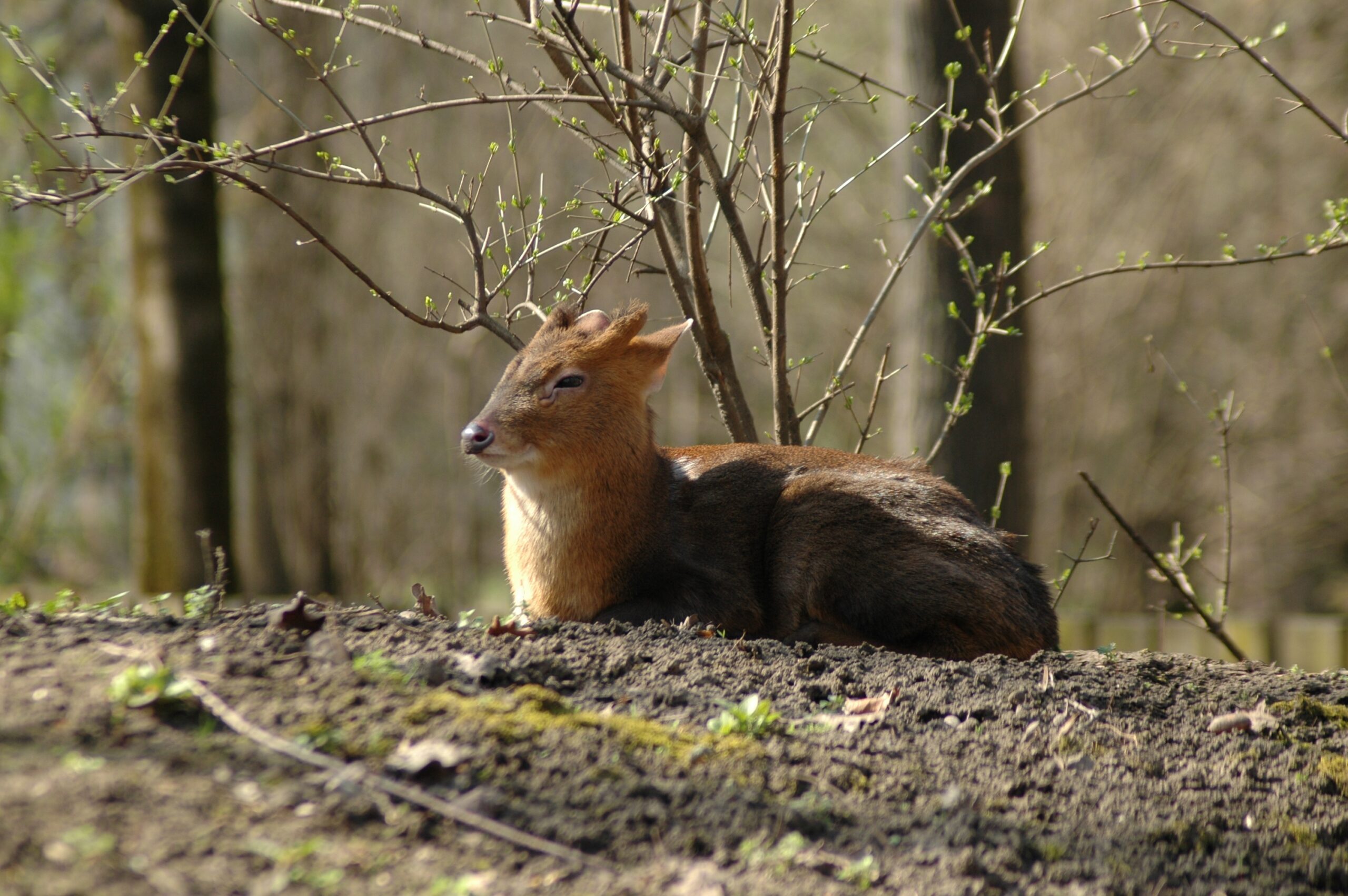
Reeves’s Muntjac (Muntiacus reevesi)
Order: Artiodactyla
Family: Cervidae
IUCN Red List: LC (Least concern).
Habitat
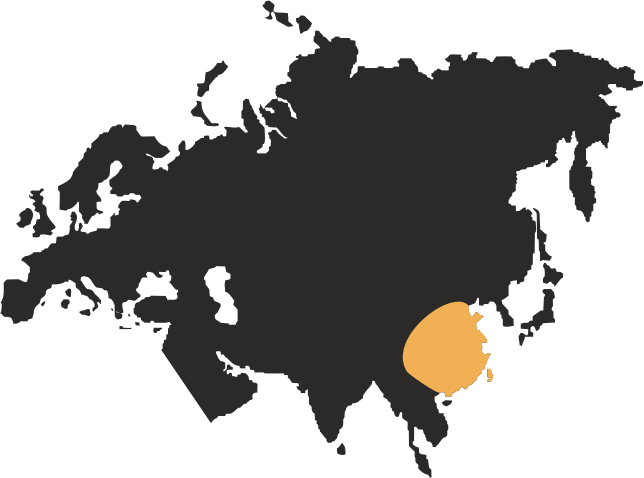
Subtropical forests of Asia
Informations
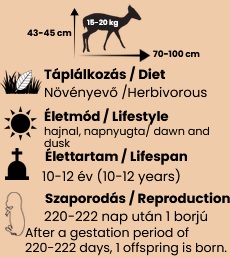
The Reeves’s Muntjac is a small deer species that lives a secretive and elusive life. It prefers dense vegetation where it can remain hidden
Although the most characteristic feature of male deer is usually their antlers, in some species elongated, dagger-like canine teeth are also used as weapons during fights over territory or females. Muntjacs possess both antlers and elongated canines. However, their antlers remain quite small, usually growing only about 7–8 cm long even in older males. Females have neither antlers nor prominent canines.
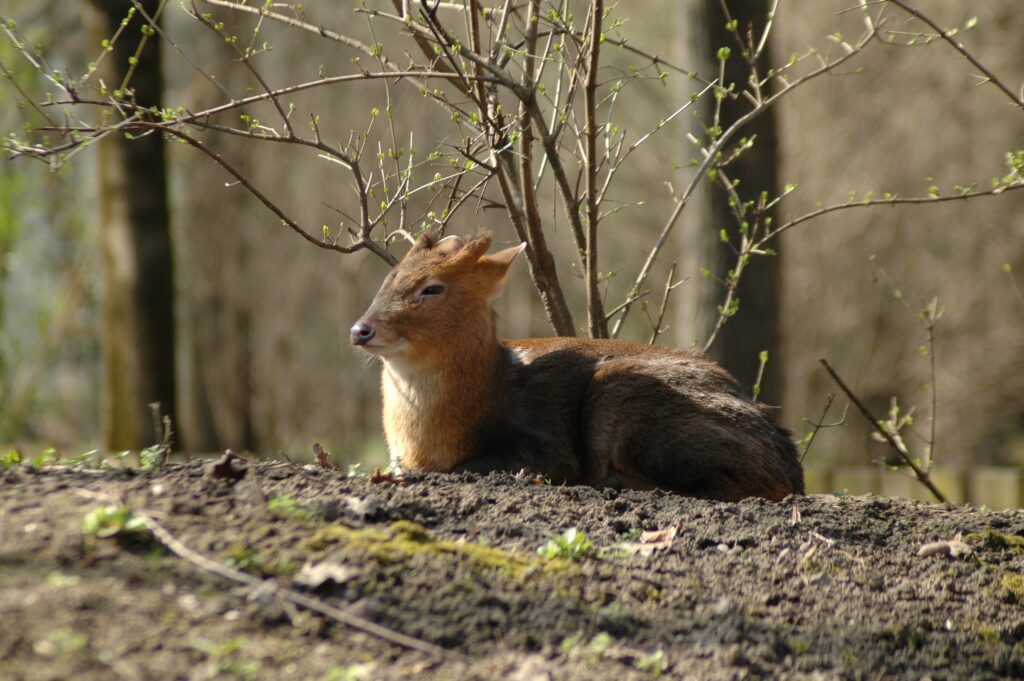
Individuals communicate with one another through vocal calls and scent signals. They are generally solitary animals. The territories of females may overlap, while the territories of males usually do not. An exception may occur with young males that have not yet developed antlers, as they are not seen as serious rivals by dominant males.
The species is native to southeastern China and Taiwan. Around 1900 it was introduced to England, where wild populations later became established.