
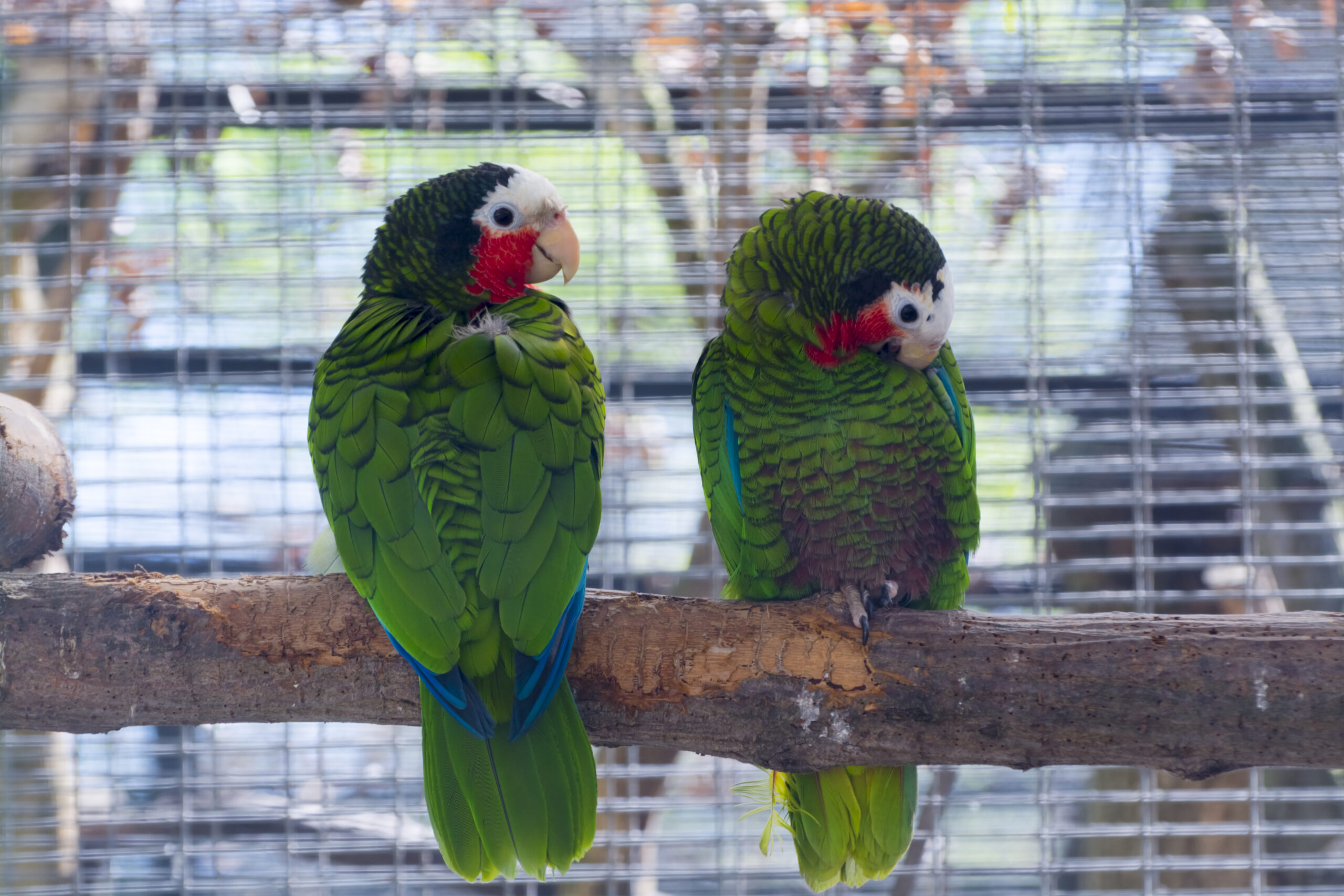
Cuban amazon (Amazona leucocephala)
Order: Psittaciformes
Family: Psittacidae
IUCN Red List: NT – Near Threatened

I.
Habitat
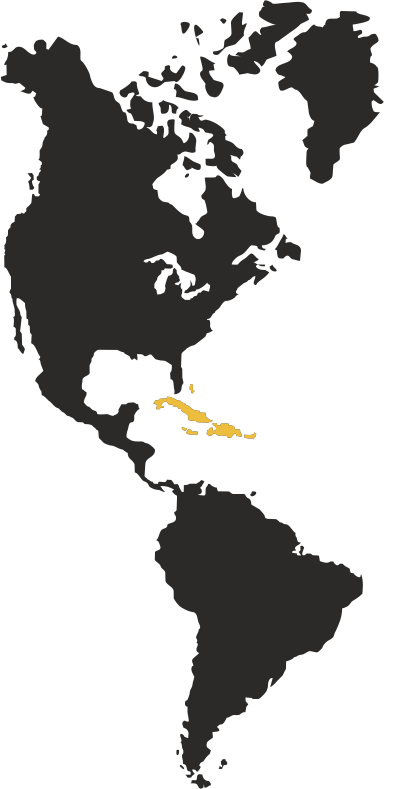
Woodlands and dry forests of Cuba, the Bahamas and Cayman Islands in the Caribbean.
Information
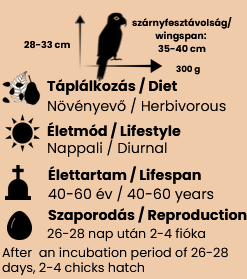
Diet and Ecological Role: They consume plant shoots, fruits, and seeds. Many animals assist in plant dispersal by carrying fruits far away—either stuck to their fur, skin, or feathers, or by transporting and eventually excreting the seeds through their digestive systems at a distance. Cuban amazons are among these seed-dispersing birds, as they fly over vast distances, thereby transporting plant seeds very far from their origin.
Cuban amazons nest in tree hollows, except for the subspecies living on Abaco Island, whose individuals breed in limestone cavities. Their eggs are white and nearly spherical. The chicks hatch 12–72 hours apart with their eyes closed and without feathers. For about a week after hatching, the male brings food to the female. The chicks’ feathers begin to grow at one week of age, from which point the female also participates in foraging. They are generally very noisy birds, especially while in flight. The species is threatened by both habitat loss and trapping for the illegal ornamental bird trade.