
Animal talk&feeding: Wolverine
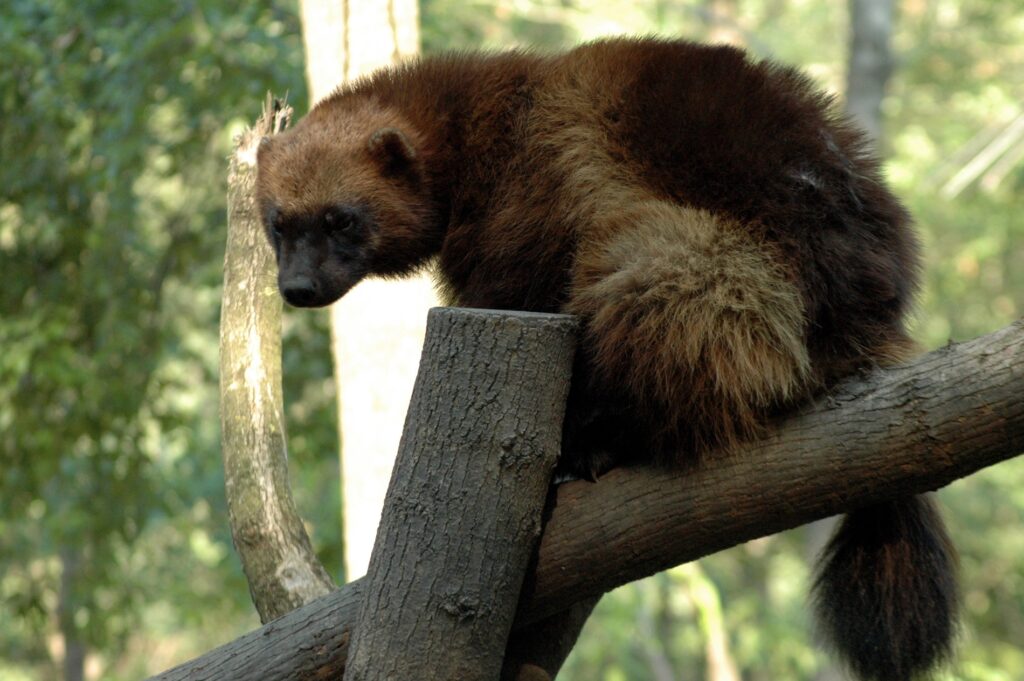
At first glance, the wolverine resembles a small bear, although it actually belongs to the weasel family. Its body is muscular and stocky, and it can weigh as much as 30 kilograms. Its long, dense coat provides excellent protection even in extreme cold. Webbing between its toes helps prevent it from sinking into the snow, while its large, powerful claws allow it to grip its prey securely. It is a skilful climber and a strong swimmer, although it moves mainly on the ground.
The wolverine lives and hunts alone. Its territory may cover approximately 2,000 square kilometres, and it marks its boundaries with urine and droppings. Its exceptional abilities are most apparent during winter. It is extremely fast and powerful and can successfully stalk prey much larger than itself.
A wolverine is even capable of killing a deer. When the deer sinks into deep snow, the wolverine leaps onto its back, clings to it and bites through its throat. It may travel as far as 45 kilometres in a single day while searching for food, resting every few hours before setting off to hunt again. It does not hibernate.
During summer, it catches smaller animals and may prey on lemmings and the calves of reindeer and moose. It also consumes plant material. Wolverines commonly steal the kills of other predators and may confront foxes, lynxes and even bears. Only a pack of wolves can usually force one to retreat.
The wolverine often behaves like a true commando, as visitors can also observe during feeding presentations. It ventures onto even the thinnest branches, demonstrating remarkable courage, and almost performs a somersault as it leaps down from a great height after securing a tasty morsel. It enjoys challenges, is highly persistent and intelligent, and possesses excellent problem-solving skills.
Wolverines are widely believed to have enormous appetites, a reputation reflected in some of their traditional names. This reputation is not entirely deserved, however, because they hide any food they cannot finish and return to eat it later. If necessary, a wolverine can locate buried food as much as six months after hiding it.
The popular hero of the X-Men comics and films is originally called Wolverine, a fitting name considering his large claws. Since the animal is less familiar in Europe, the character’s name was translated into Hungarian as Farkas, meaning “wolf”, in the films.
Wolverines once occupied a vast geographical area and could be found as far south as Poland and Lithuania. As with many other predators, humans carried out systematic campaigns to eradicate them, causing their population to decline considerably.
Hunting and the poisoning of predators to protect livestock remain significant threats. Although wolverines receive some legal protection, they attract less conservation attention than many other European predators, perhaps because of their poor reputation and supposedly bloodthirsty nature.
Approximately 70 wolverines live in European zoos, making them a rare zoo species. In Hungary, the wolverine was first exhibited at Szeged Zoo.