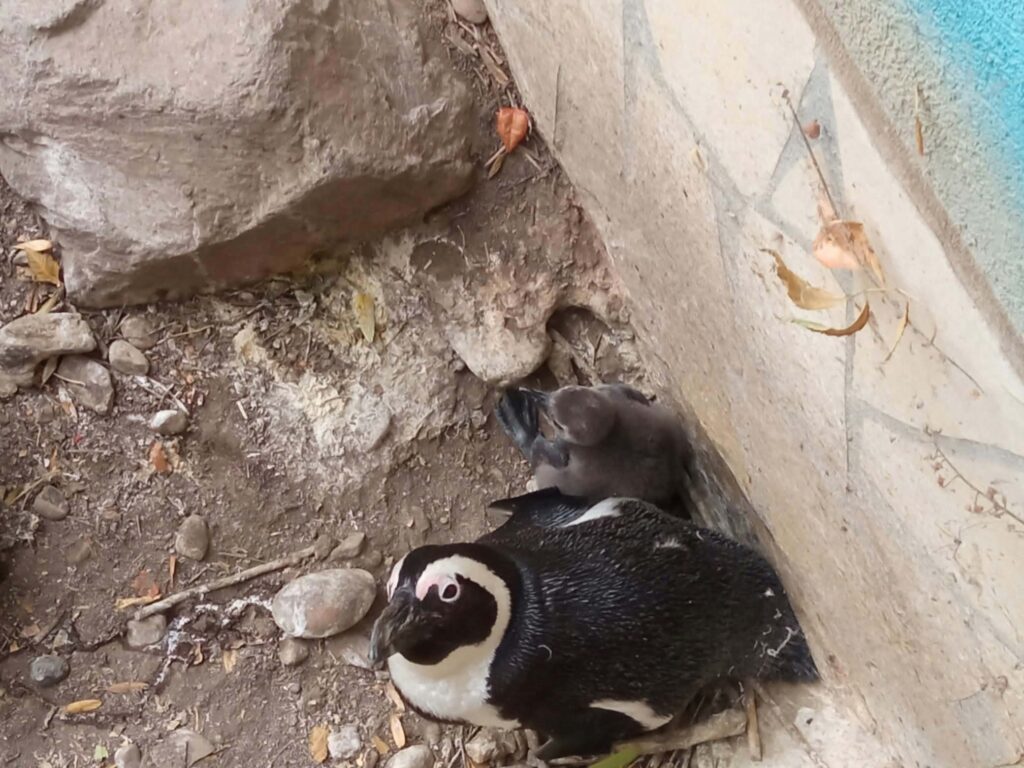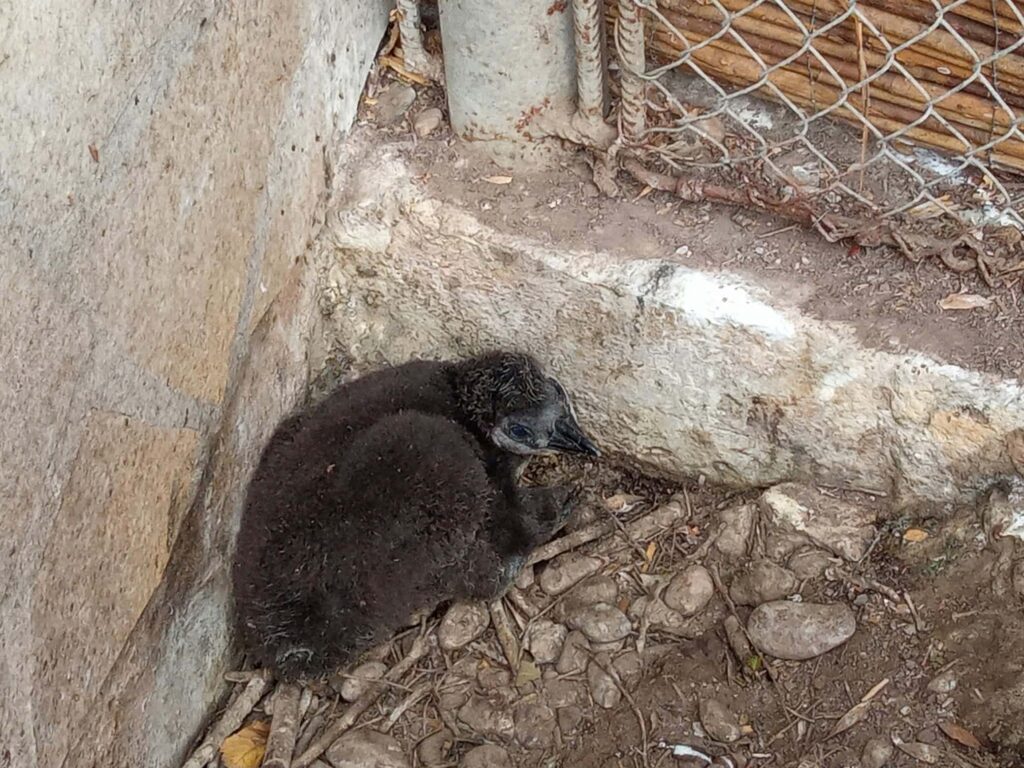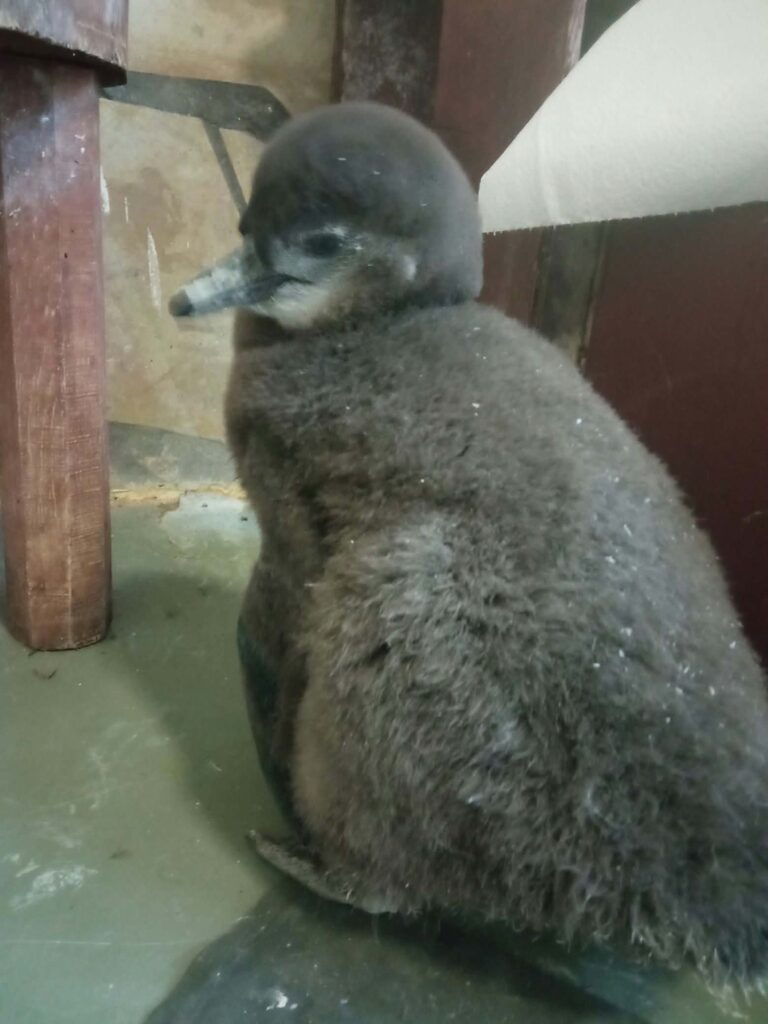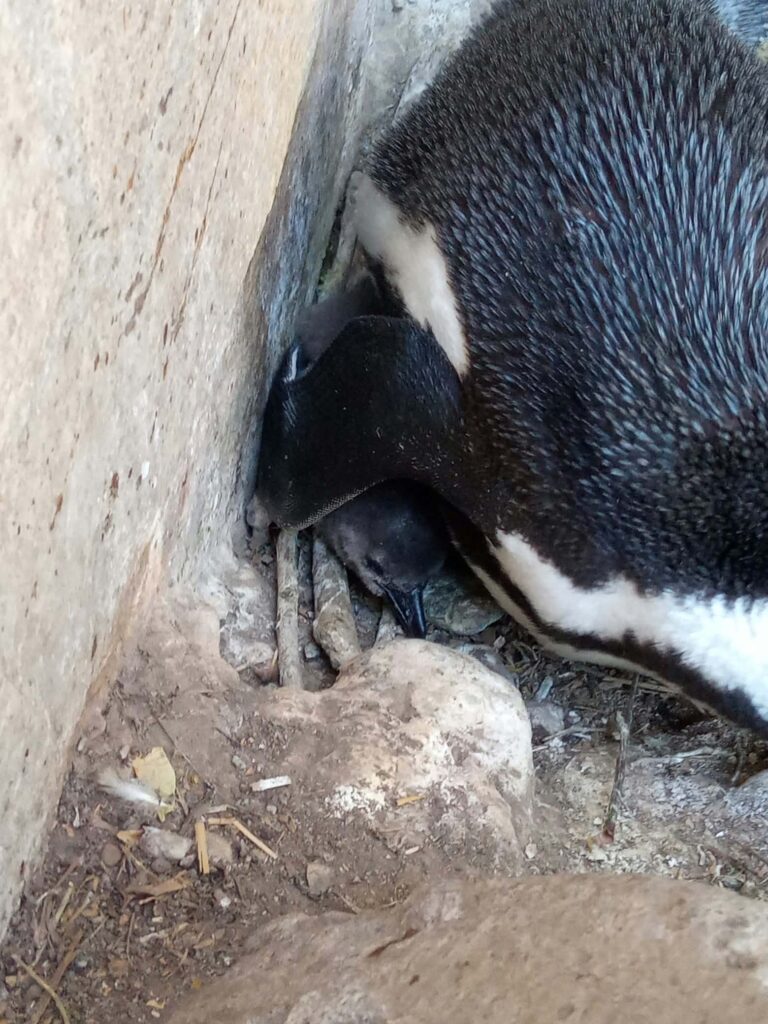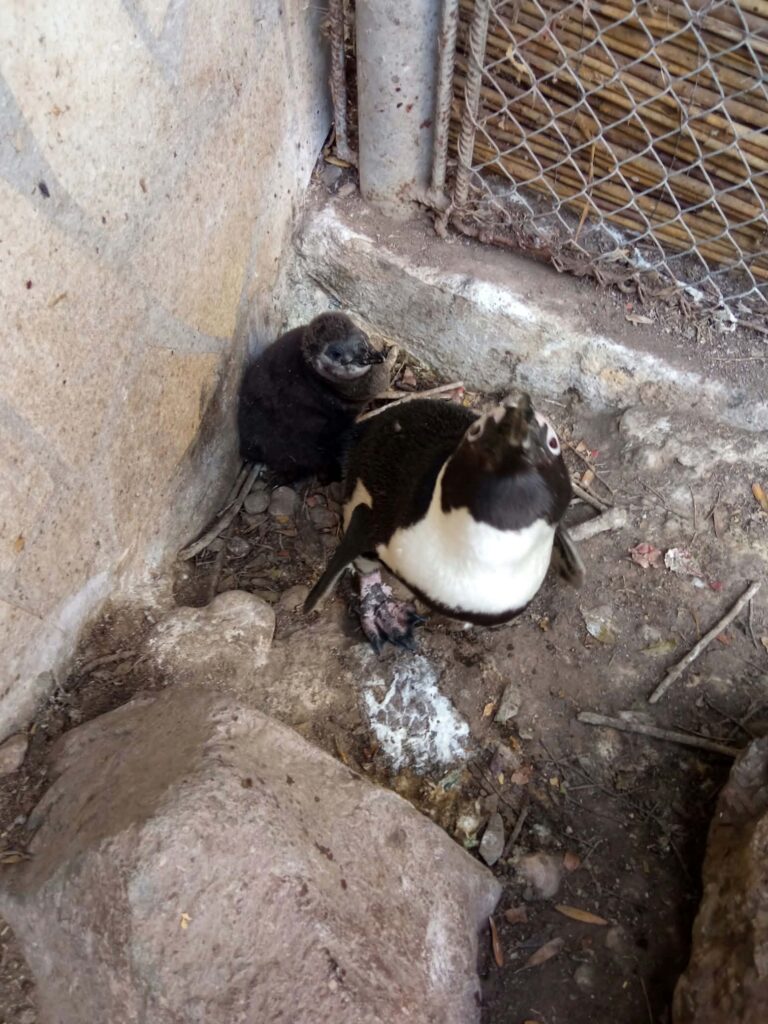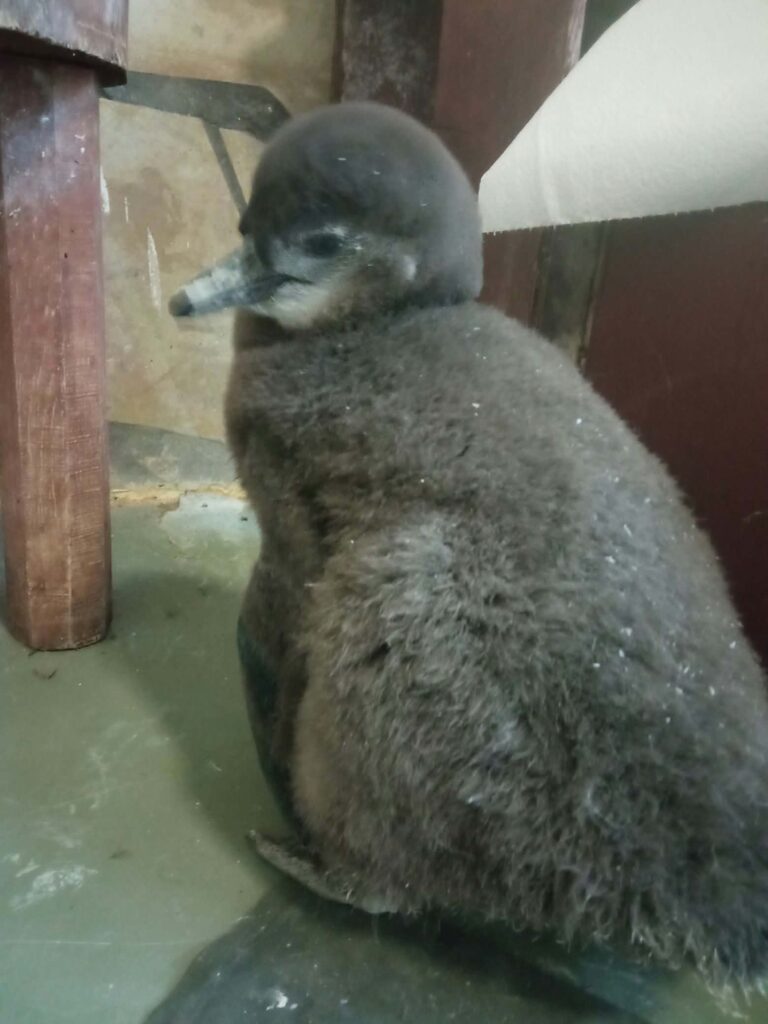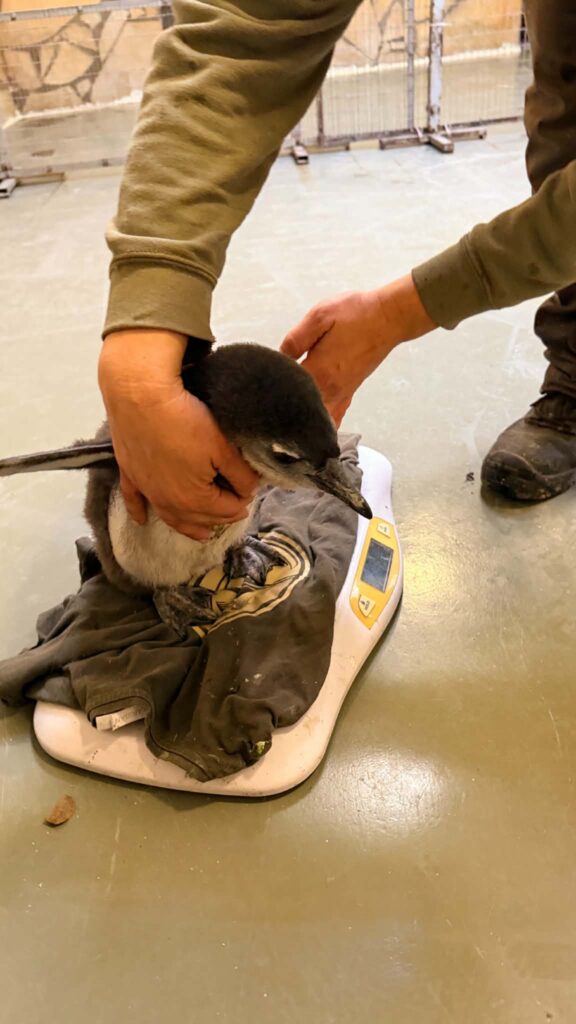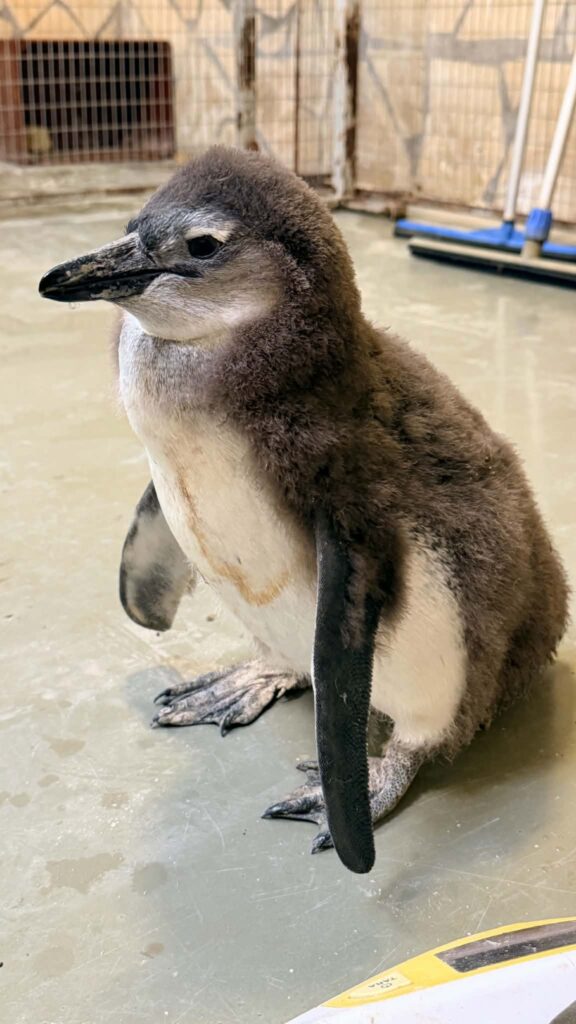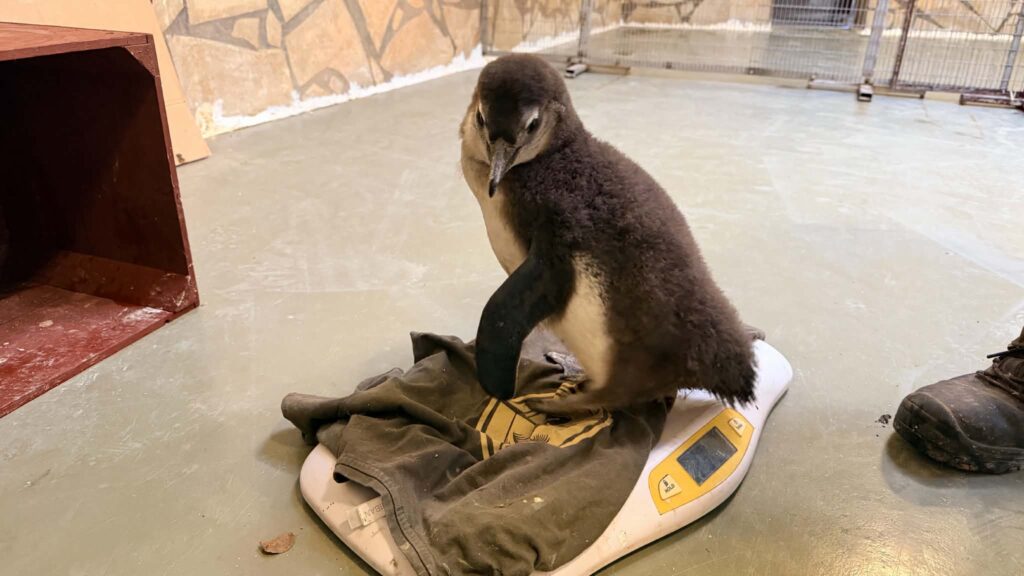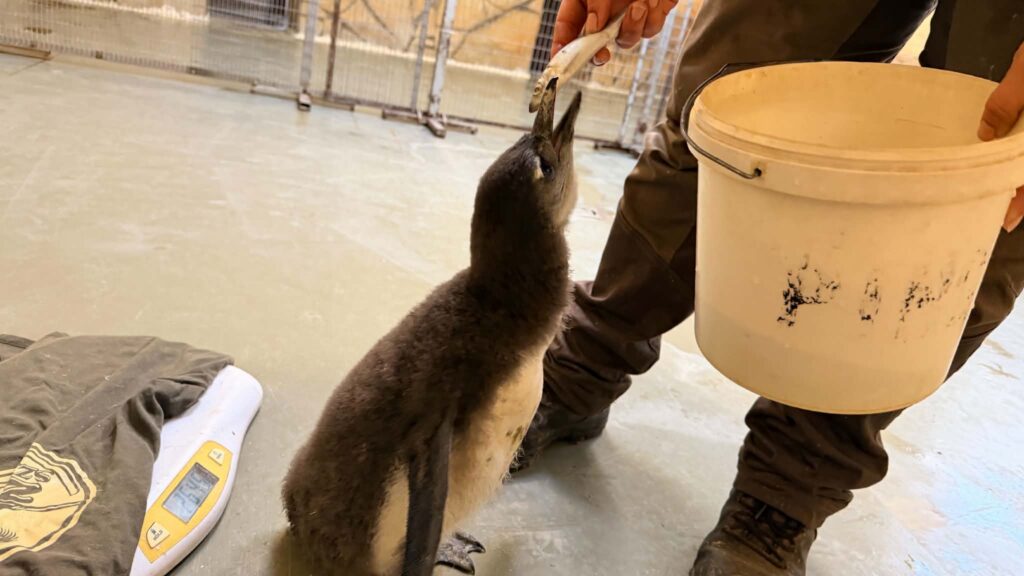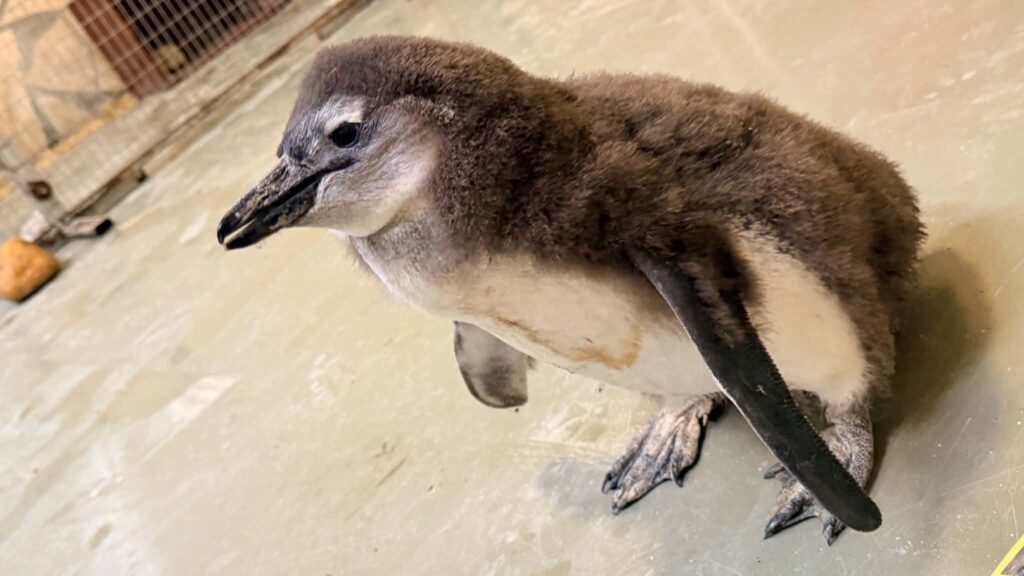
An African penguin chick is growing up at Szeged Zoo! The little newcomer hatched on 27 August and, although it has yet to be named, it already holds a special place in our keepers’ daily lives. It is happily taking food by hand and is expected to get to know the rest of the penguin colony in about a month.
The chick’s parents, Pihe and Pöttöm, also hatched here at our zoo. Sadly, its mother, Pöttöm, passed away, and its father did not continue caring for it on his own, so our keepers stepped in to look after the chick. Separation from its parents would have taken place around this time anyway, as young penguins need to learn to accept food by hand. This is also important so that medication can be given when needed. Fortunately, our little penguin is taking this new challenge in its stride and readily accepts the fish offered by its keepers.
@szegedzoo Pápaszemes pingvinfióka cseperedik a Szegedi Vadasparkban! 🐧 A kis jövevény augusztus 27-én bújt ki a tojásból, és bár neve még nincs, gondozóink mindennapjaiban már fontos helyet foglal el. Szépen eszik kézből, és várhatóan körülbelül egy hónap múlva a pingvincsapat többi tagjával is közelebbről megismerkedhet.🐟 A kis pingvin szülei Pihe és Pöttöm, akik szintén nálunk keltek ki. 😔 Sajnos anyja, Pöttöm elpusztult, apja egyedül nem folytatta a gondozását, így munkatársaink vették át a fióka ellátását. A szülőktől való elválasztás egyébként is nagyjából erre az időszakra esett volna, hiszen a fiatal pingvineknek meg kell tanulniuk kézből elfogadni a táplálékot. Ez azért is fontos, hogy a gyógyszereket be lehessen adni nekik. Szerencsére ügyesen veszi ezt az akadályt, és szépen elfogadja a felkínált halat.☺️ A következő nagy lépés a csapatba való beilleszkedés lesz. Ezt fokozatos összeszoktatás előzi meg, hogy a kis pingvin és társai is megbarátkozhassanak egymással. Addig is gondozóink figyelme és a finom falatok kísérik a mindennapjait. #szegedzoo #szegedivadaspark #nekedbe #foryoupage #africanpenguin ♬ Wiggle Wobble Time – Giggles & Grins
The next big step will be joining the colony. A gradual introduction will give the chick and the other penguins time to get used to one another. Until then, its days are filled with attentive care and tasty morsels.
Both parents usually share incubation and chick-rearing duties in African penguins. The chicks’ first fluffy down is not waterproof, so they have to wait until they develop feathers suited to life in the water before they can swim. Young penguins have greyish plumage, and it takes two years for the characteristic black-and-white adult colouring to develop.
These penguins can swim at speeds of up to 20 km/h and cover as much as 30–70 km on a single trip. They can also dive to depths of 30 metres in search of food. The species’ Hungarian name, which means “spectacled penguin”, refers to the pink patches of bare skin above its eyes, which help regulate body temperature. While swimming, its white belly helps conceal it from underwater predators, while its black back provides camouflage against birds of prey.
Threats to African penguins include oil pollution, declining food supplies due to fishing, and guano mining, which has disturbed the birds and contributed to their population decline.