
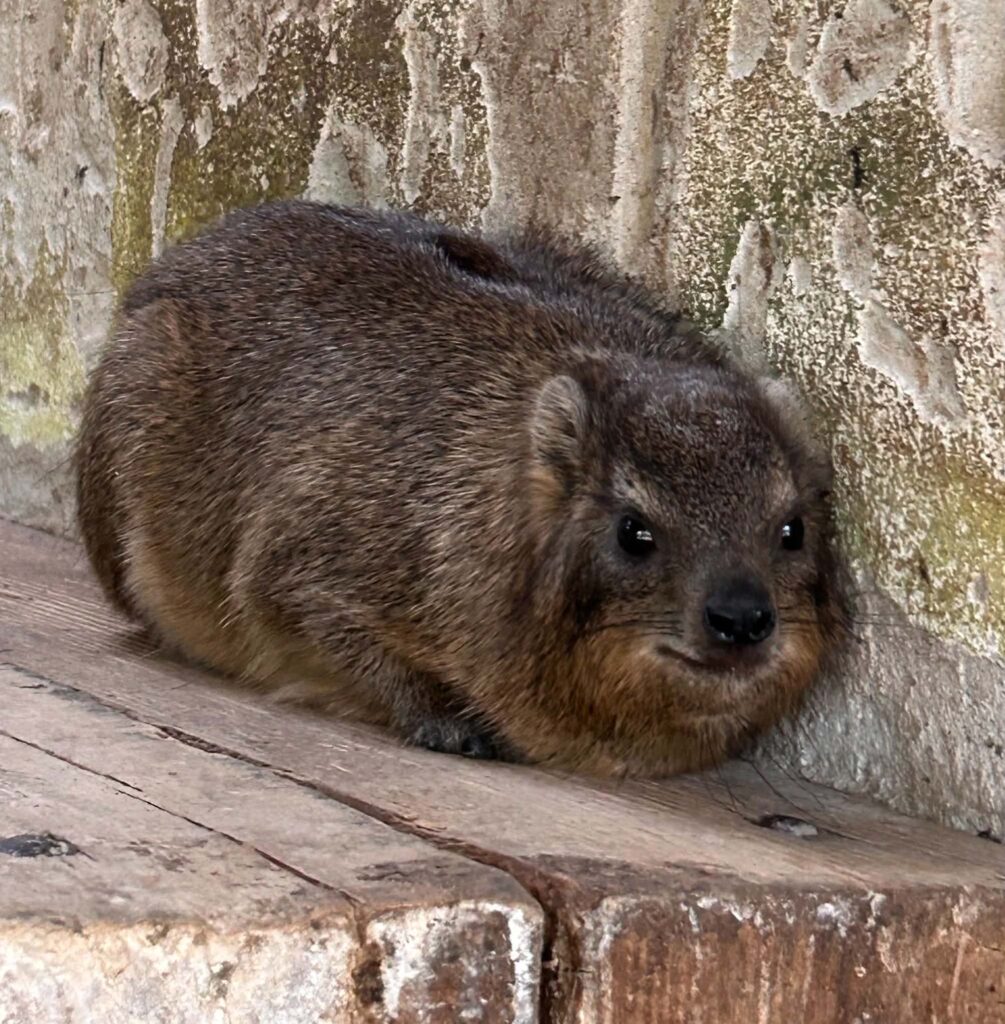
Rock Hyraxes Return to Szeged Zoo
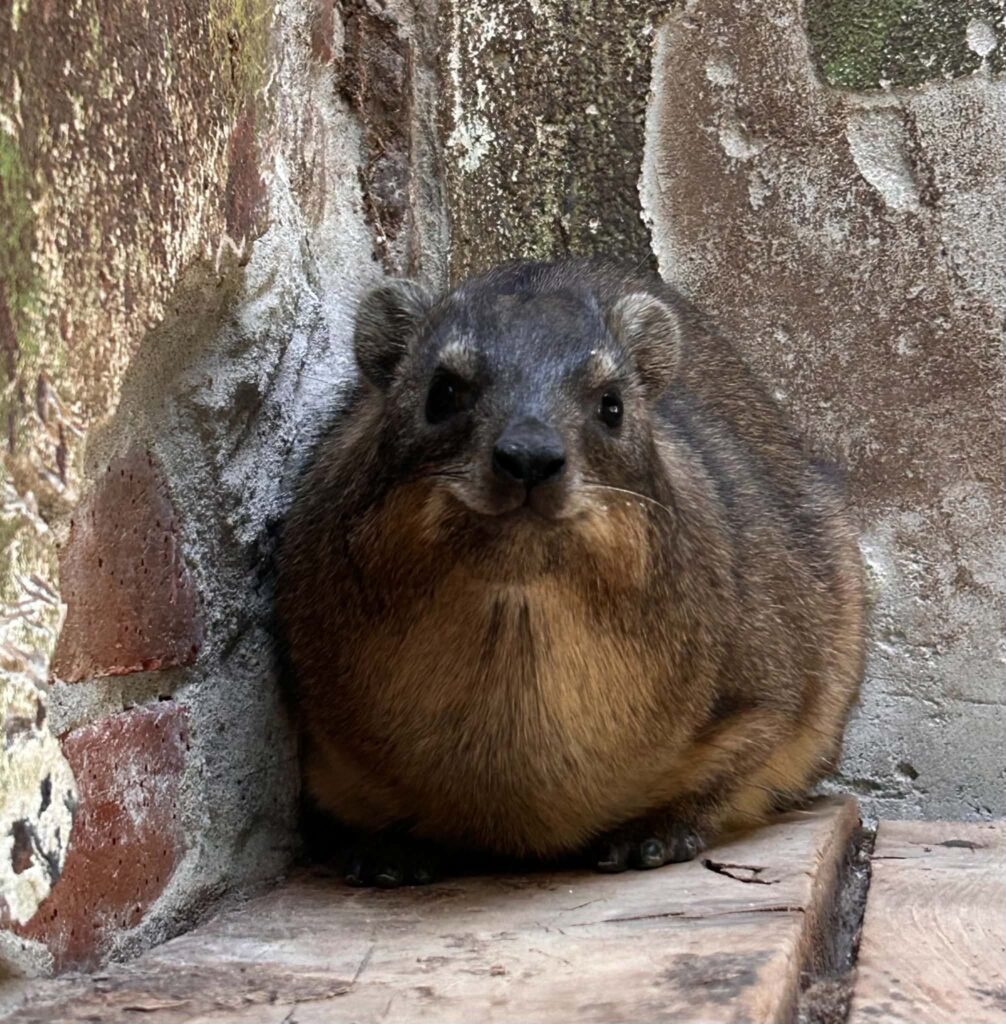
Following a break of several years, visitors to Szeged Zoo can once again see rock hyraxes, with three males recently arriving at the zoo. After completing their required quarantine period, the new residents have now moved into the outdoor enclosure they share with African vultures. The two groups coexist peacefully, as vultures pose no threat to living animals. Rock hyraxes are not entirely new to Szeged Zoo: the species was kept here in the past. Their return gives visitors another opportunity to discover these remarkable animals, which may resemble guinea pigs or marmots at first glance but have some surprisingly unusual relatives.
@szegedzoo 👀Három hím érkezésével, többéves kihagyás után ismét szirtiborzokat láthatnak a Szegedi Vadaspark látogatói. Az új lakók a kötelező karanténidőszak letelte után már külső helyüket is birtokba vették az afrikai keselyűkkel közös kifutóban. A két állatcsoport jól megfér egymás mellett, tekintve, hogy a keselyűk nem jelentenek élő állatokra veszélyt. ☺️A faj nem számít teljesen új lakónak nálunk: korábban már éltek szirtiborzok a Szegedi Vadasparkban. Néhány év kihagyás után most ismét visszatértek gyűjteményünkbe, így látogatóink újból megismerhetik ezeket a különleges, első pillantásra talán tengerimalacra vagy mormotára emlékeztető állatokat, amelyek valójában meglepő rokonsággal rendelkeznek.🦡 Kiderül egy következő videóból! #szegedzoo #szegedivadaspark #neked #foryoupage #hyrax ♬ The Playful Vine – Tilly Henson
Despite its name and appearance, the rock hyrax (Procavia capensis) is neither a badger nor a rodent. It belongs to a distinct order of mammals called Hyracoidea. Surprisingly, its closest living relatives include elephants and manatees. This does not mean that the rock hyrax is a direct descendant of elephants: the evolutionary history of all three groups can be traced back to a distant common ancestor.
Its upper incisors resemble tiny tusks, while the soles of its feet have flexible pads kept moist by glandular secretions. These help the animals grip the surface and move confidently across steep rocks. Rock hyraxes occur across much of Africa and in parts of the Middle East. They mainly inhabit rocky areas where crevices and cavities provide shelter from predators and extreme weather.
Rock hyraxes are social animals that usually live in colonies consisting of several individuals. While the group is feeding or resting, one animal often acts as a lookout, warning the others with an alarm call when danger approaches. Their vocal communication is surprisingly varied, including whistles, cries and a range of other calls.
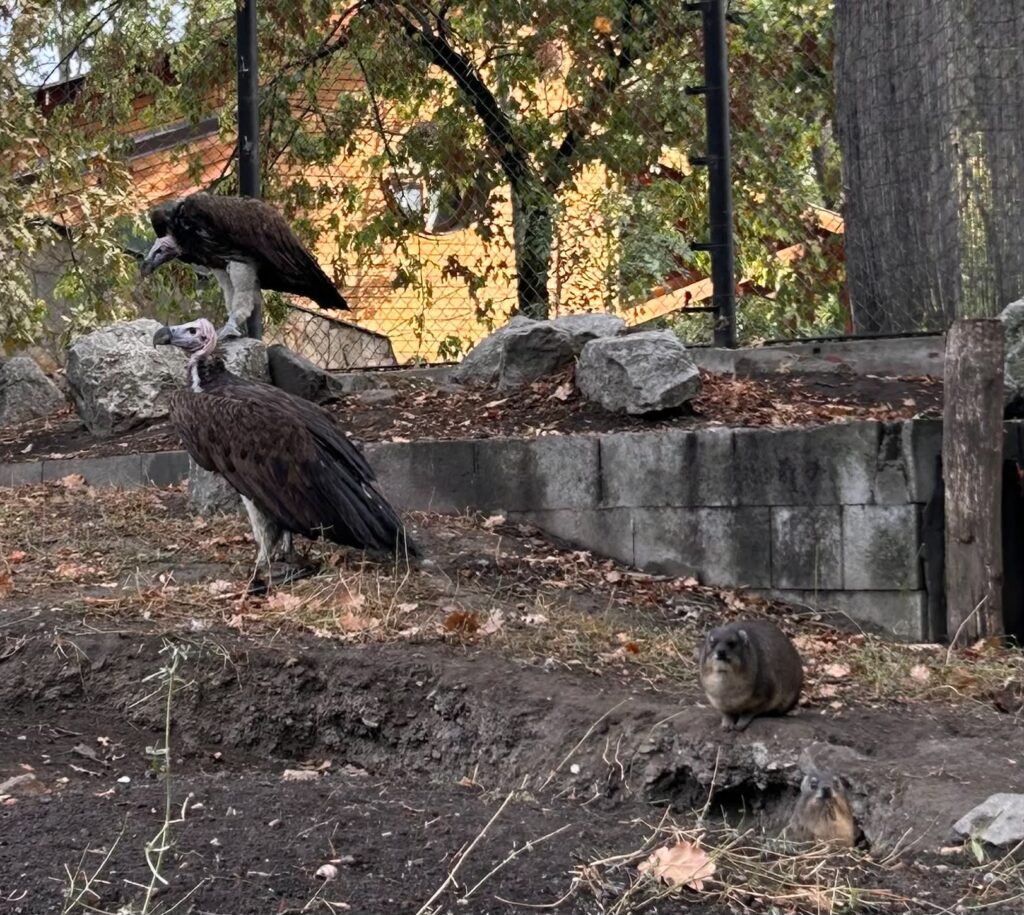
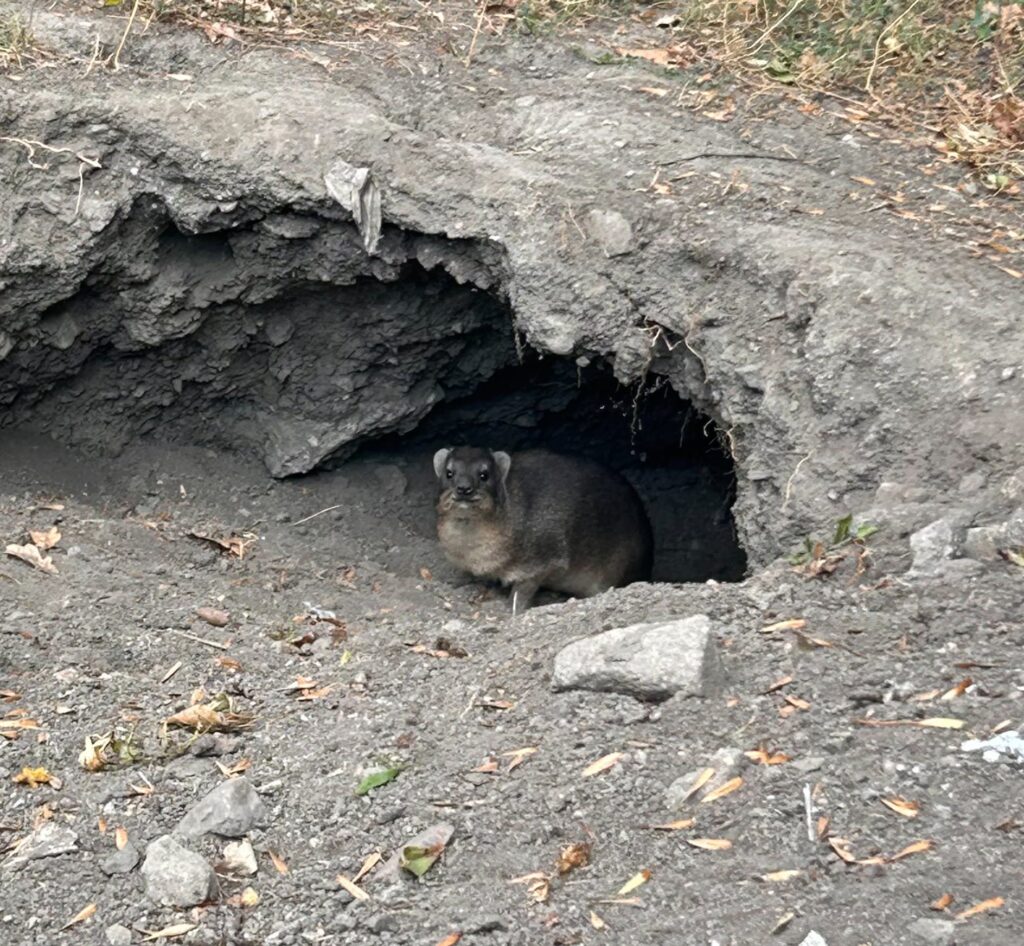
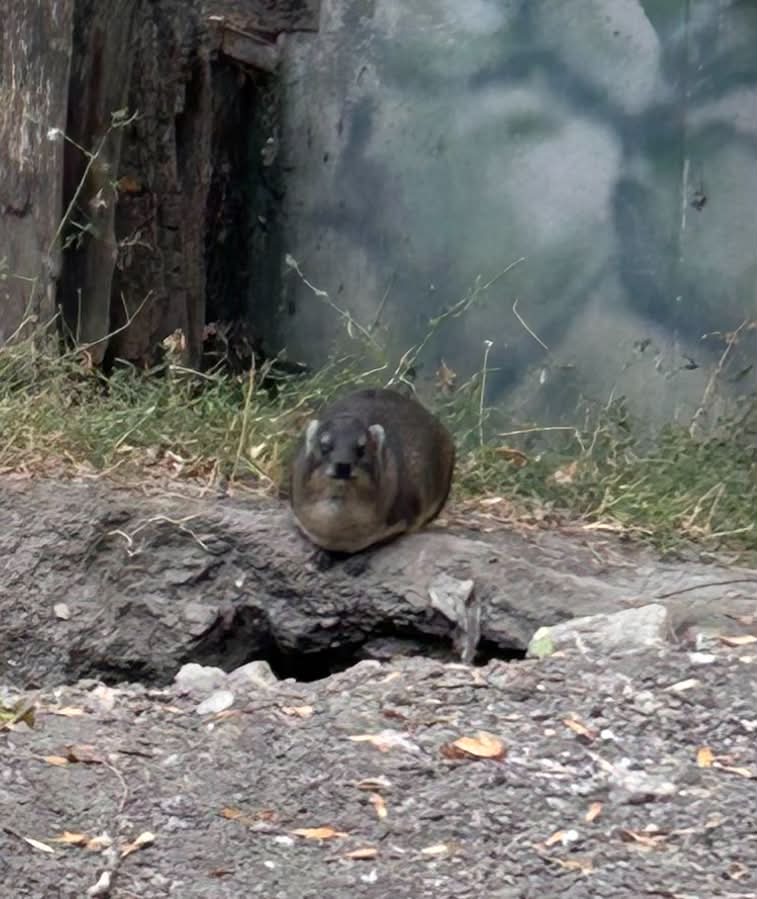
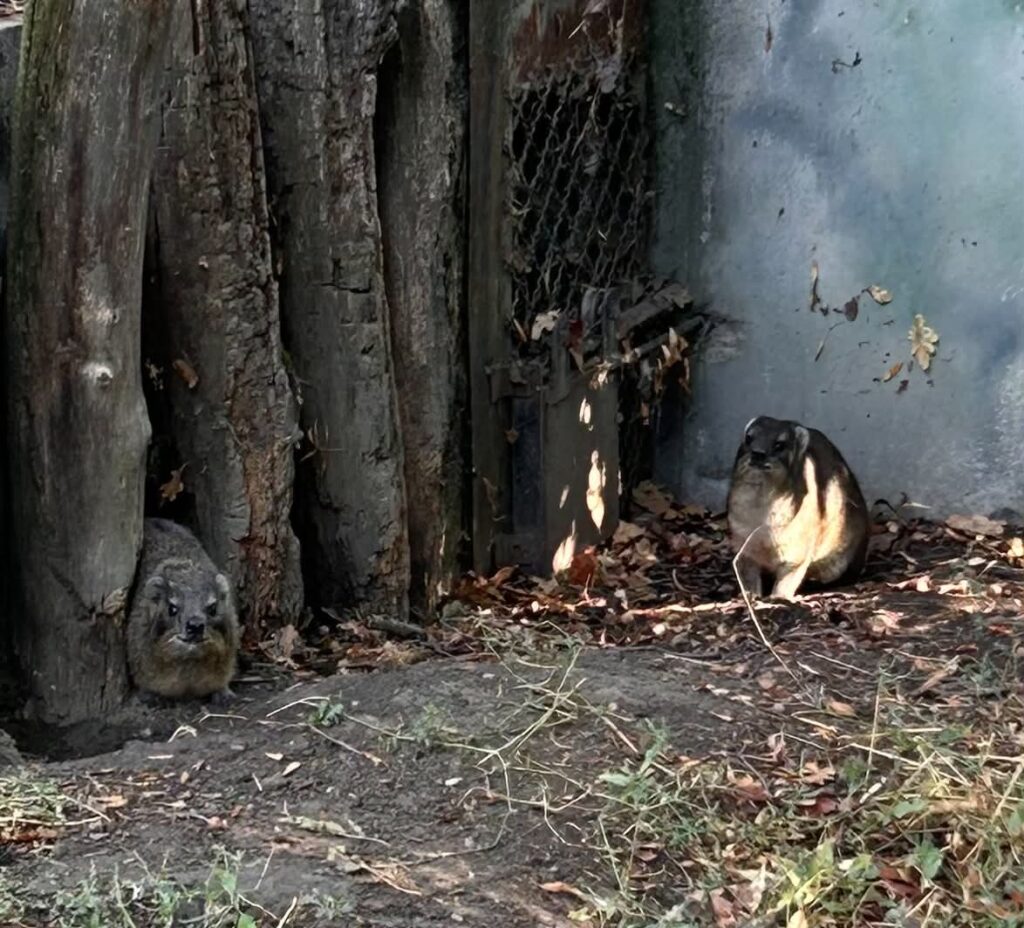
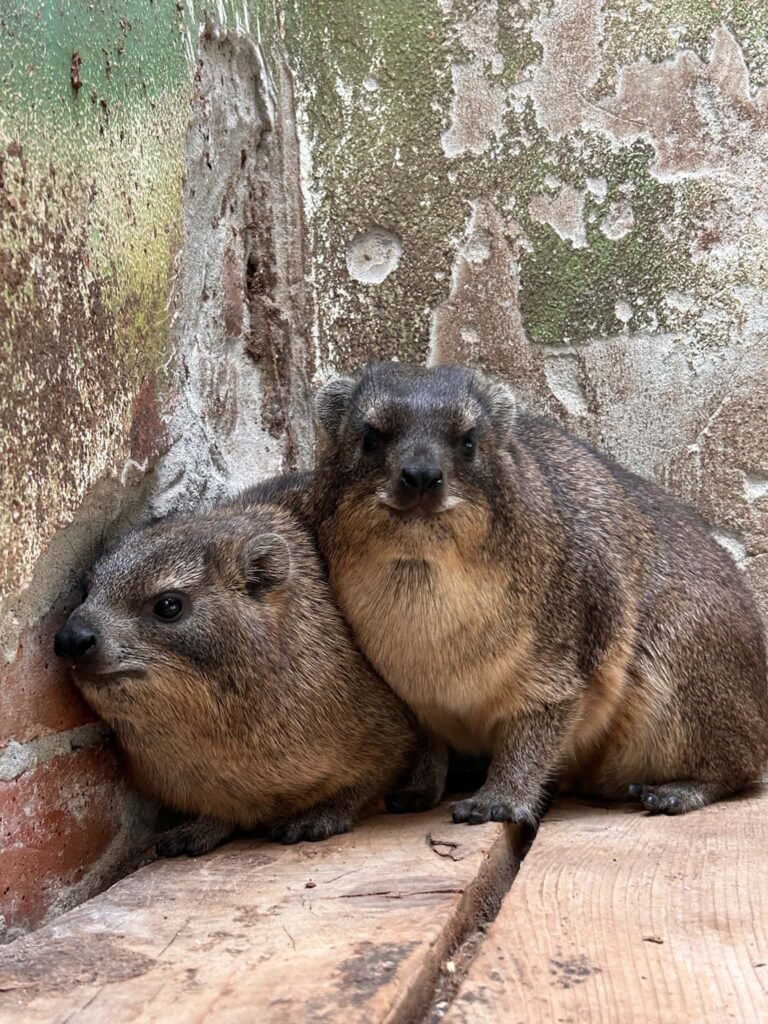
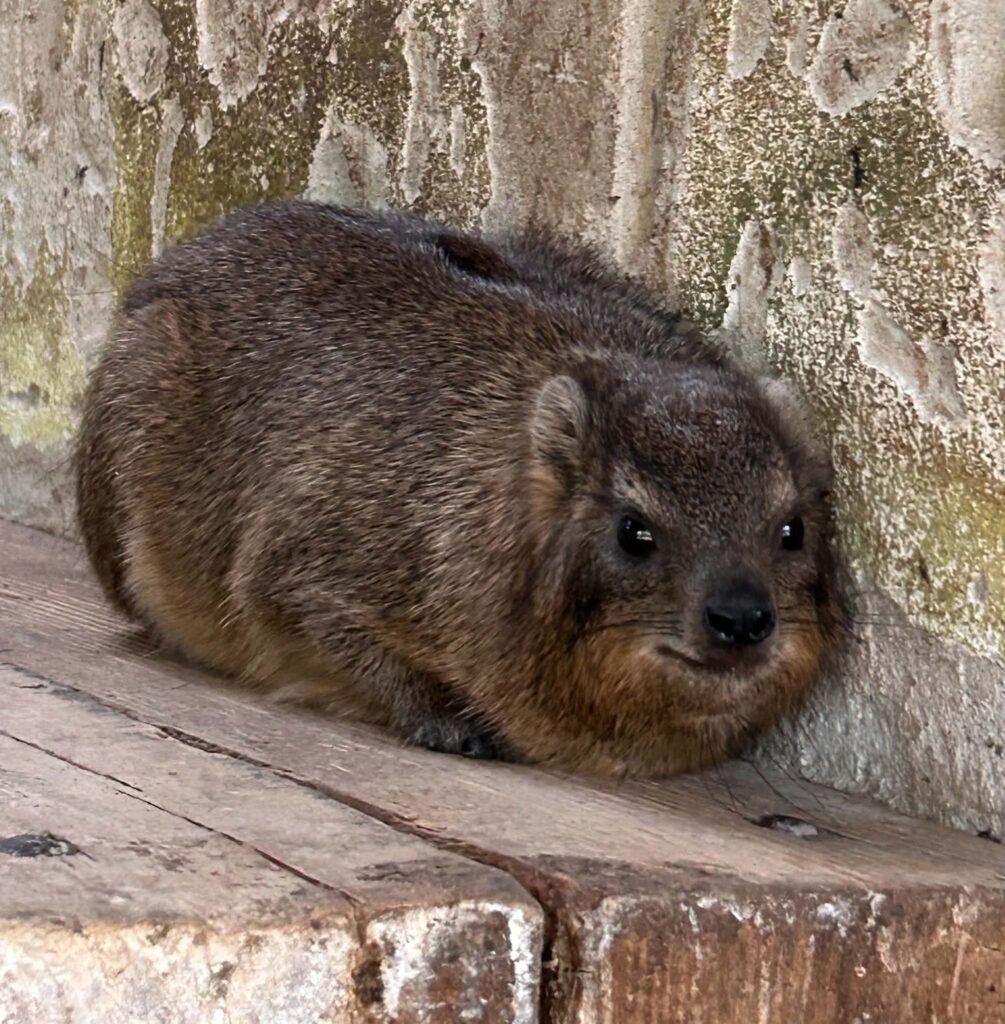
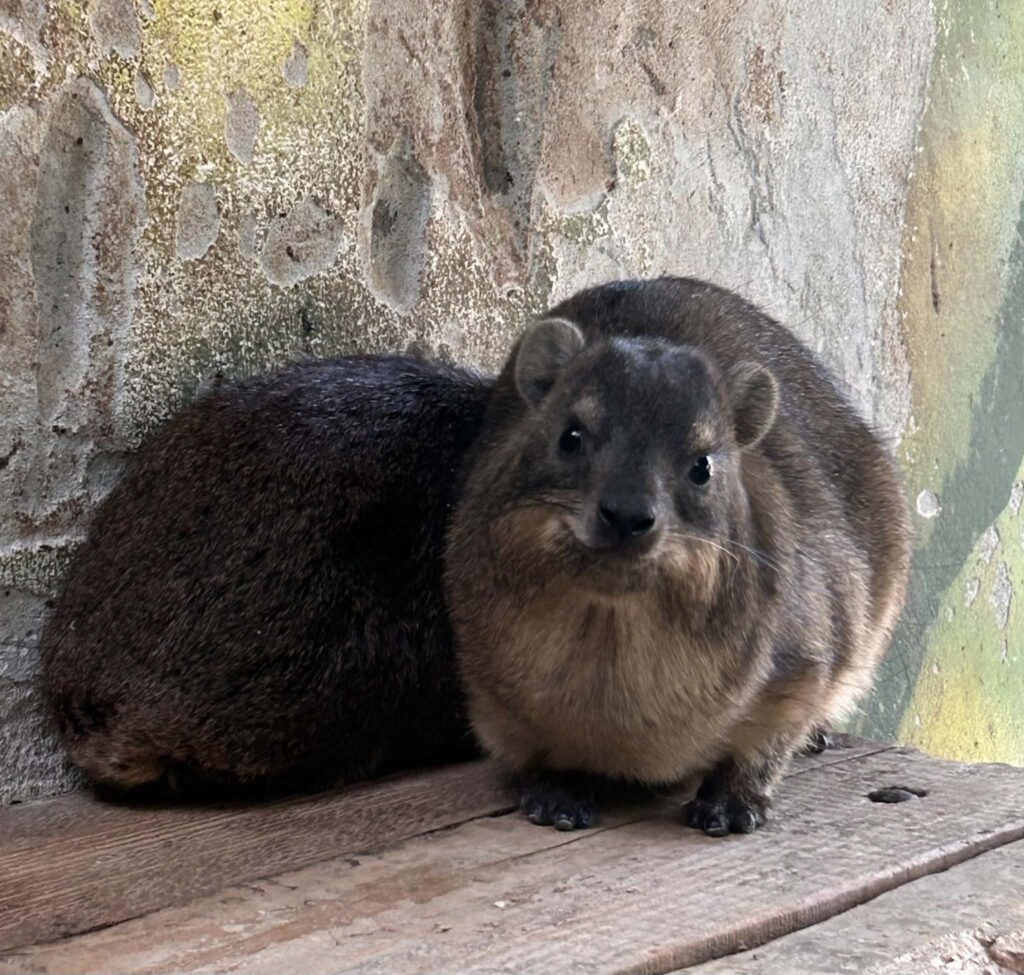
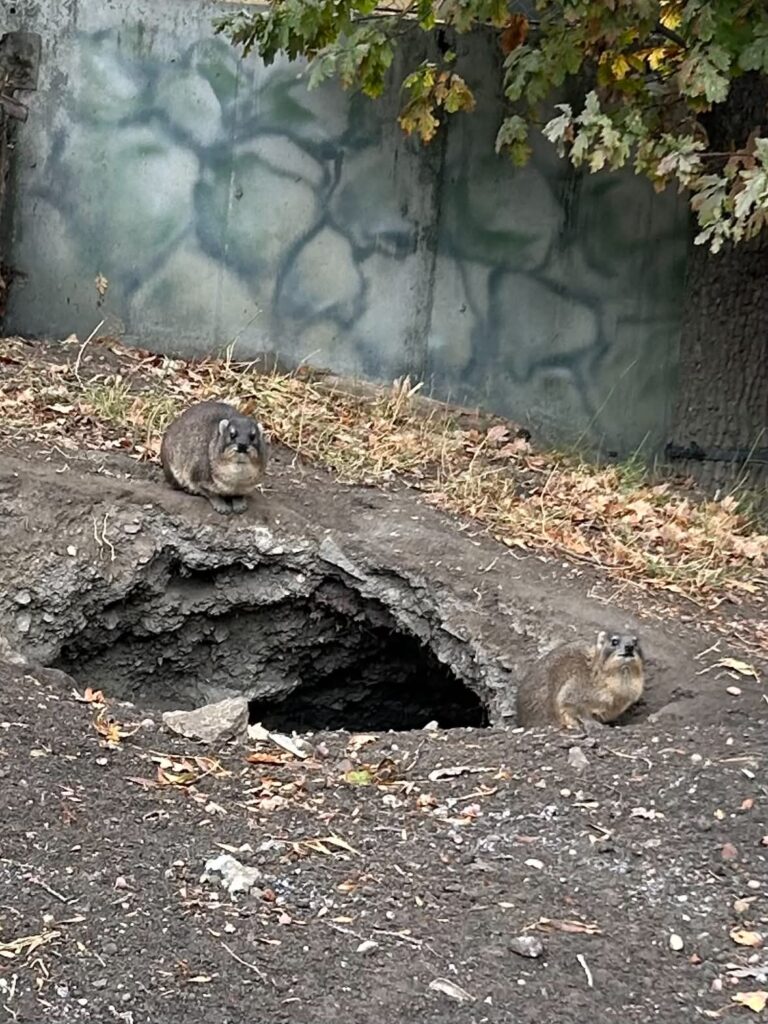
Their ability to regulate their body temperature is less efficient than that of many other mammals, so they also rely on their behaviour to adapt to changing temperatures. They enjoy basking in the morning sun and huddle together for warmth in cooler weather. On sunny days, they are therefore particularly worth looking for on the higher, sunlit parts of their enclosure.
After an unusually long gestation period of approximately seven months, females generally give birth to 1–4 well-developed young. The young are born fully furred and with their eyes open, and are able to follow their mother soon after birth.
The rock hyrax is a widespread species classified as Least Concern by the International Union for Conservation of Nature (IUCN). In European zoos, however, it is considered a zoological rarity. Its unusual evolutionary relationships, complex social behaviour and remarkable adaptations to rocky habitats make it an especially valuable species for education and raising awareness.