
Greater One-horned Rhino (Rhinoceros unicornis)
Habitat: Riverine grasslands, marshes, and forests of Asia
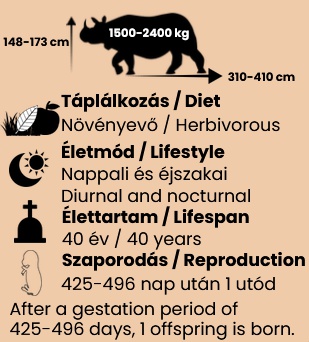
Diet: Herbivorous
The Indian rhinoceros has thick skin, about 2–5 cm in depth, with prominent folds that give it an appearance similar to the armor of medieval knights. Because of this, it is often called the “armored rhinoceros.” Despite its seemingly rigid look, the skin is actually flexible, allowing movement and helping regulate body temperature in hot, humid environments.
It has a single horn, present in both males and females, which can grow up to 52 cm long. One of the greatest threats to the species is poaching, as its horn is mistakenly believed to have medicinal properties in traditional medicine. In addition, expanding human populations and agriculture have reduced its natural habitat, so today it mainly survives in protected national parks.
Indian rhinos are most active in the late afternoon, early morning, and at night. They are often seen wallowing in mud, which helps prevent dehydration from sun exposure, aids in cooling, and protects against insects and parasites. During the dry season, they spend much of the day resting in the shade of vegetation. Their eyesight is poor, but their sense of smell and hearing are highly developed, helping them navigate their environment. They use their prehensile upper lip to graze on grasses and low vegetation.
Perissodactyla / Rhinoceriotidae
IUCN Redlist: VU (Vulnerable)


I.