
Harbour seal (Phoca vitulina)
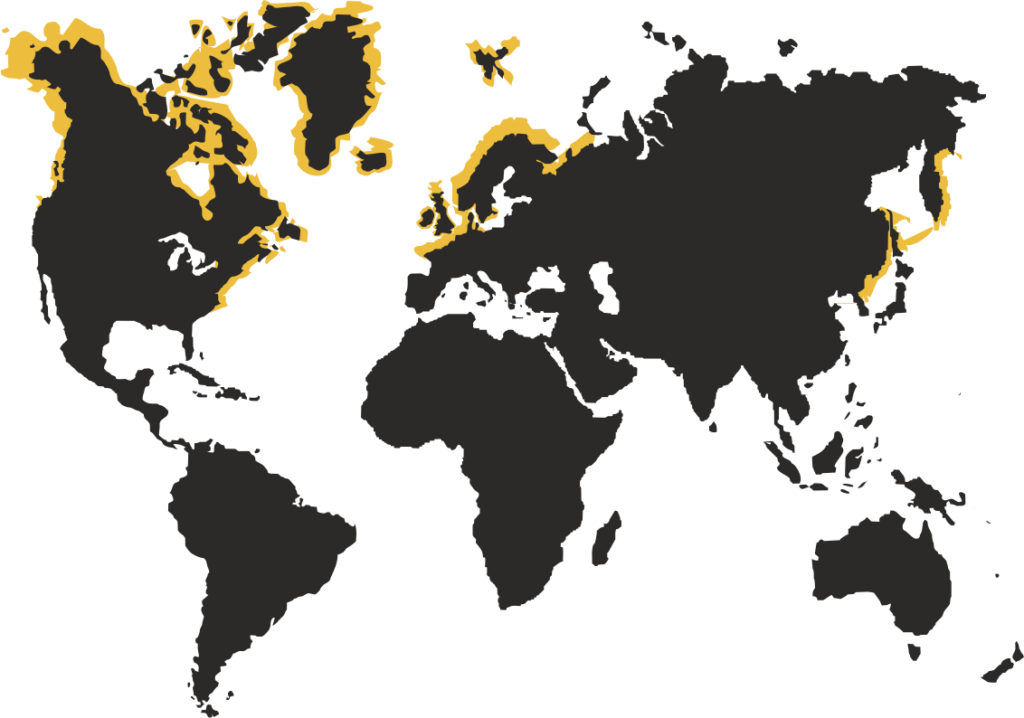
abitat: Coastal waters of the Atlantic and Pacific Oceans
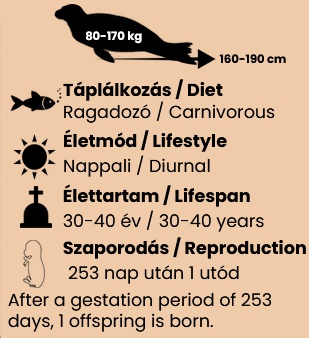
Diet: Carnivorous
The harbor seal has one of the widest distributions among seal species, living in the cold seas of the Northern Hemisphere.
They can stay underwater for up to 30 minutes, typically diving to depths of around 91 meters, but they are capable of reaching as deep as 427 meters. Their bodies are streamlined and torpedo-shaped, with dense, short fur and webbed limbs. On land, they move clumsily, but in water they are agile and fast swimmers.
Harbor seals are alert animals, constantly observing their surroundings, and they are known for their playful behavior. Their sensitive whiskers and excellent eyesight help them locate prey. They mainly feed on fish such as cod, mackerel, and herring, but also consume crustaceans and mollusks, eating about 5–7 kg of food daily.
Pups are born on land and quickly learn to swim, soon following their mothers into the water. Females nurse their young for about four weeks, producing milk with a fat content of around 50%, which allows the pups to grow rapidly. Harbor seals often fall prey to sharks, orcas, and polar bears, and many also die after becoming entangled in fishing nets.
Carnivora / Phocidae
IUCN Redlist: LC (Least concern)