
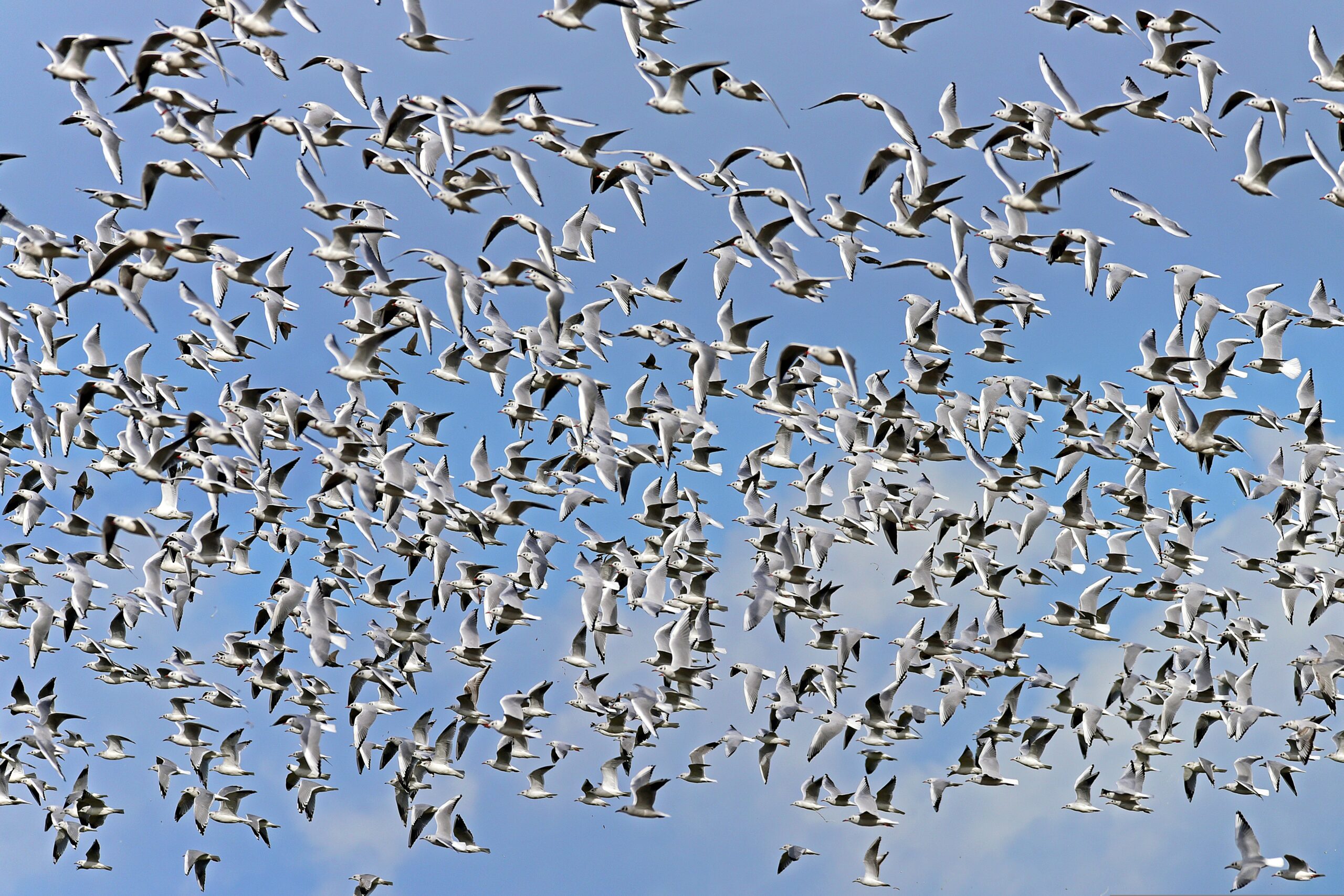
Black-headed gull (Chroicocephalus ridibundus)

The black-headed gull is the most common gull species breeding in Hungary. Many pass through the country in spring and autumn, while birds from farther north arrive at our lakes and rivers in winter. You may see them in towns and farmland as well as near water.

During the breeding season, the black-headed gull has a dark brown hood, which disappears in winter, leaving a dark spot behind each eye. It nests in large colonies, where the birds work together to drive away predators. Both parents incubate the usually three eggs, and the chicks learn to fly at around 5–6 weeks old. Its varied diet includes insects, other invertebrates, fish and small animals.

They live here too

Eurasian griffon

Eurasian griffon (Gyps fulvus) Order: AccipitriformesFamily: Accipitridae IUCN Red List: LC (Least Concern) II. Habitat Africa, Europe, Asia Information The closest significant population of Eurasian griffons to Hungary is located on...

Bristlenose Pleco

Algaevő harcsa (Bristlenose Pleco) Order: SiluriformesFamily: Loricariidae A peaceful aquarium fish native to the freshwater habitats of South America. It uses its sucker-like mouth to scrape...

Alpaca

Alpaca (Vicugna pacos) Studies on different archeological sites in South America suggest that alpacas were domesticated approximately 6000 years ago. In 2001, however, Kadwel et...

Siberian ibex,

Siberian ibex (Capra sibirica) This page is currently under construction! Thank you for your patience!

Common Shelduck

Common Shelduck (Tadorna tadorna) Order: AnseriformesFamily: Anatidae IUCN Red List: LC (Least concern) A protected species in Hungary! Habitat Marshes and coastal wetlands of Europe and Asia Informations The common shelduck...