
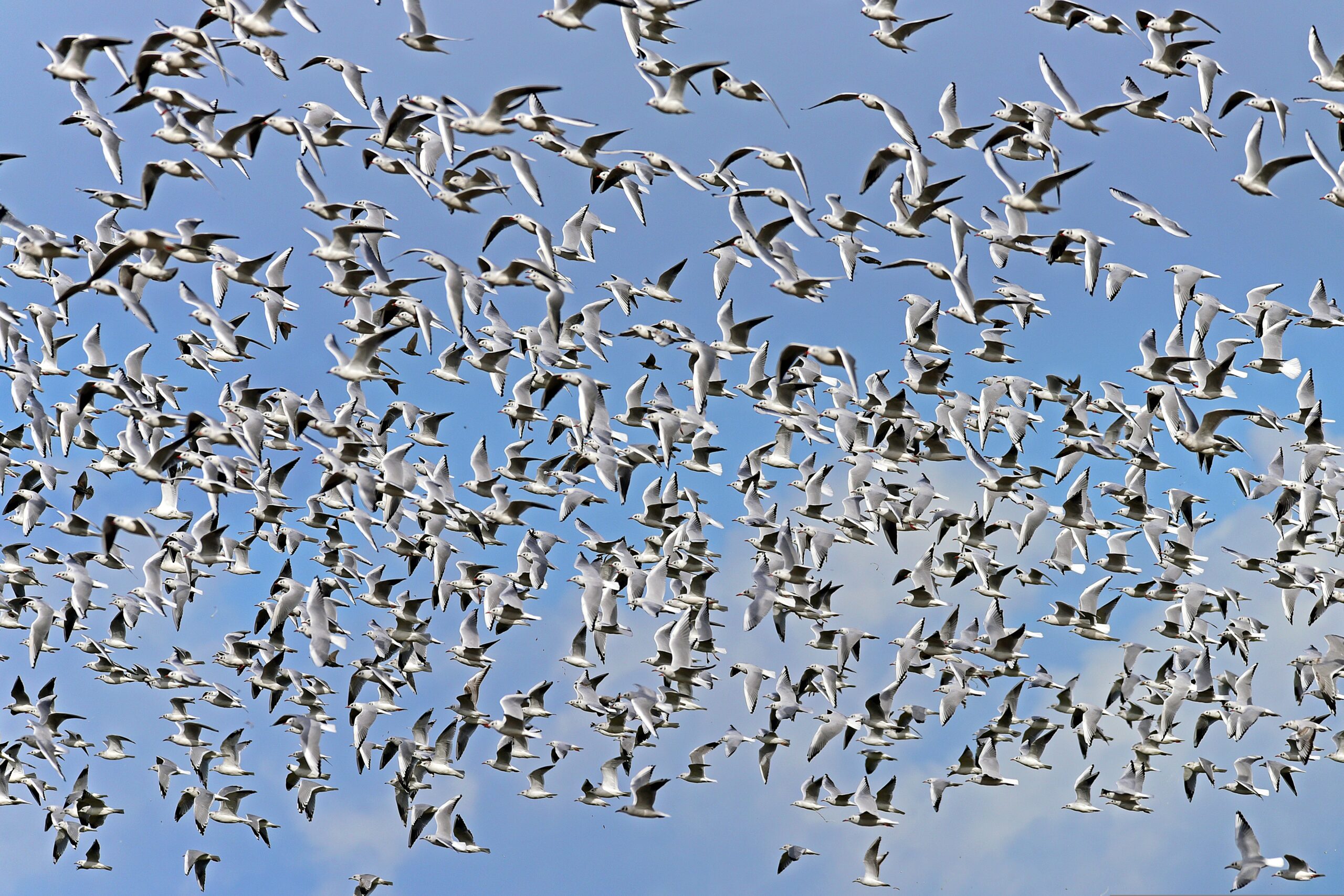
Black-headed gull (Chroicocephalus ridibundus)

The black-headed gull is the most common gull species breeding in Hungary. Many pass through the country in spring and autumn, while birds from farther north arrive at our lakes and rivers in winter. You may see them in towns and farmland as well as near water.

During the breeding season, the black-headed gull has a dark brown hood, which disappears in winter, leaving a dark spot behind each eye. It nests in large colonies, where the birds work together to drive away predators. Both parents incubate the usually three eggs, and the chicks learn to fly at around 5–6 weeks old. Its varied diet includes insects, other invertebrates, fish and small animals.

They live here too

Jaguar

Jaguar (Panthera onca)  Habitat: Tropical rainforests and wetlands of the Americas Diet: Carnivorous The jaguar is not only powerful in build—with large paws and strong claws—but also...

African fruit beetle

African fruit beetle Order: Beetles (Coleoptera)Family: Scarab beetles (Scarabaeidae) Habitat Africa Informations These strikingly colourful African beetles, with their remarkably varied patterns, are close relatives of the rose chafer...

Domestic donkey

Domestic donkey (Equus africanus f. asinus) The domestic donkey is descended from the African wild donkey and is one of the earliest animals domesticated by...

Northern Shoveler

Northern Shoveler (Spatula clypeata) Order: AnseriformesFamily: Anatidae A migratory species widespread across Europe, Asia, and North America. It prefers shallow, muddy waters, marshes, and lagoons. Its...

Common Shelduck

Common Shelduck (Tadorna tadorna) Order: AnseriformesFamily: Anatidae IUCN Red List: LC (Least concern) A protected species in Hungary! Habitat Marshes and coastal wetlands of Europe and Asia Informations The common shelduck...