Rook (Corvus frugilegus)
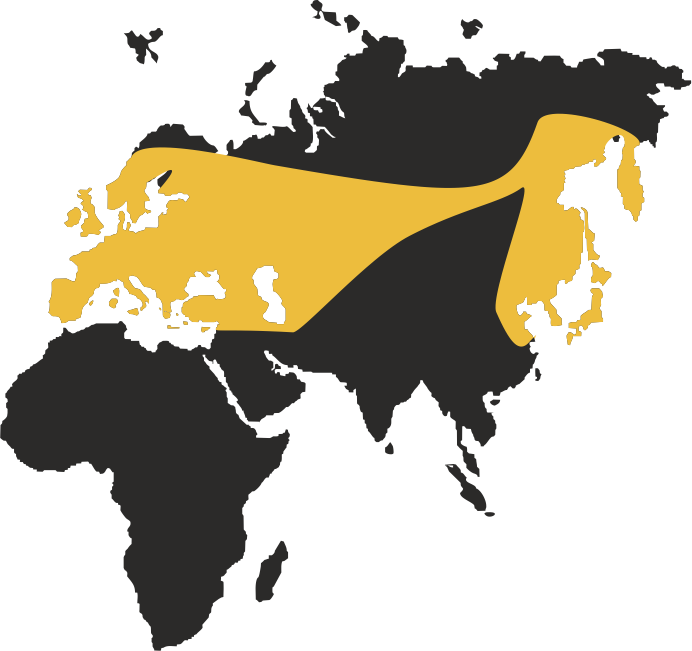
Habitat: Groves and open landscapes of Europe and Asia
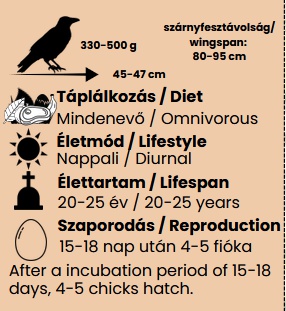
Diet: Omnivorous
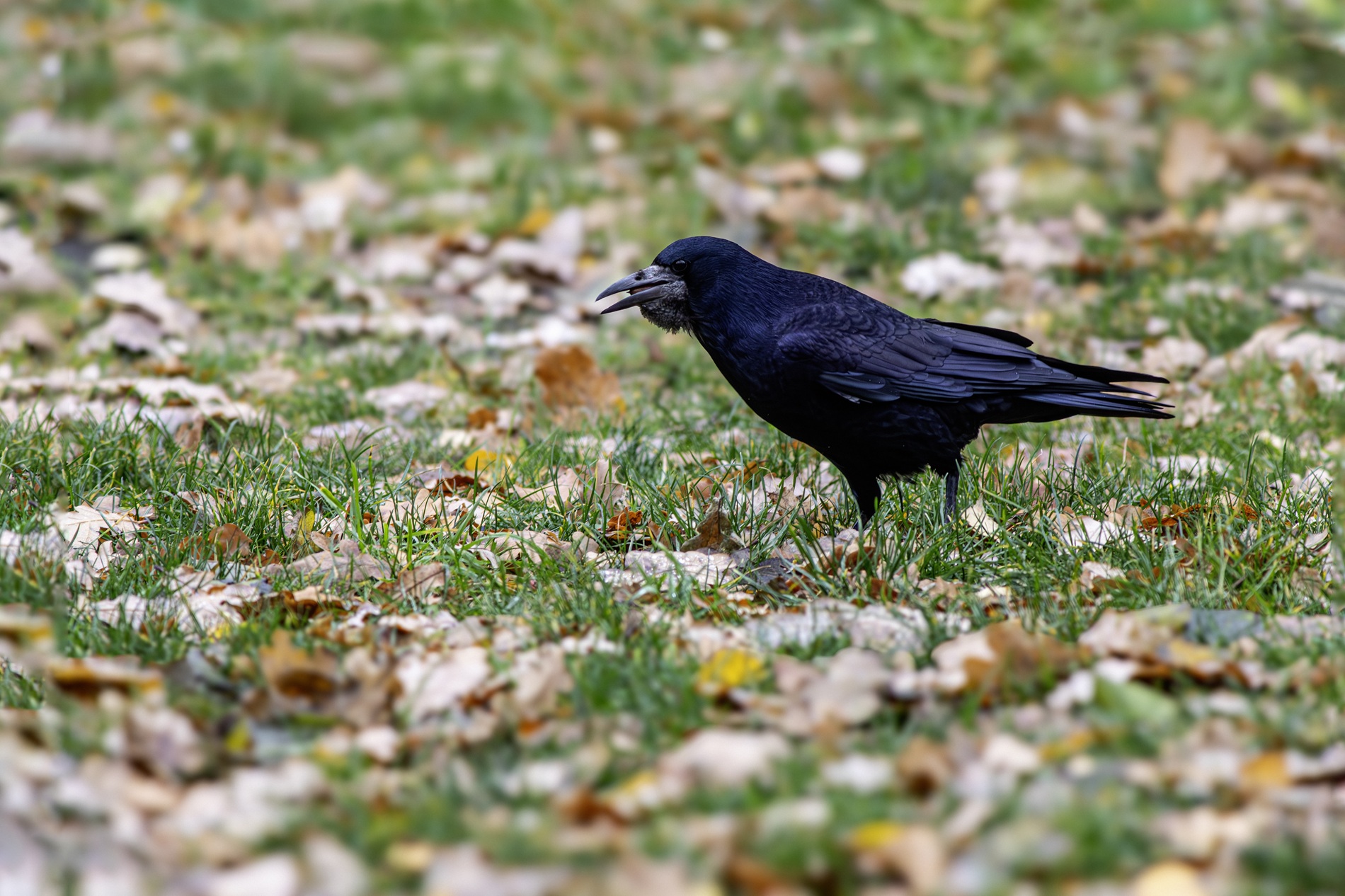
The rook is a widespread member of the crow family across Europe and Asia, and it becomes especially noticeable in Hungary during autumn and winter. From mid-autumn to March, large flocks—sometimes numbering in the thousands—can be seen leaving their roosts in the morning to forage and returning at dusk, forming impressive “black clouds” in the sky. Many of the individuals seen in Hungary are winter visitors arriving from northeastern breeding areas, while other bird species are leaving the region at the same time.
Rooks have a highly adaptable diet. They feed on scattered crops in fields, small rodents, insects and other invertebrates that emerge during milder weather, and increasingly on food waste at landfills. In spring, some flocks move on, while others remain and breed in colonies, often building large nesting sites high in tree canopies. Their nests are made of twigs and reinforced with mud on the inside.
These nests are frequently reused by other species, including the rare red-footed falcon, which relies on them for successful breeding. In the past, rooks were considered noisy and harmful, leading to widespread persecution. As a result, their population declined by around 90%, which also negatively affected species that depended on their nests. Today, the rook is protected in many areas and is recognized as an ecologically important species.
Verébalakúak rendje (Passeriformes)
Varjúfélék családja (Corvidae)
IUCN Redlist: LC (Least Concern)