
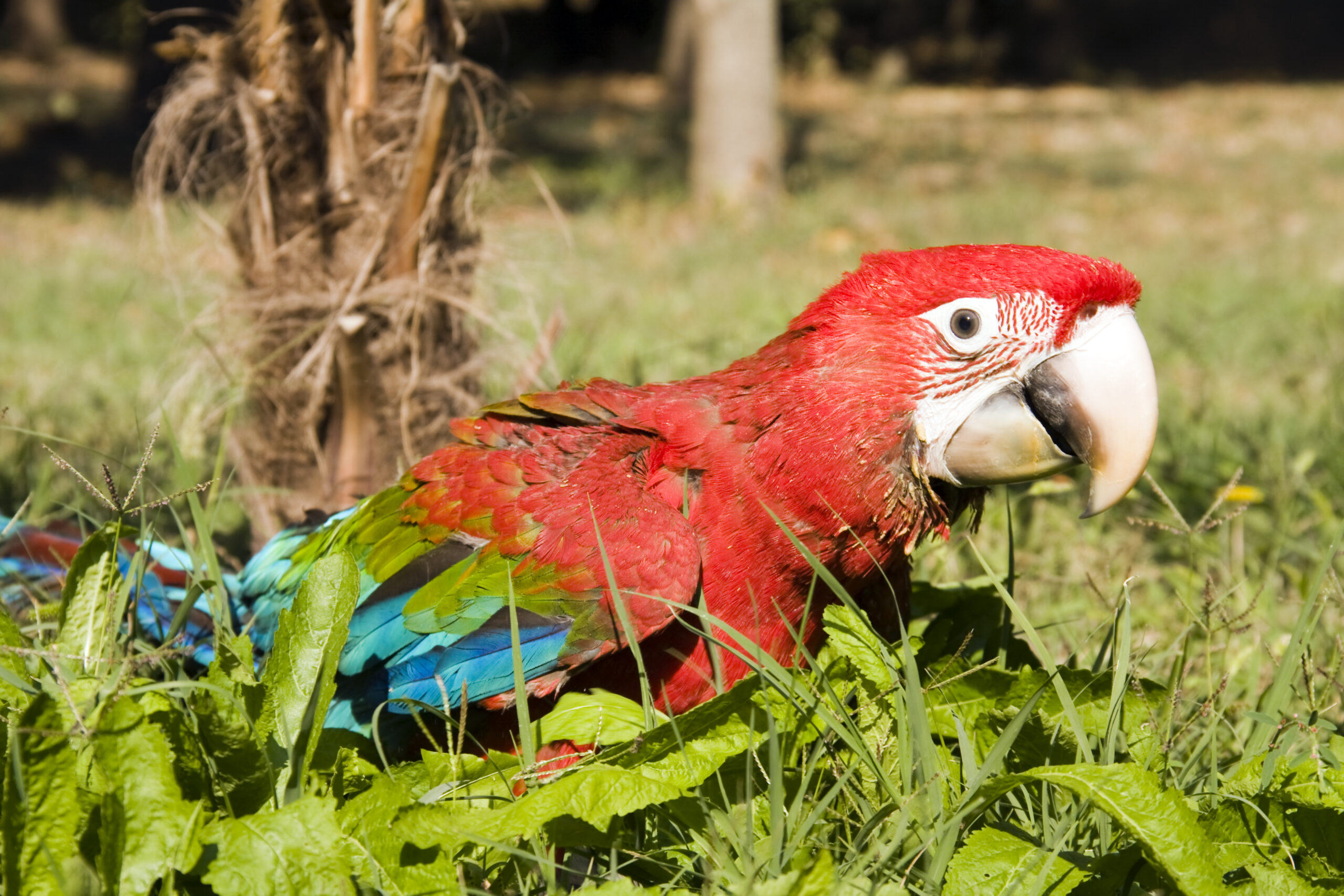
Red-and green macaw (Ara chloropterus)
Order: Psittaciformes
Family: Psittacidae
IUCN Red List: LC (Least Concern)

II.
Habitat
South-America, rainforests.

Information
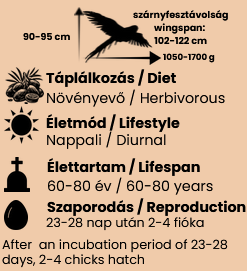
The Red-and-green macaw nests in the hollows of decaying palm trees. The chicks hatch at intervals of 1 to 5 days and begin to grow feathers within 8 days. They fledge after approximately 90 days but may stay with their family for up to a year. They choose a partner for life. Both members of the pair participate in nest building and feeding the chicks, and they return to the same nest for several years. Diet: herbivorous.
From early morning until afternoon, they gather along clay licks with other macaw species. The clay helps detoxify their systems and provides them with essential minerals. This behavior is characteristic not only of macaws but also of other birds and even mammals, such as tapirs and bush dogs. If they sense danger, they warn each other with loud calls.
With their powerful beaks, they are capable of crushing even the hardest shells; they can even use their beaks to hang from branches. They are extremely intelligent birds, capable of mimicking sounds, learning quickly, and showing great curiosity. In captivity, if they become bored, their behavior can become problematic.