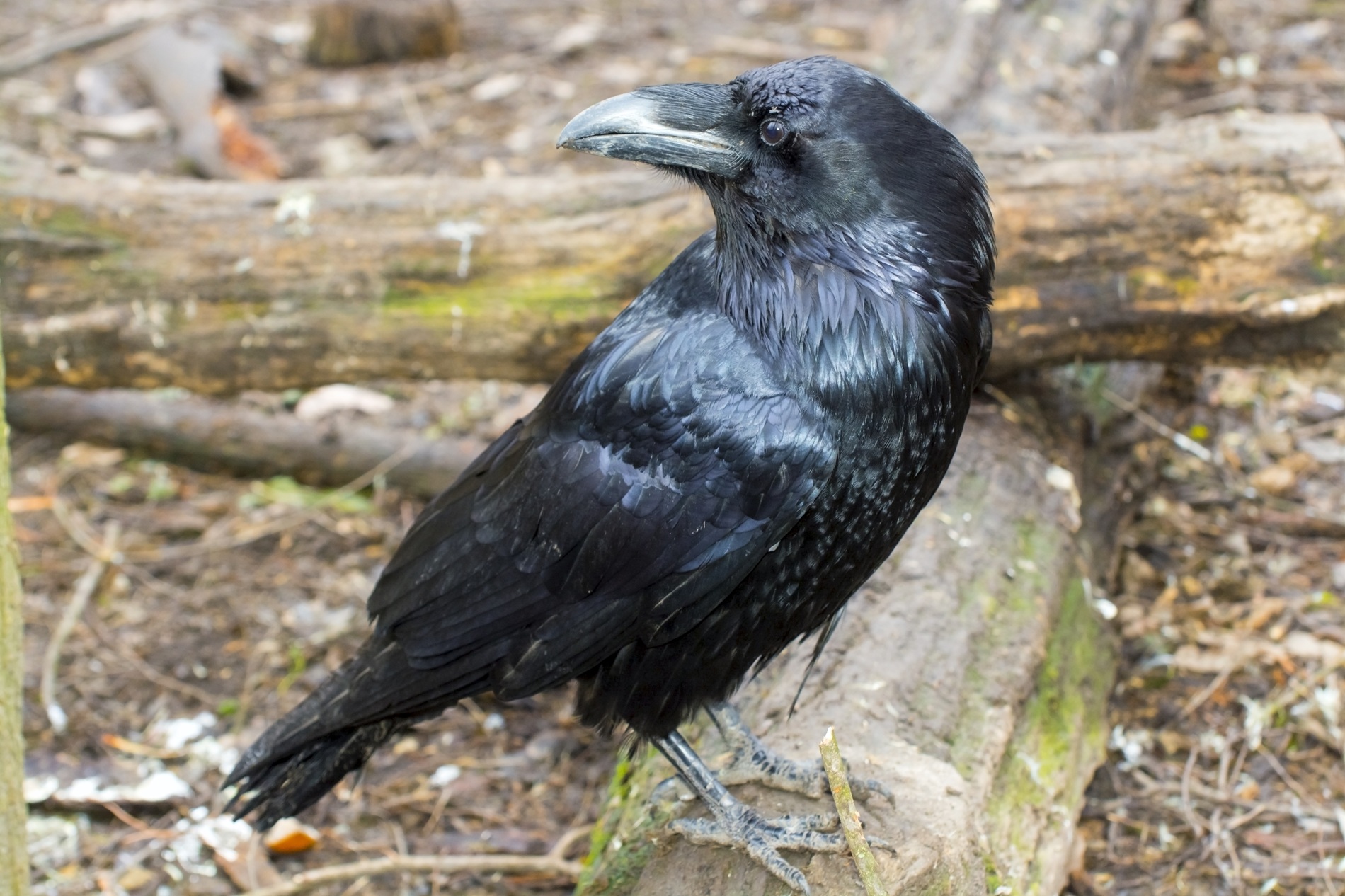
Raven (Corvus corax)
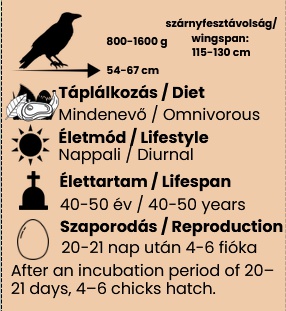
Habitat: Mountainous and lowland forests of Europe, North America and Asia
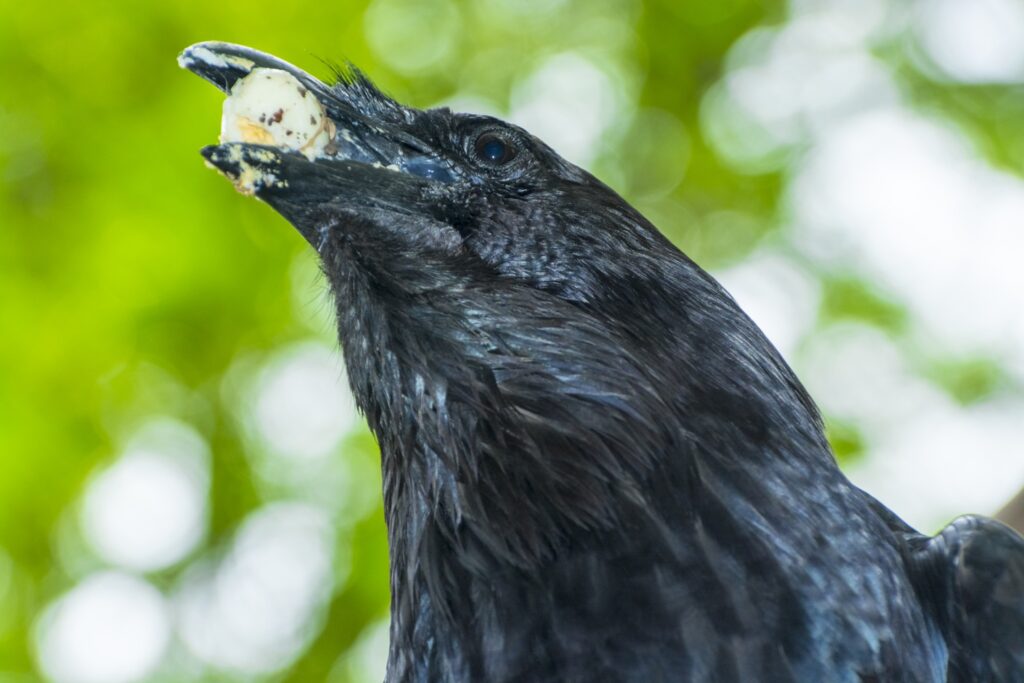
Diet: Omnivorous
The common raven is considered one of the most intelligent birds in the world. Its brain size relative to its body rivals that of chimpanzees. It is known for its exceptional problem-solving abilities, capacity for learning and remarkable memory. Ravens can imitate a wide range of sounds, including human speech. While many birds store food, ravens do so with particular cunning: they watch each other, steal hidden caches, and sometimes even pretend to hide food to deceive potential thieves.
The raven also holds an important place in Hungarian culture. It was the heraldic animal of the Hunyadi family and served for a long time as a symbol of the Hungarian postal service. According to tradition, during the captivity of King Matthias in Prague, his mother sent him messages with the help of a raven. The bird also appears in the coat of arms of the Pauline Order, and its name is preserved in several place names, such as Hollóháza and Hollókő. Many cultures across the Northern Hemisphere have attributed sacred or mythical significance to this species.
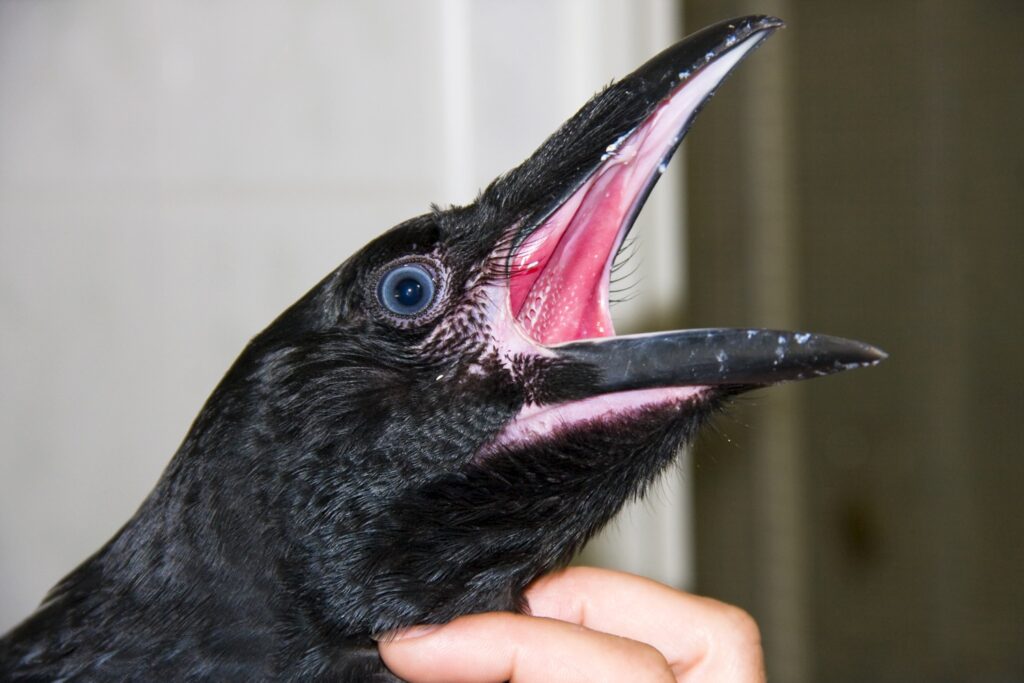
A rare curiosity is the occasional appearance of albino ravens. In Hungary, one such case was recorded in the early 1900s near Hódmezővásárhely, where completely pigment-less chicks were observed leaving the same nest every few years, making it a remarkable natural phenomenon.
Passeriformes / Corvidae
IUCN Redlist: LC (Least Concern)