
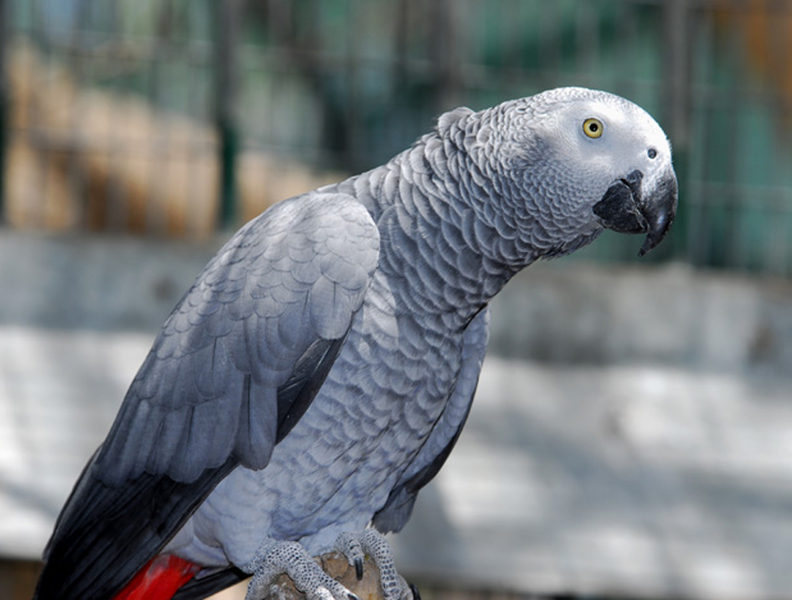
Grey parrot (Psittacus erithacus)
Order: Psittaciformes
Family: Psittacidae
IUCN Red List: EN (Endangered)

I.
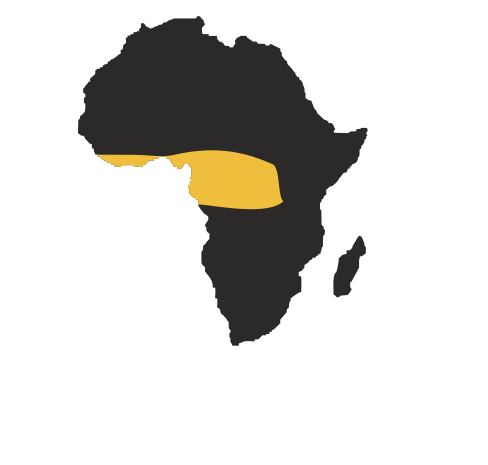
Habitat
The grey parrot is native to equatorial Africa.
Information
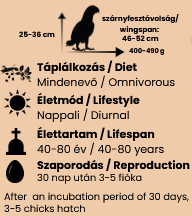
Diet: omnivorous, fruit, nuts, and seeds, including oil palm fruit.
The intelligence of the Grey Parrot rivals that of primates and dolphins; it possesses advanced problem-solving skills. It can deceptively mimic a wide variety of sounds, whether it be a bird’s song, a human voice, or even the creaking of a chair. They are capable of learning as many as 800–900 words. In captivity, they can live for 40–50 years.
The sexes cannot be distinguished by appearance with total certainty; only a DNA test provides accurate results. Established pairs stay together for life. During incubation, the female sits on the eggs while the male feeds her. Once hatched, both parents take turns caring for and feeding the chicks.
They consume seeds, nuts, fruits, flowers, leaves, insects, and snails. Their powerful beak is not only suitable for cracking hard seeds but also for climbing. They are important seed dispersers in their ecosystem.
Their toes are zygodactyl, meaning two face forward and two face backward. This helps them grip more securely, allowing them not only to stay on vertical surfaces but also to hang upside down.
In its natural habitat, the Grey Parrot is hunted; furthermore, it is threatened by the illegal wildlife trade and the loss of its habitat.