Addax (Addax nasomaculatus)
Order: Artiodactyla
Family: Bovidae
IUCN Red List: CR (Critically endangered)


I.
Habitat
Semi-desert regions and sandy or rocky deserts of Africa
Information
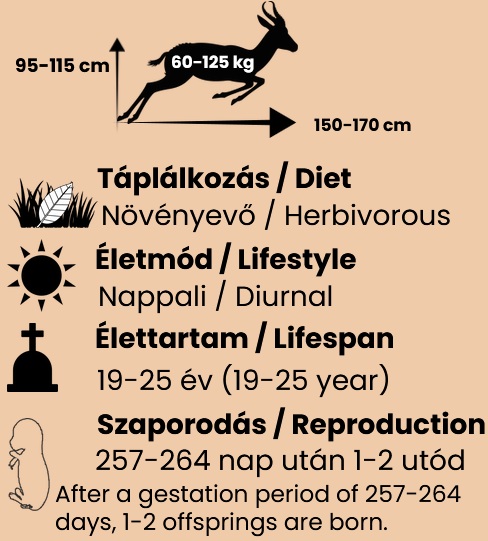
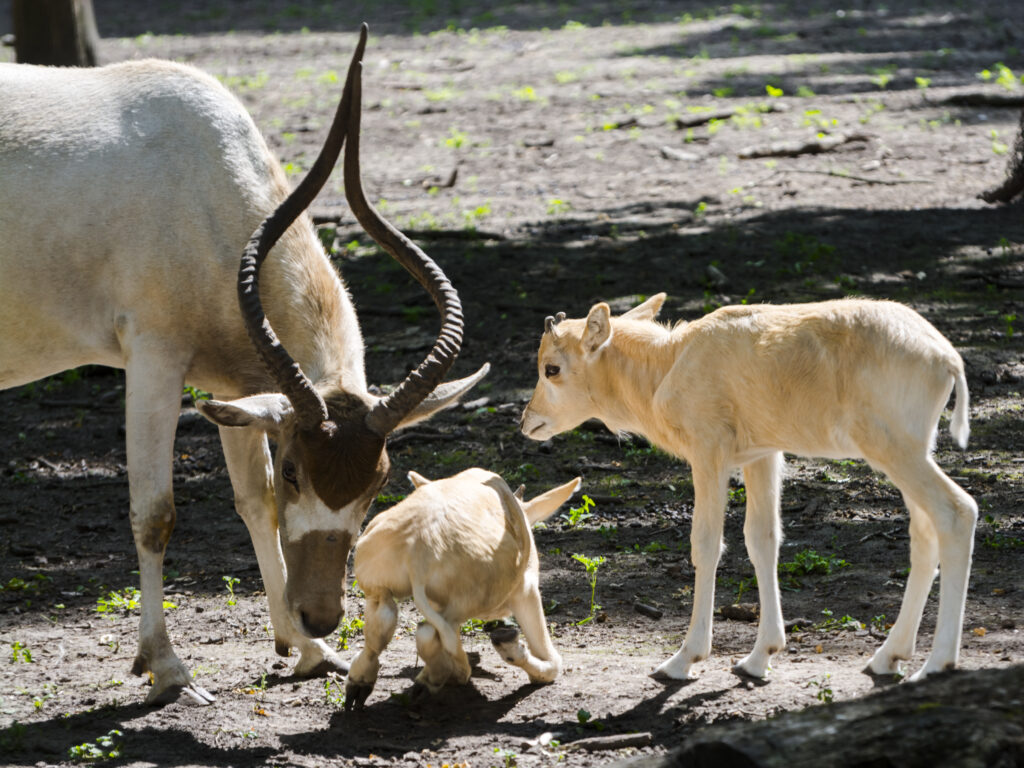
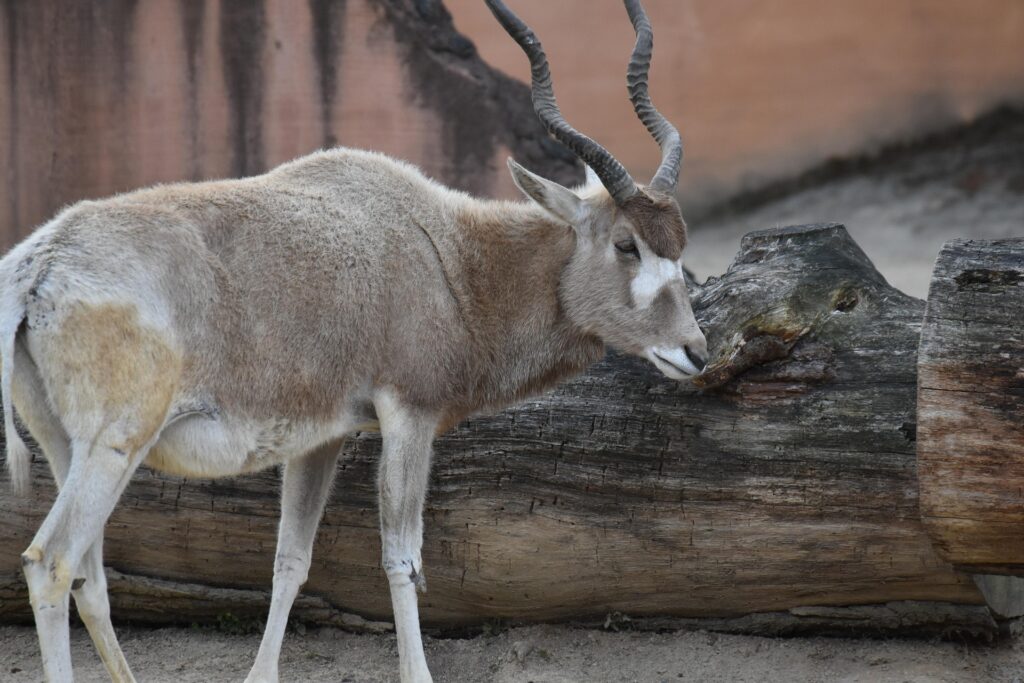
The addax was first described in 1816 by the French zoologist and anatomist Henri Marie Ducrotay de Blainville. Its common name, “addax,” comes from Arabic and means “animal with curved horns.” The long, spiraled horns — measuring between 70 and 125 cm — are present in both males and females.
The species is also associated with the ancient Egyptian city of Mendes, where it was revered as a sacred animal and often considered mystical. A distinctive white patch on its nose forms a mask-like marking, which inspired its scientific name nasomaculatus, meaning “spotted nose.”
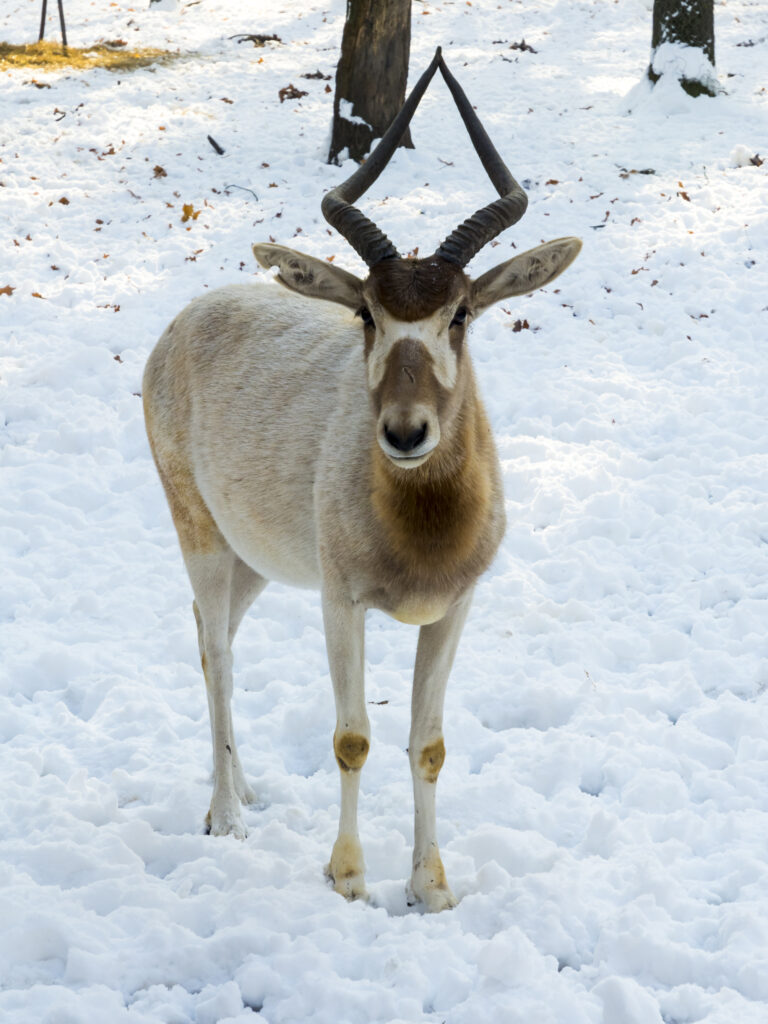
The addax is the antelope species best adapted to extreme desert conditions. It can regulate its body temperature and is able to survive without drinking water. Its broad, splayed hooves help it move easily across soft sand. It usually lives in small herds of 5–20 individuals, although groups may disperse during especially dry periods.
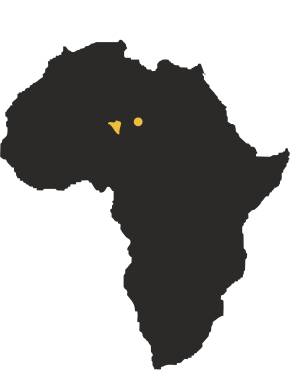
Due to heavy hunting, the addax is now on the brink of extinction, with fewer than one hundred individuals remaining in the wild. Once widespread from Egypt to Morocco, it now survives only in small populations in Niger and Chad. Fortunately, several zoos and wildlife reserves — including those in Tunisia, Morocco, and the Arabian Peninsula — run reintroduction programs, improving the species’ chances of survival.