
Persian fallow deer (Dama mesopotamica)
Persian Fallow Deer (Dama mesopotamica)
Habitat: Forested areas and riverine thickets of Asia
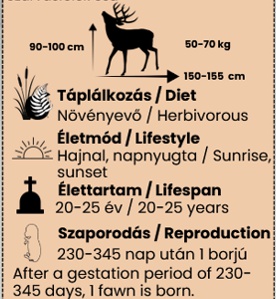
Diet: Herbivorous
The Persian fallow deer is one of the rarest mammals in the world. In the past it inhabited much of the Middle East, but by the middle of the 20th century only about one hundred individuals remained in the wild, while around three hundred lived in zoos.
Efforts to save the species from extinction began in two rather unusual ways. Between 1957 and 1958, the Opel Zoo in Germany captured several individuals in southwestern Iran. The present zoo population originates from the descendants of these animals.
At the same time, in 1964–1965, six wild individuals were captured in Iran and moved to a protected area where they could reproduce undisturbed. This population also began to grow, making it possible to establish additional habitats in several locations. By 1995, purebred Persian fallow deer populations had survived in several areas.
Because the species had previously been considered a subspecies of the European fallow deer, crossbreeding occurred in some places. However, these hybrid individuals were later successfully identified and excluded from breeding programs.
Thanks to these conservation measures, the wild population has slowly increased. Nevertheless, the species still requires strict protection to ensure its long-term survival.
Artiodactyla / Cervidae
IUCN Redlist: EN (Endangered)



I.